
Last updated November 2, 2026
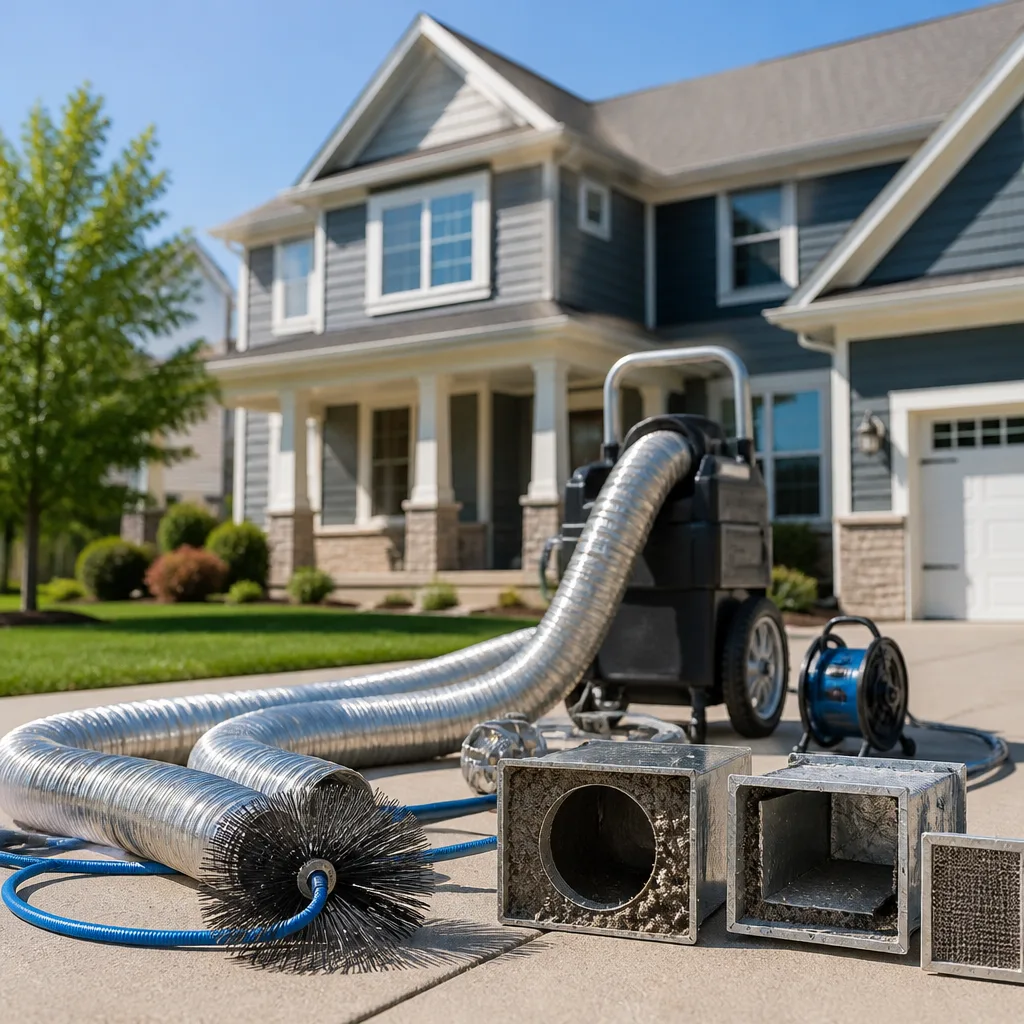 Whole-home duct cleaning
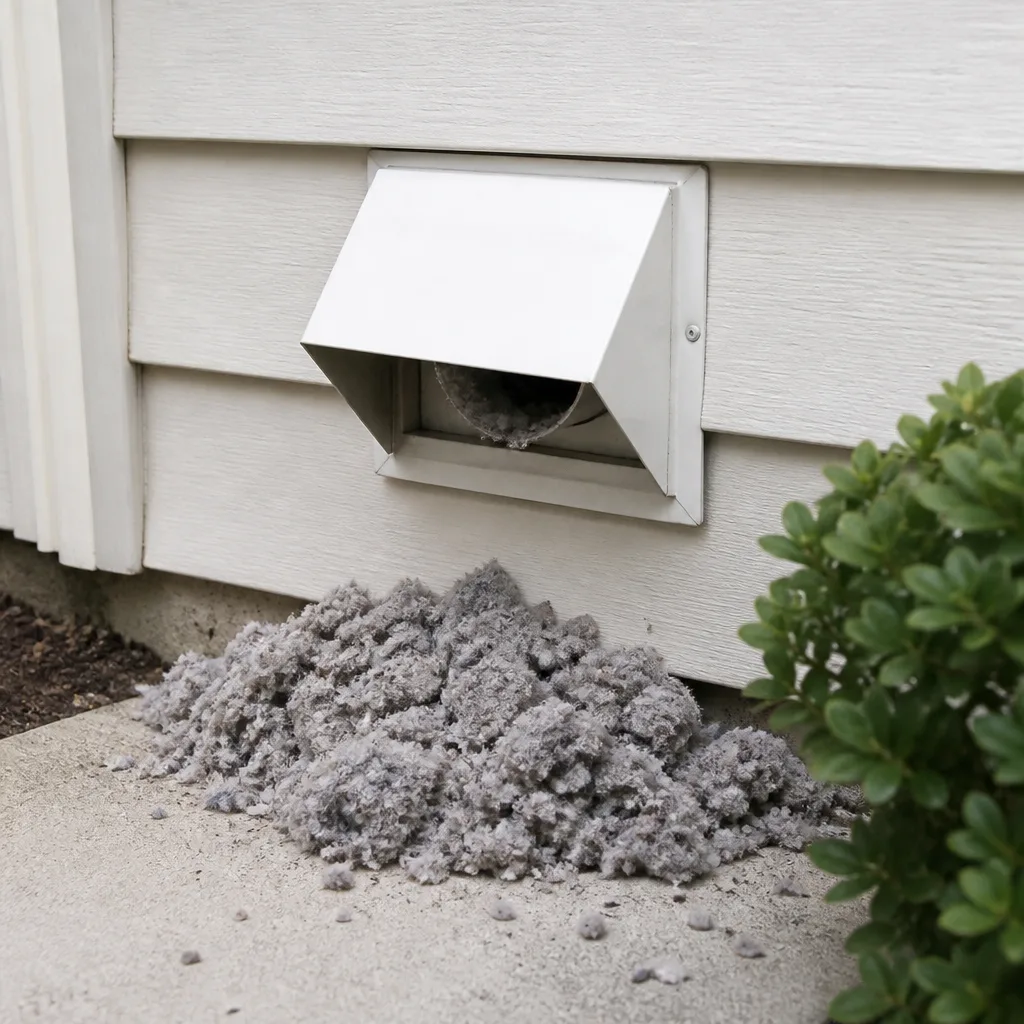 Dryer vent cleaning
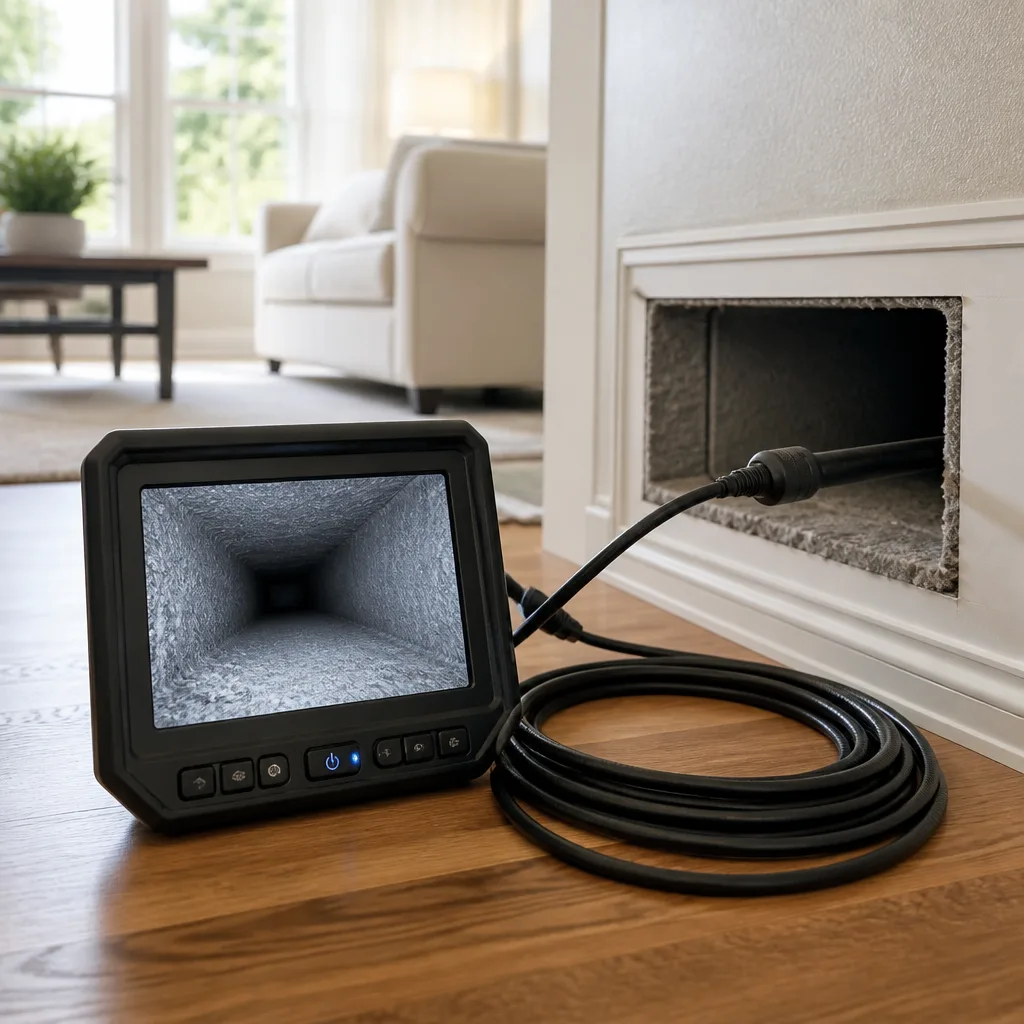 Camera inspection
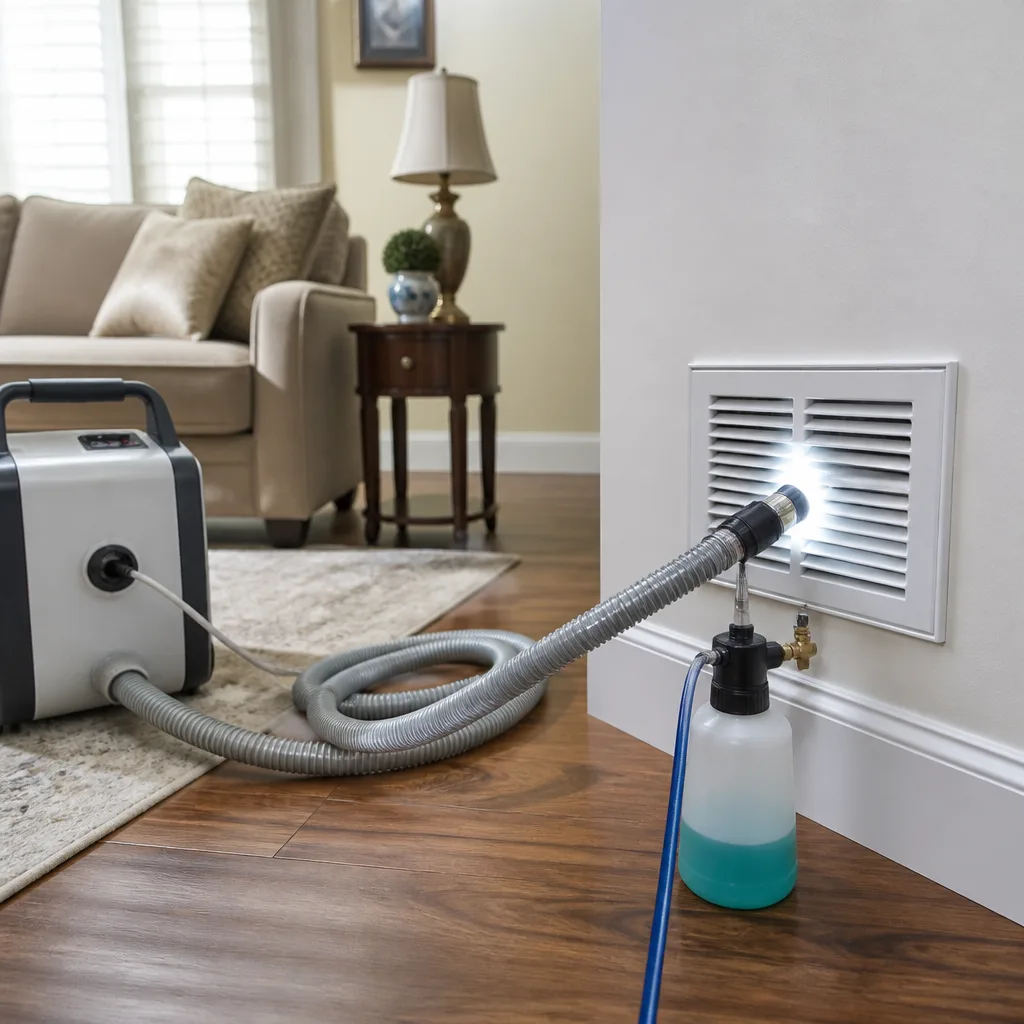 Sanitizing & deodorizing
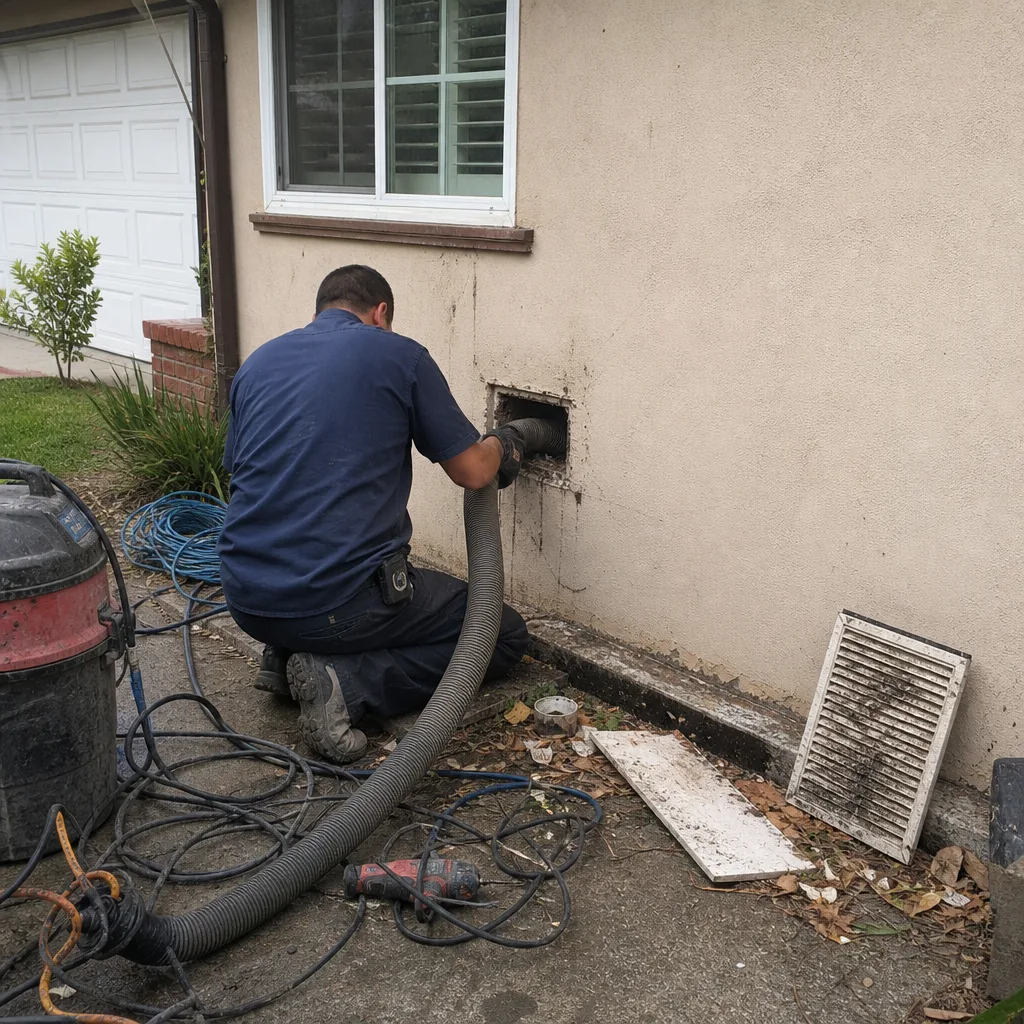
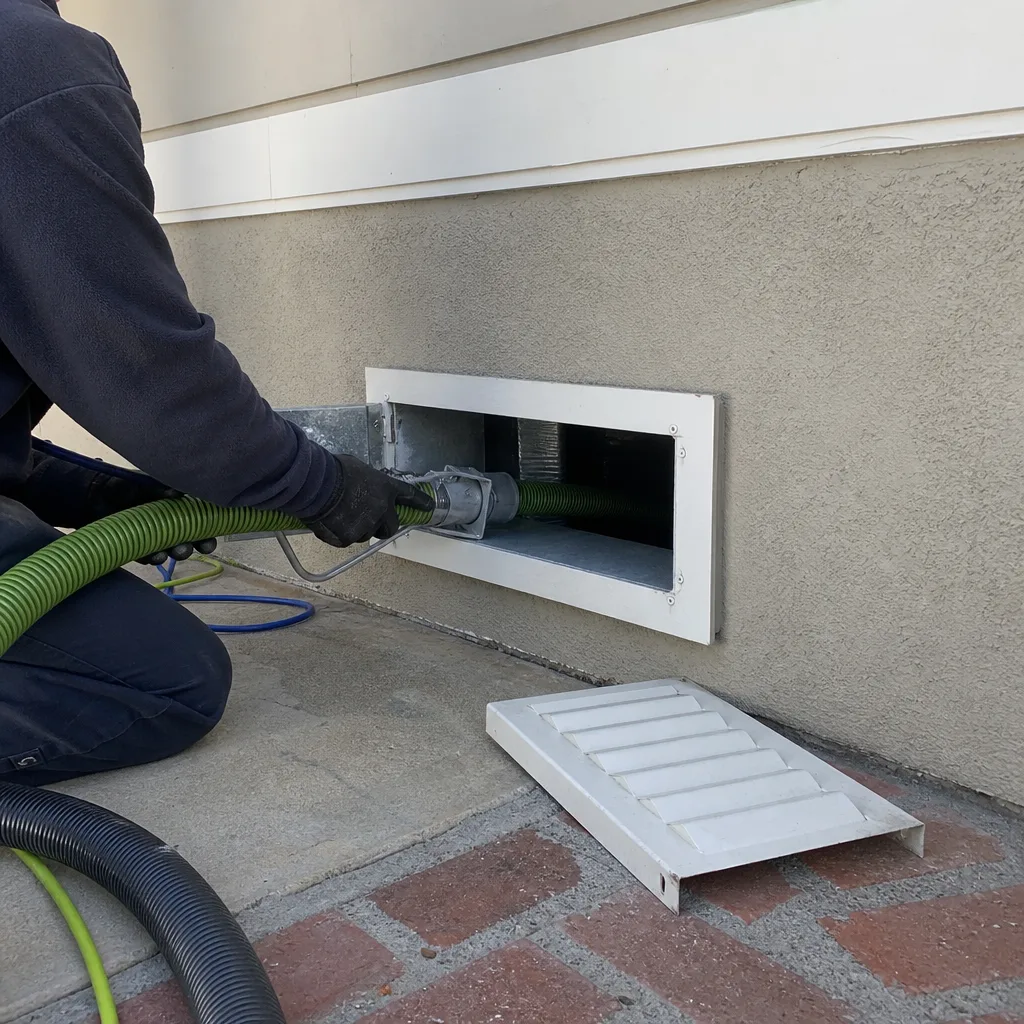
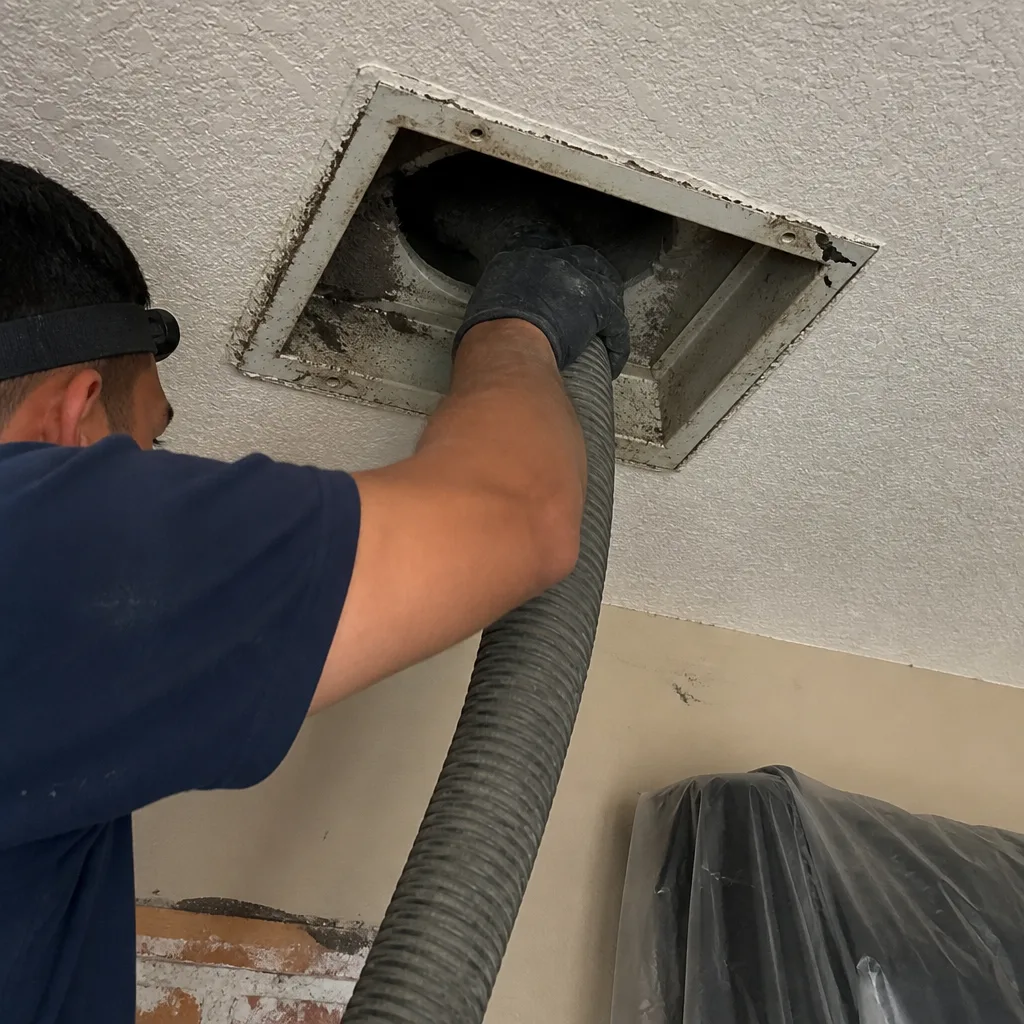
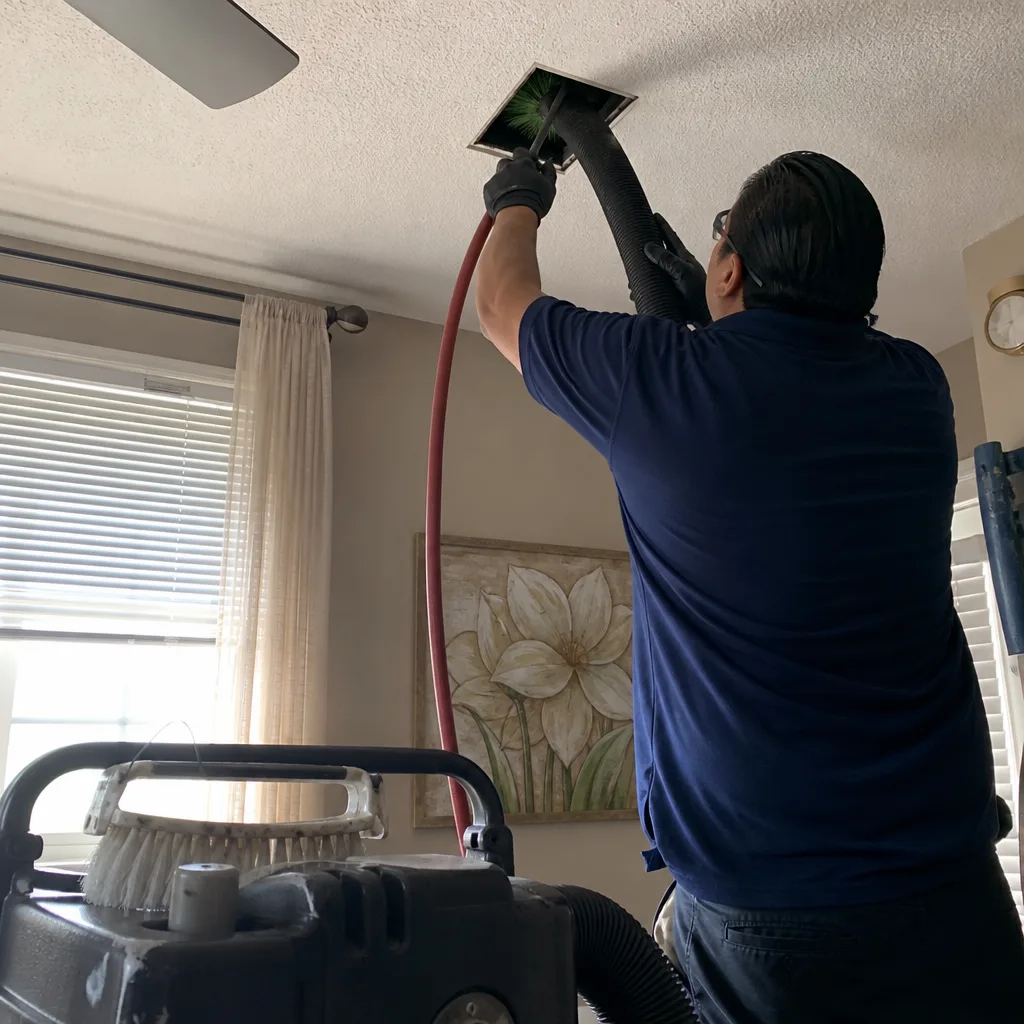
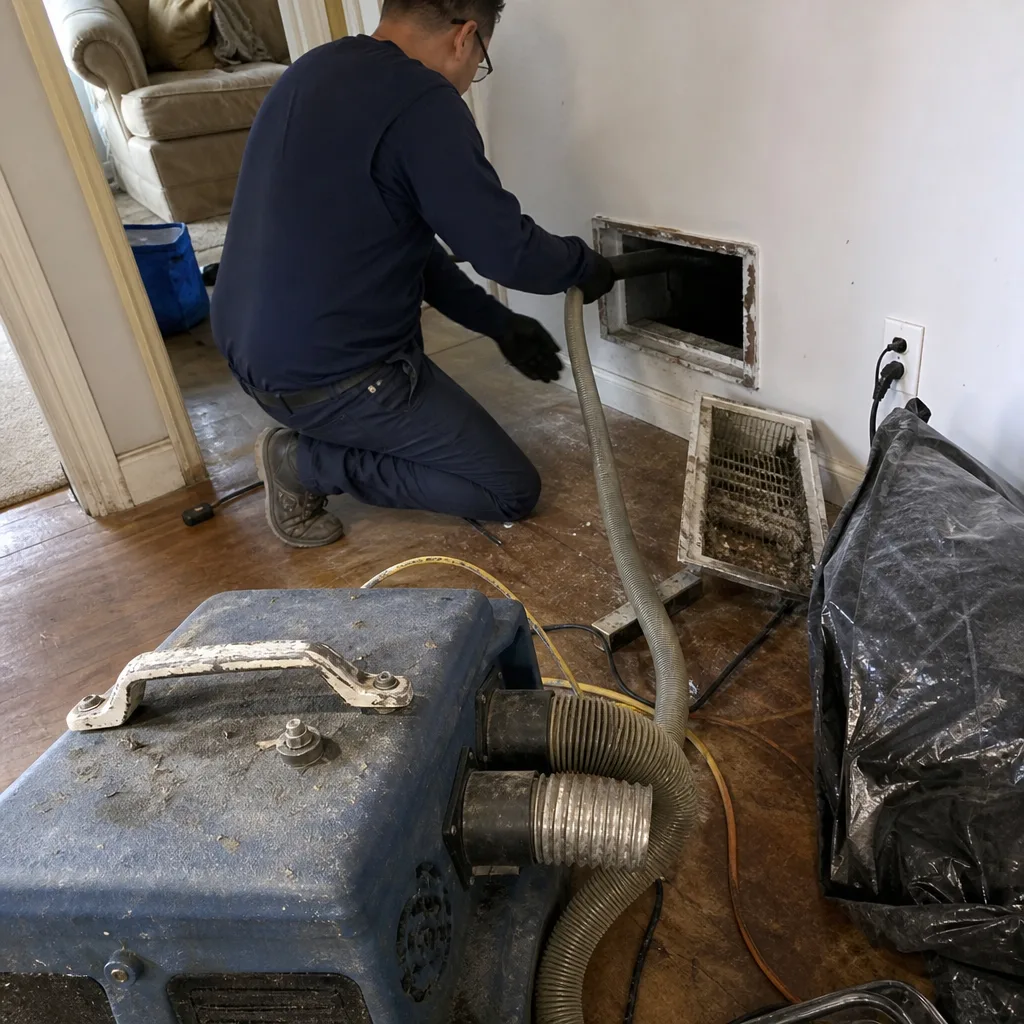
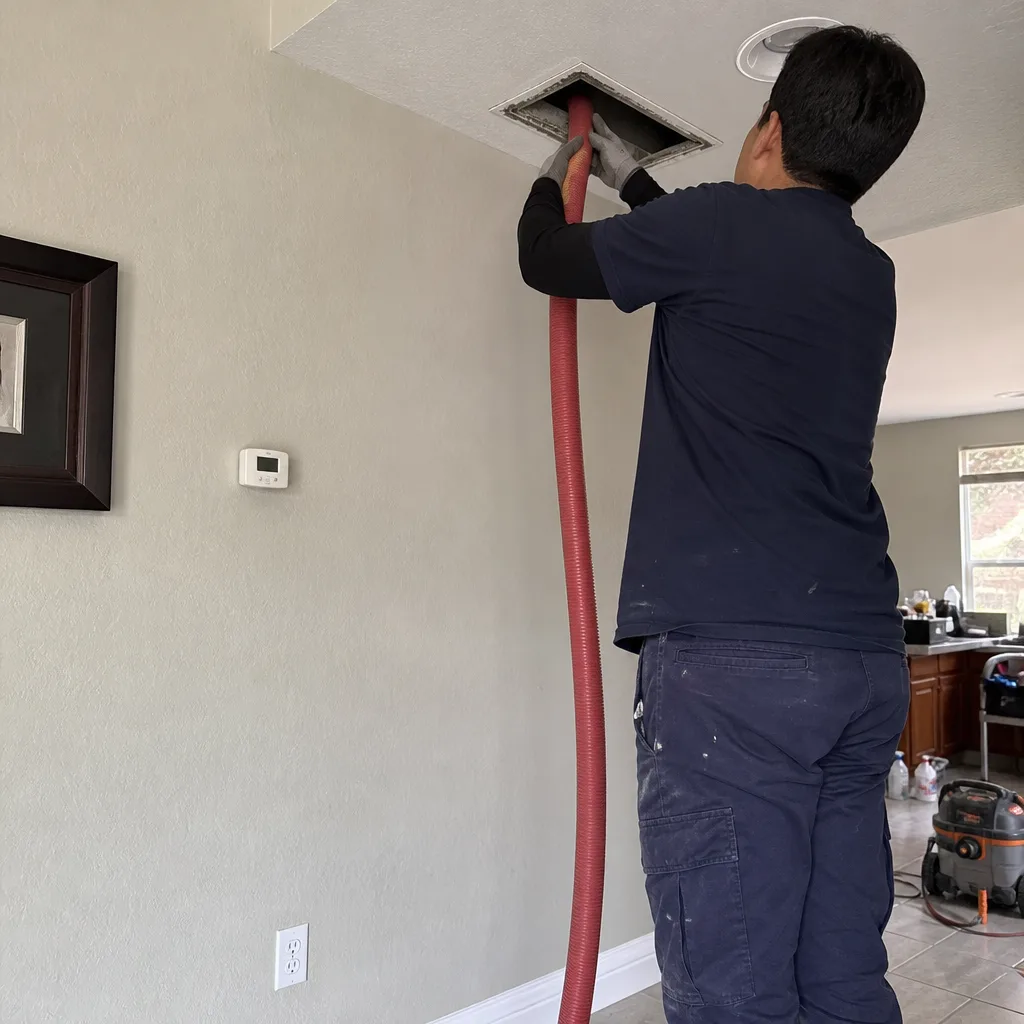
Whole-system duct and dryer vent check with before-and-after photos - you see exactly what came out of your vents
That "$99 whole-house special" is a bait ad - the real number appears once they are in your hallway, or the "clean" is a shop-vac at the register. We photograph the inside of your ducts before and after instead.
Air Duct Cleaning Emergency Preparedness Guide for La Habra Homes
After the 2020 Bobcat Fire, air quality monitors in the La Habra foothills recorded PM2.5 readings above 200 µg/m³ for consecutive days. Homeowners who ran their HVAC systems during that period without understanding what was entering the return air stream embedded that particulate directly into their ductwork, where it continued to circulate long after outdoor air cleared. This guide is not about Air Duct Cleaning services in the abstract. It is a protocol for La Habra homeowners who live in earthquake country, wildfire-adjacent foothills, and a climate where the Santa Ana winds turn outdoor air into an active contaminant. You will learn what to do before, during, and after an emergency event, and in what order those actions prevent a nuisance from becoming a health problem.
Styles & brands we work with
- Whole-home duct cleaning
- Dryer vent cleaning
- Camera inspection
- Sanitizing & deodorizing
Quick Answer
Air duct emergency preparedness for La Habra homes means treating your duct system as a system that fails during a disaster, not just after one. The core protocol is this: shut the HVAC system down during active wildfire smoke or earthquake aftershocks, inspect for structural damage before restart, address moisture within 48 hours, and schedule a professional duct assessment before you repaint, re-carpet, or call the project done. Every hour of HVAC operation during a contamination event pushes particulate deeper into places that later require professional-grade extraction, not just a filter swap.
Table of Contents
- Wildfire Smoke and Your Duct System: The Protocol
- Post-Earthquake Duct Inspection: What Fails First
- Moisture Intrusion: The 48-Hour Timeline
- Where Duct Restoration Fits in Disaster Recovery
- Pre-Event Preparedness: Seal and Access Vulnerabilities
- Santa Ana Wind Events: The La Habra-Specific Threat
- Power Outages and HVAC Restart: What Changes
- Common Mistakes to Avoid
- When to Call a Professional
- Frequently Asked Questions
- The Bottom Line
Wildfire Smoke and Your Duct System: The Protocol
La Habra sits close enough to the San Gabriel Mountains that wildfire smoke is not a hypothetical. When the Bobcat Fire burned in 2020, neighborhoods from Whittier to Fullerton recorded hazardous air quality for days, not hours. What most homeowners do not understand is that HVAC systems in Southern California are designed for cooling, not filtration. A standard MERV 8 filter catches dust and pet hair. It does not catch the sub-2.5-micron particulate that makes wildfire smoke dangerous.
The protocol for active smoke intrusion is not complicated, but it is specific:
- Shut the system down when outdoor PM2.5 consistently exceeds 100 µg/m³. Check PurpleAir or AirNow before making the call. Running the fan in “On” mode during active smoke pulls contaminated air into the return plenum at a rate your filter cannot handle.
- Upgrade your filter to MERV 13 if you must run the system during smoke events. Honeywell and Aprilaire both manufacture MERV 13 media filters that fit standard residential filter slots. This is a temporary measure, not a permanent solution.
- Do not run “Fan Only” mode during smoke events. That setting bypasses compressor logic and pulls outdoor air continuously through an inadequately filtered path.
- Seal intake vents if smoke is sustained for more than 48 hours. A piece of painter’s tape over the outside combustion air intake prevents the worst of it from entering.
- After the event, replace the filter immediately, then schedule a duct inspection. The filter catches what passes through it. It does nothing for what already deposited inside the supply and return lines.
We have seen systems in La Habra where a single week of smoke operation left a visible gray film inside the supply plenum, a coating that a standard filter swap cannot address. The particulate embeds in the duct lining and re-enters the air stream every time the blower cycles, which is why following an Air Duct Cleaning Maintenance Checklist for La Habra Homeowners matters. This is where professional-grade equipment like the Rotobrush and Nikro systems matters. Mechanical agitation loosens what passive vacuuming cannot reach.
Post-Earthquake Duct Inspection: What Fails First
La Habra sits on the Puente Hills thrust fault system. The 1987 Whittier Narrows earthquake and the 2014 La Habra earthquake both produced meaningful shaking across the city’s residential stock. When a home shakes, the duct system shakes with it. And duct systems fail in predictable, specific ways.
- Flex duct joint separation. Flex ducts are joined to boots and plenums with zip ties and mastic. A 5.1-magnitude event is enough to break those connections, especially in attics where ducts run unsupported for long spans. A separated joint means your system is now pulling attic air, not return air.
- Register dislodgement. Floor and ceiling registers pop out of their openings during shaking. This seems cosmetic. It is not. A dislodged register changes static pressure in the system, which changes where the system draws its air from.
- Plenum integrity in raised-foundation homes. A significant portion of La Habra’s housing stock sits on raised foundations. The supply plenum under the floor takes the full brunt of vertical movement. Cracks in the plenum mean the system pulls crawlspace air, which in La Habra means soil gas, pest debris, and moisture-laden air.
- Duct strap failure. In attic installations, the metal strapping that holds ducts in place can snap during the shaking. A duct that falls against the roof deck or insulation compresses, kinks, and loses airflow capacity.
Our recommendation after any earthquake strong enough to knock pictures off walls: shut the system down, inspect every register you can reach, and then schedule a professional inspection before restarting. This is where Air Duct Repair in La Habra becomes the service that matters most. Cleaning alone cannot fix a separated joint or a cracked plenum. The structural repair has to come first.
Moisture Intrusion: The 48-Hour Timeline
The most misunderstood contamination pathway in La Habra homes is moisture. A roof leak during winter storms, a failed water heater, an attic intrusion from a fallen tree branch, all of these put water near or inside the duct system. And the clock starts ticking immediately.
Mold colonization in a dark, warm duct environment begins within 24 to 48 hours of sustained moisture. The EPA’s guidance on mold remediation is clear on this timeline. What most homeowners do not realize is that fiberglass duct lining is an ideal substrate. Once mold establishes in the lining, cleaning becomes significantly more difficult and expensive, and in some cases, section replacement is the only viable fix.
The assessment sequence after any moisture event:
- Hour 0-12: Identify the source and stop it. If the leak is in the attic above a duct run, place a tarp or bucket before anything else.
- Hour 12-24: Inspect accessible duct surfaces. Look for water staining on the exterior of ducts, especially at the low points where water pools.
- Hour 24-48: If moisture has touched the interior of the duct or the insulation, schedule a professional assessment. This is no longer a household fan and patience situation.
Homes in the hills above Whittier Blvd that are exposed to heavier rain and roof runoff are more vulnerable to this failure mode than homes in the flatlands. The timeline remains the same for everyone: 48 hours is the threshold where a cleaning job becomes a repair job.
Where Duct Restoration Fits in Disaster Recovery
After a fire, earthquake, or flood, the natural instinct is to handle the visible damage first: the drywall, the flooring, the paint. But there is a structural problem with that instinct. When you repair drywall before addressing the duct system, you are sanding, cutting, and generating particulate that then enters the compromised ducts. You are also scheduling cosmetic work on top of a system that may be actively distributing whatever contamination the event introduced.
The correct sequence for La Habra homes after a disaster event:
- Stabilize the structure. Shut off utilities, address any life-safety issues, secure the property.
- Assess the duct system. Before any demolition or reconstruction begins, know whether your ducts are intact, contaminated, or structurally compromised.
- Clean or repair the ducts. This is the point where Air Duct Cleaning in La Habra enters the recovery timeline. The system should be clean and sealed before the home is lived in again.
- Proceed with cosmetic restoration. Drywall, paint, flooring. By this point, the air handling system is no longer feeding contaminants into the living space.
- Final filter replacement. After all construction is complete, replace the filter again. Construction dust is real dust.
We have walked into La Habra homes where the entire interior had been freshly painted and the ducts still contained gray fire ash from the previous year’s smoke season. The homeowners had followed the wrong order. The paint sealed in what the ducts were still releasing.
Pre-Event Preparedness: Seal and Access Vulnerabilities
The best emergency protocol is the one you do not need. For duct systems, that means assessing two things before an event ever happens: how well sealed the system is, and how easy it is to access.
Duct sealing in most La Habra homes is original equipment. Mastic applied in the 1970s and 1980s is cracked, dried, and failing. Duct tape, despite the name, is not a duct sealing product and fails within a few years of installation. Every unsealed joint is a gap where disaster particulate enters the system.
Access is the second issue. La Habra homes with 1950s and 1960s construction often have furnace closets or crawlspace installations where the return plenum is difficult to reach. That is fine in normal operation. In an emergency, it means inspection is delayed, and delay is contamination window.
What to assess before the next event:
- Visible joint condition: Are the seams at the plenum and register boots sealed with intact mastic, or are there visible gaps?
- Filter fit: Does the filter seat properly, or does air bypass around the edges? A filter that does not fit is doing nothing.
- Strap integrity in the attic: Can you see drooping or disconnected ducts? If you can see it, it has already failed.
- Crawlspace condition: Is the area under a raised foundation dry and intact, or is there standing water and pest activity that would enter a cracked plenum immediately?
This is the checklist version of preparedness. The deeper assessment, the one that requires a professional eye, is what Cobalt Air Duct Cleaning does every day. The Cobalt Air Duct Cleaning home page covers the scope, but the principle here is simple: a sealed system is a protected system.
Santa Ana Wind Events: The La Habra-Specific Threat
La Habra’s geography makes it unusually vulnerable to a threat that does not appear in most national duct cleaning guides: the Santa Ana winds. These winds come down through the Cajon Pass and the Santa Ana Canyon, picking up dust, pollen, and whatever particulate is airborne in the Inland Empire before hitting northern Orange County. La Habra sits directly in the path.
What the Santa Anas do to a duct system is not dramatic in the moment. It is cumulative. Dust infiltrates through attic vents, around access panels, and through any gap in the return path. The system then distributes that dust throughout the house, every time the AC cycles. Homes near the hills, around West La Habra and the neighborhoods off Euclid and Whittier Blvd, get the worst of it because they catch the wind before it dissipates.
The practical preparedness step for Santa Ana season is two-fold: check your filter more frequently during Santa Ana weeks, and pay attention to dust accumulation on registers. A register that builds visible dust within a week during wind season is telling you the return path is leaking.
Power Outages and HVAC Restart: What Changes
Power outages in La Habra come from heat waves, from Santa Ana wind damage, and from earthquake-related infrastructure failure. The HVAC system is one of the first things homeowners restart when power returns. That is a mistake.
When power cuts and the blower stops mid-cycle, several things happen. The system was likely running when power failed, meaning the AC was actively condensing moisture on the coil. Without airflow, that moisture sits. In a warm attic or closet, that is the beginning of a microbial problem. When power returns and the blower cycles on, it blows that moisture and whatever has started growing on the coil surface directly into the supply ducts.
The restart protocol after any outage longer than a few hours:
- Do not immediately restart the AC. Run the fan only (without cooling) for 15-20 minutes to dry the coil and circulate any stale air.
- Check the registers for musty odor during that fan-only cycle. Odor means moisture sat too long.
- Replace the filter if the outage lasted more than 24 hours or if outdoor air quality was poor during the outage window.
- Listen for new sounds. A blower that was fine before the outage and is now rattling, squealing, or surging needs attention before full operation resumes.
- Using a high-MERV filter as a permanent fix during smoke season. MERV 13 filters create more static pressure. If the system was not designed for it, the blower works harder and the efficiency drops. It is a temporary measure, not a lifestyle upgrade.
- Running the system during heavy smoke because “the filter will catch it.” A MERV 8 filter catches almost none of the sub-2.5-micron particulate that makes wildfire smoke hazardous. You are actively pumping contaminated air through every room.
- Ignoring a dislodged register after an earthquake. It appears cosmetic but changes system static pressure and creates a contamination entry point. Every open register boot is an open door for whatever is in the wall cavity or under the floor.
- Painting or re-carpeting before duct assessment. Construction dust enters the compromised system and then redistributes through the finished space. You have now finished your home with dirty ducts.
- Waiting more than 48 hours to address moisture near ducts. The mold clock is real. Past the 48-hour threshold, remediation costs rise sharply and cleaning alone may not be sufficient.
- Assuming a filter change after an event means the ducts are clean. The filter is a barrier for what is entering the system. It does nothing for what has already deposited inside the supply and return lines.
- Restarting the HVAC immediately after power restoration. The coil needs to dry first, or you are blowing the moisture that accumulated during the outage directly into the living space.
These steps matter because they cost nothing and prevent the exact conditions that lead to expensive duct remediation later.
Common Mistakes to Avoid
When to Call a Professional
There are emergency scenarios where the correct action is assessment by someone who does this work daily. If you see moisture staining on any accessible duct surface, call a professional. If you smell musty air from registers after a power outage or water event, call a professional. If your home has been through a significant earthquake and you can see any structural movement in the attic or crawlspace, call a professional before restarting the system. If exterior walls show ash or soot staining after a wildfire event and the HVAC ran at any point during the smoke, call a professional. Cobalt Air Duct Cleaning offers free estimates in La Habra, call (866) 596-7835. The consultation tells you what you are dealing with, whether you hire us or not.
Frequently Asked Questions
Air duct cleaning in La Habra typically runs $350 to $700 for a standard single-family home, depending on square footage, the number of registers, and the condition of the system. Homes with extensive contamination, pet dander buildup, or construction debris will fall at the higher end. Be skeptical of any quote under $99, it is a loss leader designed to get a technician in the door, and the invoice rarely ends there. Call (866) 596-7835 for an exact quote, estimates are free.
Cheap duct cleaning quotes in La Habra usually mean the company will do a pass with a vacuum hose and call it done. No mechanical agitation, no access cutting where needed, no before-and-after verification. The work appears the same on paper. It is not the same in practice. Equipment like Rotobrush and Nikro systems costs real money, and the operators who invest in that equipment charge accordingly. If the price is dramatically lower than competing quotes, ask what equipment they use and whether they cut access points for thorough cleaning.
Ask for before-and-after photos of the supply plenum, the return drop, and at least one register boot. Any legitimate duct cleaning company will provide this without hesitation. We at Cobalt Air Duct Cleaning document every job, and the photos are part of the work product, not an upsell. If a company cannot show you what the ducts looked like before and after, you are being asked to take their word for it, and that is not the standard you should accept for air you breathe every day.
For most La Habra homes, professional duct cleaning every three to five years is appropriate. Homes in the hills that catch Santa Ana wind dust, homes with pets, and homes that have been through a wildfire smoke event or home renovation should be assessed more frequently. The honest answer is that it depends on what your system is pulling in, and that depends on where you live and how you live. A visual inspection is the only way to know for certain.
You can replace the filter and wipe down the visible registers, but the interior of a residential duct system is not accessible without professional equipment. The particulate from wildfire smoke is sub-2.5-micron, it embeds in the duct lining and requires mechanical agitation to remove. A shop vacuum from the hardware store cannot reach what matters. This is not a DIY project.
Running the system during active smoke does not permanently damage the equipment in most cases. What it does is deposit particulate throughout the ductwork, on the blower wheel, and on the coil. That contamination then circulates through the home until it is removed. The equipment usually survives. The air quality in the house may not. A professional cleaning after a significant smoke event addresses the contamination before it becomes the new normal for your home’s air.
Yes. Dryer vents are a fire risk in normal conditions, and that risk rises during events that change the home’s air pressure, like Santa Ana winds or HVAC changes. A clogged dryer vent also forces the dryer to work harder, which adds heat to the home during the hottest months. Dryer Vent Cleaning in La Habra is a dedicated service, not an add-on, and it deserves the same planning attention as the duct system before a disaster, not after.
The Bottom Line
Disasters in La Habra are not rare. Wildfire smoke, earthquakes, Santa Ana wind events, and power outages are recurring features of life in this city. What is rare is a homeowner who has thought through what those events do to the air system of their house. The preparation list is short and practical: seal the joints, maintain the filter, know your access points, and have a plan for the 48 hours after any event that could put contamination or moisture into the ducts. The recovery sequence is equally clear: structural assessment, duct restoration, then cosmetic repairs, in that order. If you do only one thing from this guide, shut the system down during the event. That single action prevents most of the contamination that becomes expensive later. For more guides & resources, or to schedule a professional assessment before the next event, call Cobalt Air Duct Cleaning at (866) 596-7835. The estimate is free, and the information is worth having before you need it.
Written by the team at Cobalt Air Duct Cleaning, serving La Habra since 2016.
See the difference
 Before
 After
 Before
 After
 Before
 After