
Last updated November 2, 2026
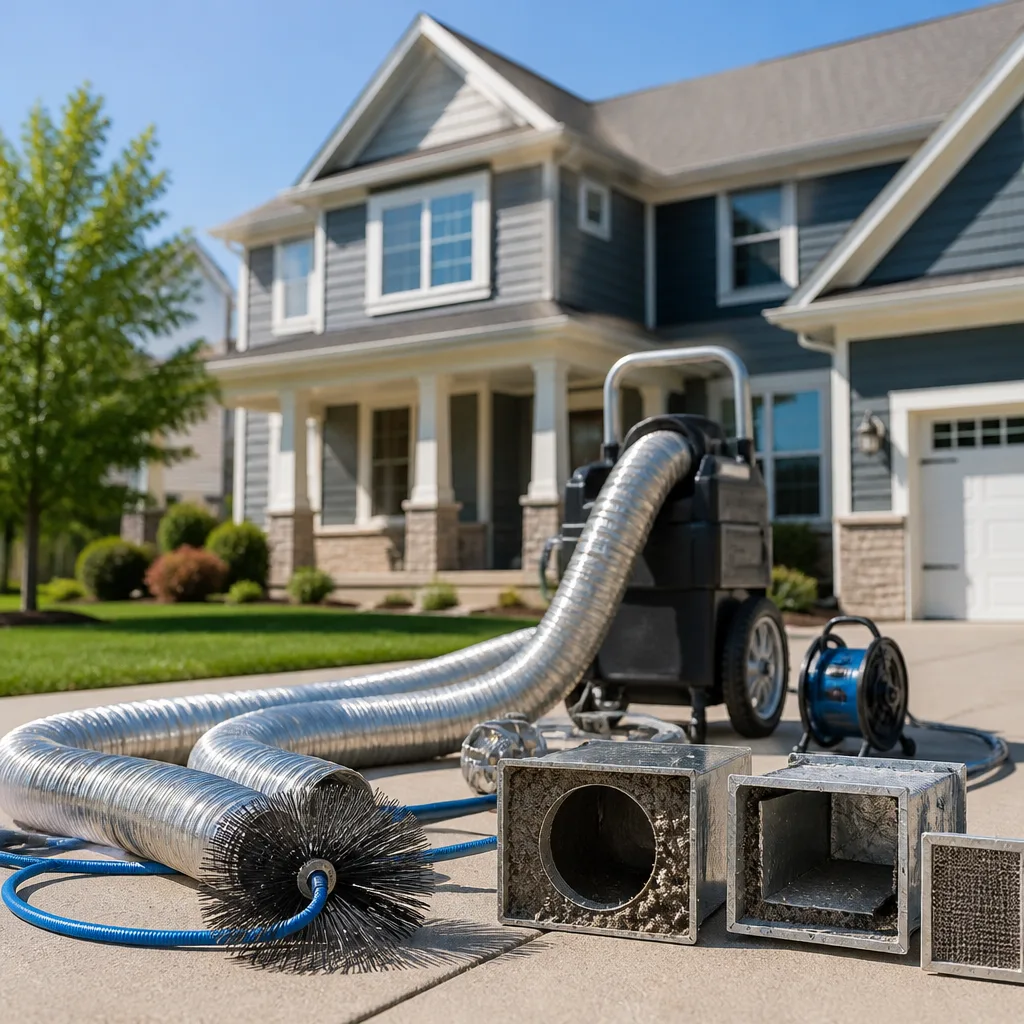 Whole-home duct cleaning
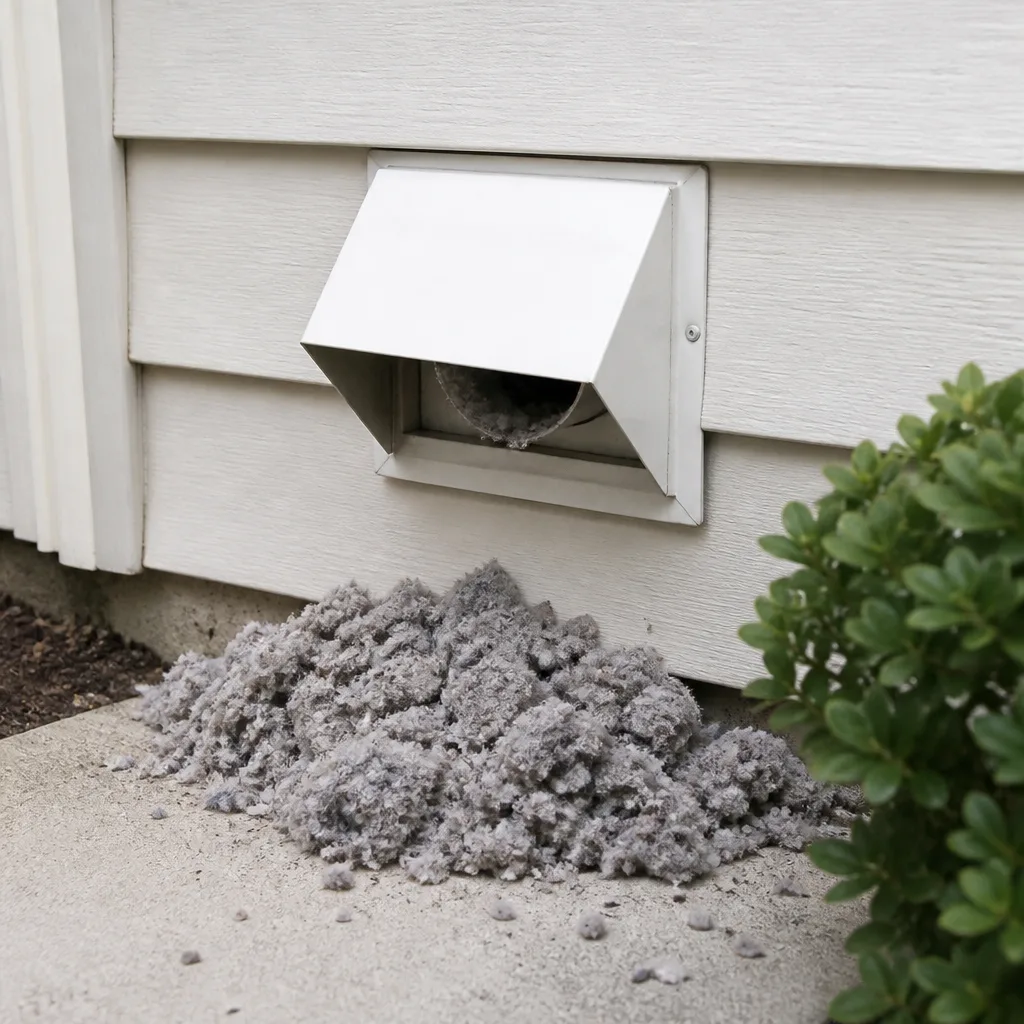 Dryer vent cleaning
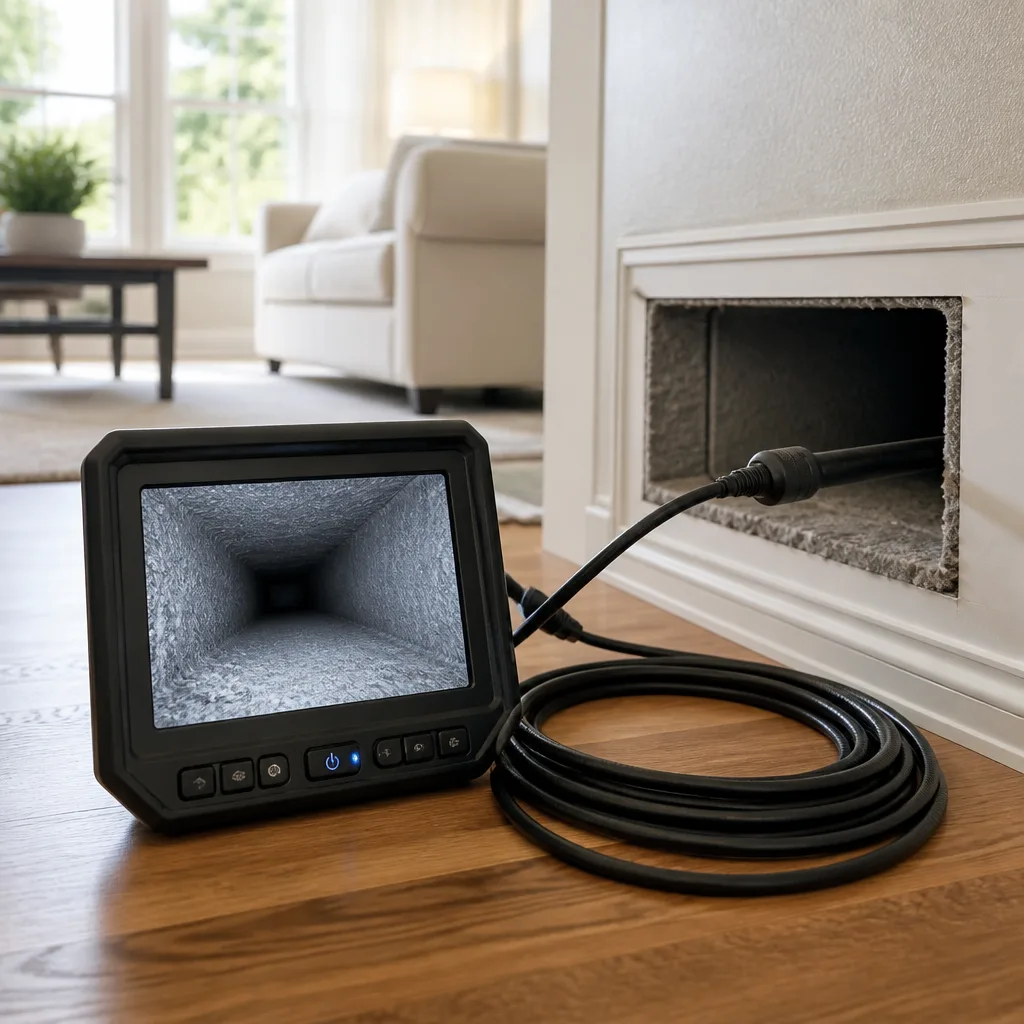 Camera inspection
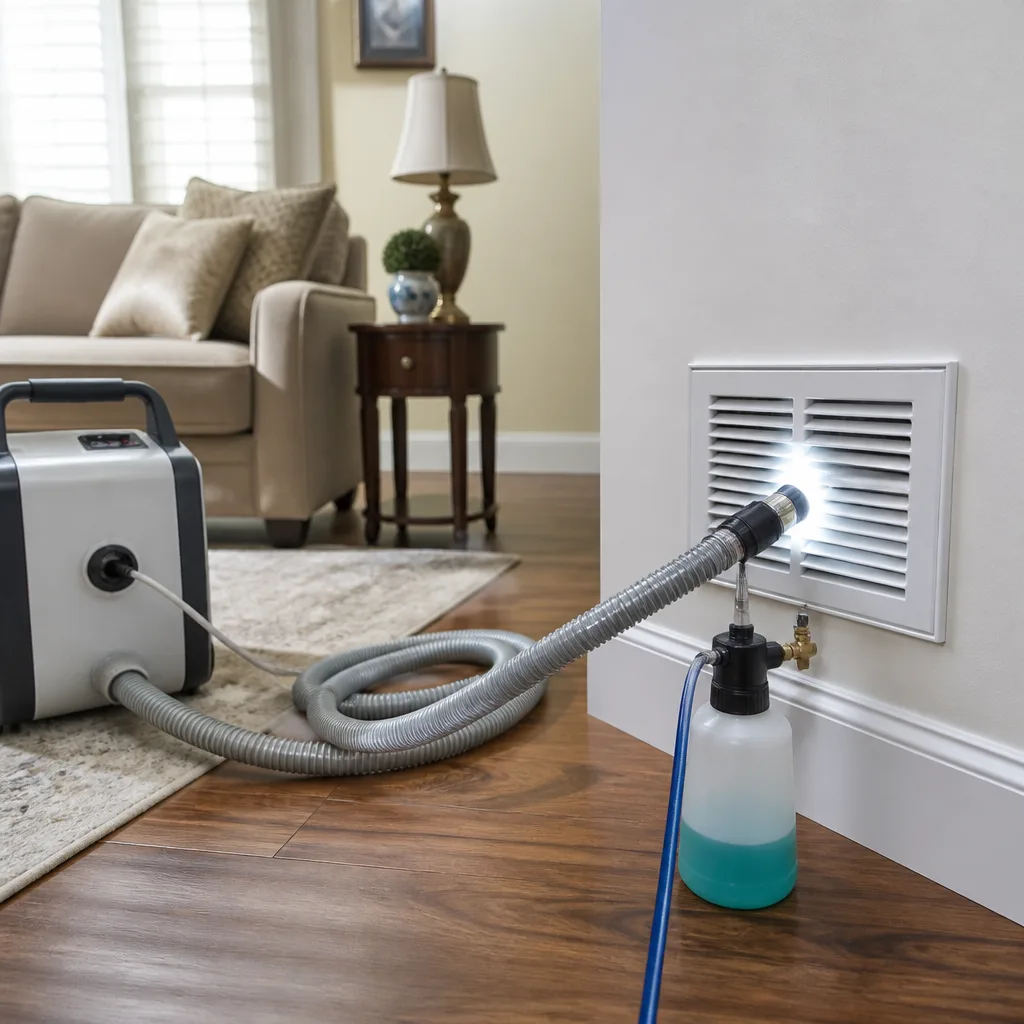 Sanitizing & deodorizing
Whole-system duct and dryer vent check with before-and-after photos - you see exactly what came out of your vents
That "$99 whole-house special" is a bait ad - the real number appears once they are in your hallway, or the "clean" is a shop-vac at the register. We photograph the inside of your ducts before and after instead.
Air Duct Cleaning Troubleshooting: Common Problems and How to Fix Them
The most common complaint we hear from homeowners after an air duct cleaning isn’t that the house smells worse. It’s that nothing changed. The dust still settles on the bookshelf two days after wiping. The allergies still flare up in the bedroom. The musty smell still creeps in when the AC kicks on. In La Habra, where summer temperatures push HVAC systems to run for months without rest, a duct cleaning that doesn’t deliver is worse than no cleaning at all, because it costs money and erodes trust in the entire process. This guide walks through the real reasons duct cleanings fail to solve problems, how to diagnose what actually happened, and what fixes exist for each failure point. For a deeper look at when to schedule service, see our Air Duct Cleaning Warning Signs: A La Habra Homeowner’s Reference Guide.
Quick Answer
Most air duct cleaning problems trace back to four specific process failures: the contamination source was never identified, the cleaning equipment created inadequate negative pressure to capture debris, flex duct was damaged during the job, or the real issue was never in the ducts to begin with, it was the coil, drain pan, or air handler. Fixing these problems starts with a correct diagnosis, not another generic cleaning.
Styles & brands we work with
- Whole-home duct cleaning
- Dryer vent cleaning
- Camera inspection
- Sanitizing & deodorizing
Table of Contents
- Why Your Duct Cleaning Didn’t Work: The Four Failure Points
- Persistent Odor After Cleaning: It’s Probably Not the Ducts
- Elevated Dust in the First 48 Hours: Red Flag or Normal?
- Negative Pressure: The Physics Your Duct Cleaning Depended On
- Flex Duct Damage: Collapse, Tears, and Loose Connections
- When a Second Cleaning Is Justified Versus When It’s an Upsell
- Why the Equipment Used Matters More Than the Price Quoted
- Common Mistakes to Avoid
Why Your Duct Cleaning Didn’t Work: The Four Failure Points
When a homeowner in La Habra calls us after another company’s cleaning failed to fix their problem, we start by asking the same question every time: what did the technician actually do? The answer is usually some version of “hooked a vacuum to the register and moved a brush around.” That’s not duct cleaning. That’s inlet cleaning, and it leaves the trunk lines, return plenum, and air handler cabinet untouched. The problem is rarely a matter of bad luck or an unusually dirty system. It’s a matter of four process failures that repeat across this industry.
Here’s what those failures look like in order of how frequently we encounter them in La Habra homes:
- The contamination source was never located. Ducts are a transport system, not a source. If the contamination originates at the coil, the drain pan, or a rodent intrusion in one specific branch, cleaning the duct walls downstream does nothing. The source keeps feeding the system.
- Inadequate negative pressure during cleaning. Proper duct cleaning requires a vacuum system that can pull 2,000 CFM or more continuously while agitation brushes disturb the debris. A small portable vacuum can’t move enough air to capture what the brushing releases. The debris just settles back down.
- Flex duct damage during the job. Flex duct has a plastic liner. Aggressive brush work can tear it, collapse it, or pull it loose from its connections. A cleaning that damages more than it removes will leave the system worse than it was found.
- The real problem was never duct-related. This is the one our industry doesn’t like to admit. Sometimes the correct answer is coil cleaning, drain pan treatment, or mold remediation, not duct cleaning. A company that doesn’t offer those services has a financial incentive to sell the one service it does offer, even when it’s the wrong fix.
Understanding which failure you’re dealing with is the difference between paying for the right fix and paying for the same disappointment twice. The sections below walk through each failure mode in detail, with the symptoms that identify it and the questions that uncover it.
Persistent Odor After Cleaning: It’s Probably Not the Ducts
If you paid for duct cleaning because of a musty, sour, or dirty-sock smell and the odor came back within a week, the most likely culprit is not the ducts. It’s the evaporator coil, the drain pan beneath it, or the air handler cabinet where sitting water and accumulated biofilm create the smell that gets distributed through the clean ducts. In La Habra’s climate, where air conditioners run heavily from June through October, condensation on the coil is constant. That water drains into a pan, and if the pan doesn’t drain properly or hasn’t been cleaned, it becomes a biological breeding ground.
Here’s how to tell the difference between a duct-source odor and a coil-source odor:
- Duct-source odor tends to be consistent regardless of whether the system is cooling or just circulating air. It’s the smell of dust, pet dander, or possibly pest activity that lives in the duct walls themselves.
- Coil-source odor intensifies when the air conditioner is actively cooling. The temperature change causes the biofilm on the coil to release volatile compounds. The smell often peaks a few minutes after the AC kicks on, then fades as the coil temperature stabilizes.
- Drain-pan odor often comes with a secondary sign: standing water or evidence of moisture in the air handler cabinet, sometimes accompanied by a faint drip or gurgling sound.
If the odor points to the coil or drain pan, no amount of duct cleaning will fix it. The coil needs cleaning with a proper coil cleaner that dissolves the biofilm, and the drain pan needs clearing and treating. The good news is that this diagnosis is straightforward for a technician who opens the air handler and looks. A company that skips that step and just cleans ducts is either inexperienced or not being honest about what it found.
One more angle: if the smell is specifically a lingering smoky or fire odor, check the return side. Contamination that enters through the returns in a home with a recent kitchen fire or nearby wildfire exposure will keep recirculating until the return plenum is cleaned thoroughly. In La Habra, homes near the hills get periodic smoke exposure that settles in returns more than supply lines, because the larger return openings let more particulates in.
Elevated Dust in the First 48 Hours: Red Flag or Normal?
A small uptick in airborne dust immediately after duct cleaning is expected. The cleaning process physically disturbs material that has been sitting still, often for years. Some of that material gets captured by the vacuum, but the lightest fraction can hang in the air and settle over the following day or two. So a thin film on shelves in the first 24 to 48 hours is not automatically a sign of a bad job.
But here’s the line we tell La Habra homeowners to watch: if the dust is still settling two, three, or four days after the cleaning, or if the amount of dust is heavier than what a normal week produces, something went wrong. Specifically, it means the cleaning disturbed debris without extracting it. The dust that used to be attached to the duct walls is now loose, and loose debris moves more easily through the system and into your living space.
The technical term for this is disturbed-but-not-extracted debris, and it’s the most common failure mode of low-effort duct cleanings. Here’s why it happens:
- Undersized vacuum. A shop vac or small portable unit can’t establish the negative pressure needed to pull disturbed debris out of the duct run. The dust gets brushed loose and falls back to the duct floor, where turbulence pushes it toward registers over the following days.
- No sealing of unused registers. In a proper cleaning, all but the register being worked on should be temporarily sealed. This directs the vacuum pull through the duct run being cleaned. Without sealing, the pull is diffused across the entire system and the air at the working register isn’t moving fast enough to carry debris.
- Cleaning supply lines but not returns. Return ducts move higher air volume and collect more debris in most homes. Skipping them leaves a reservoir of contaminated material ready to re-enter the living space.
If you’re in the first 48 hours and seeing elevated dust, wait it out. If it’s day five and the dust is still settling, call the company that did the work and ask two questions: what vacuum CFM did the equipment produce, and were the returns cleaned as a separate pass or skipped? The answers will tell you what happened.
Negative Pressure: The Physics Your Duct Cleaning Depended On
Proper duct cleaning is a controlled demolition job. The technician breaks material free from the duct surfaces, and that material has to go somewhere. The somewhere is the vacuum, but it only goes there if the vacuum can create enough negative pressure throughout the duct run to pull air toward itself faster than the material can fall. That’s the entire game. Brush work without adequate vacuum pressure is just making dust airborne inside your duct system.
Here’s the number that matters: a residential duct cleaning should use a vacuum producing at least 2,000 cubic feet per minute of airflow. A commercial-grade system, the kind used on industrial ducting and hospital returns, produces 4,000 to 8,000 CFM. That’s what tool platforms like Nikro and Rotobrush are built around. A small shop vac produces maybe 150 CFM. A portable carpet-cleaning vacuum produces 300 to 500 CFM. Neither one can clean anything beyond the first few feet of a duct run.
If you weren’t home to watch the cleaning, here are the questions to ask afterward:
- What was the vacuum CFM rating? If the company can’t answer this immediately, that’s an answer.
- Was the vacuum connected to the trunk line or just to individual registers? Trunk-line connection, meaning the vacuum was attached at the plenum or a large access point, allows whole-system depressurization. Registers-only connection can only clean the last few feet of each run.
- Were registers sealed during the cleaning? Unsealed registers bleed off the vacuum pull and leave the far end of each duct run with almost no airflow.
- Did the technician use mechanical agitation or just compressed air? A brush or agitation whip physically scrubs the duct surfaces. Air alone, especially if it’s low-pressure air from a portable blower, doesn’t move the kind of accumulated material that causes actual indoor air quality problems.
A professional-grade setup, the kind we run on every La Habra job, connects a high-CFM vacuum to the trunk, seals off all other openings, and uses rotating brushes to scrub the duct walls while the vacuum pulls. That’s the baseline for what “cleaning” should mean. Anything less is closer to a visual inspection with a dust cloud.
Flex Duct Damage: Collapse, Tears, and Loose Connections
Most duct systems built in La Habra over the last 30 years use flexible duct for at least part of the distribution network. Flex duct is insulated, flexible, and cheaper to install than rigid metal. It also fails with surprising regularity, and duct cleaning is one of the events that causes that failure. Here’s the failure chain: a rotating brush enters the flex duct, catches on the inner plastic liner, tears it, and now the conditioned air is leaking into the insulation wrap or the attic space. Or the brush is too aggressive, pushes the flex duct past its bend radius, and the inner liner collapses. Or the flex duct wasn’t reconnected properly after the cleaning, and a gap now pulls attic air into the supply line.
All three of these outcomes produce the same homeowner complaint: the house is dustier after the cleaning than before. Because when flex duct fails, attic air and insulation particles enter the system at the point of failure.
Here’s what each failure looks like from outside:
- Liner tear: Uneven airflow from one register, or a whistling sound from the duct run. In severe cases, the register blows insulation particles that look like small pink or yellow fibers.
- Collapse: A register that suddenly produces almost no airflow, often the farthest room from the air handler. The system may also make a new fluttering or popping sound as the duct tries to re-inflate.
- Reconnection gap: The classic sign is dust that appears worse specifically in one room, or hot attic air mixing with conditioned air at one register only.
Flex duct repair is fixable. A good technician can cut out the damaged section, replace it, and reconnect the ends properly. The issue is that many duct cleaning companies don’t offer repair as part of their scope. They either don’t notice the damage, notice it and say nothing, or recommend replacement by a separate company at a separate cost. At Cobalt Air Duct Cleaning home, repair is part of what we do, because air duct repair in La Habra is one of our three core services. We treat structural integrity as a cleaning prerequisite, not an optional add-on.
When a Second Cleaning Is Justified Versus When It’s an Upsell
After a failed cleaning, most companies will offer one of two things: a free re-clean or a discounted upgrade to a bigger package. Sometimes the re-clean is the right move. Sometimes it’s a way to charge twice for the same inadequate process. Knowing which situation you’re in depends on what the first cleaning actually did.
A second cleaning is justified when:
- The first cleaning skipped parts of the system. If the returns were missed, a re-clean with a clear scope of work and a full-system pass is reasonable. This should be free or discounted, not full price.
- The equipment was demonstrably undersized. If the vacuum was a portable unit and the debris is still loose in the ducts, a proper cleaning with commercial-grade equipment is the fix. This is a different job, not a repeat of the old one.
- The contamination source was identified during the first cleaning but not fully addressed. For example, a section of visible mold in one branch line that needs a second focused pass.
A second cleaning is an upsell, not a fix, when:
- The real problem is coil contamination, and the company doesn’t clean coils. No amount of duct cleaning will fix a biofilm-coated evaporator coil. The correct fix is coil cleaning, and you should not accept a second duct cleaning as a substitute.
- The real problem is moisture intrusion. If a duct in the crawlspace or attic is pulling humid air into the system, that leak needs sealing. Cleaning the duct walls will temporarily remove the visible symptoms, but the source continues.
- The real problem is insulation deterioration. In older La Habra homes, failing fiberglass wrap around rigid ducts can shed particles into the airstream. The fix is duct insulation repair or replacement, not cleaning.
Here’s the pushback script if you suspect an upsell: “Can you show me photos of what the first cleaning missed?” A legitimate company with professional equipment will have before-and-after documentation per section. If they can’t show you what’s still in the ducts, they haven’t done a real diagnosis. And if the diagnosis points toward dryer vent cleaning in La Habra as the next step rather than duct work, ask to see the vent inspection results from the outside termination to the dryer connection, because a blocked dryer vent is its own diagnostic finding, not a generic add-on.
Why the Equipment Used Matters More Than the Price Quoted
There’s a reason this guide keeps coming back to equipment. Duct cleaning is a mechanical process, and the outcome is determined by the machines. The price you pay is secondary to the tools the technician brings through your door. Here’s the direct comparison we share with homeowners in La Habra who ask why one quote came in at $99 and another came in at $450:
- Small portable vacuum: 150 to 500 CFM. Cleans the last few feet of each register. No trunk-line access. Takes 45 to 90 minutes. Produces the kind of results that lead to calls like this guide is written to answer.
- Electric truck-mounted vacuum: 4,000 to 5,000 CFM. Connects at the trunk line. Can depressurize the entire system. Takes 4 to 6 hours on an average home. Used by commercial duct cleaners because it works.
- Mechanical agitation systems: Rotobrush and Nikro systems combine the vacuum with rotating brush assemblies that scrub the duct walls. The brush does the scrubbing, the vacuum does the extraction. These are the platforms we run because they produce measurable results, not just visual improvement at the registers.
The equipment also determines what can go wrong. A portable vacuum can’t damage flex duct, because it can’t reach it. A professional-grade system can reach it, which means the technician operating it has to know what they’re doing. There’s real skill in running a Rotobrush through a 30-year-old flex duct system without tearing a liner. That skill separates a specialty company from a generalist that bought a machine and started booking jobs.
This is also where whole-system knowledge matters. We work with Honeywell, Aprilaire, and Abatement Technologies products because the duct system doesn’t end at the registers. It connects to filtration, humidity control, and in some homes, UV and air purification systems. A technician who understands those connections can tell you whether a recurring dust problem is a duct issue or a filtration gap, and that diagnosis is where the money you spend actually returns value.
Common Mistakes to Avoid
- Hiring based on price alone. A $99 duct cleaning in La Habra is either a loss leader for a hard upsell or a quick inlet-only job. The tooling and labor for a proper full-system cleaning start at several hundred dollars. If the price doesn’t support the process, the process isn’t happening.
- Not asking about negative pressure. The single most important question you can ask before hiring is what vacuum system the company uses and how it’s connected. If they can’t answer, keep looking.
- Skipping the pre-cleaning inspection. You should know what’s inside your ducts before a brush goes in. A proper inspection includes a camera pass and a written finding. If the company doesn’t offer this, they don’t have the equipment or the process to diagnose your actual problem.
- Accepting “re-clean” as a fix without a diagnosis. A second pass with the same inadequate equipment is just a slower version of the first failure. Demand to know what the first pass missed and how the second pass will be different.
- Treating duct cleaning as a substitute for source remediation. If you have a moisture problem, a pest problem, or a failing coil, the ducts are the symptom, not the disease. Clean ducts over a contaminated coil will still distribute contaminated air.
- Ignoring the dryer vent. It’s a separate system with its own failure mode. A blocked dryer vent is a fire hazard first and an air quality issue second. It needs dedicated attention, not a quick pass as part of a duct package.
See the difference
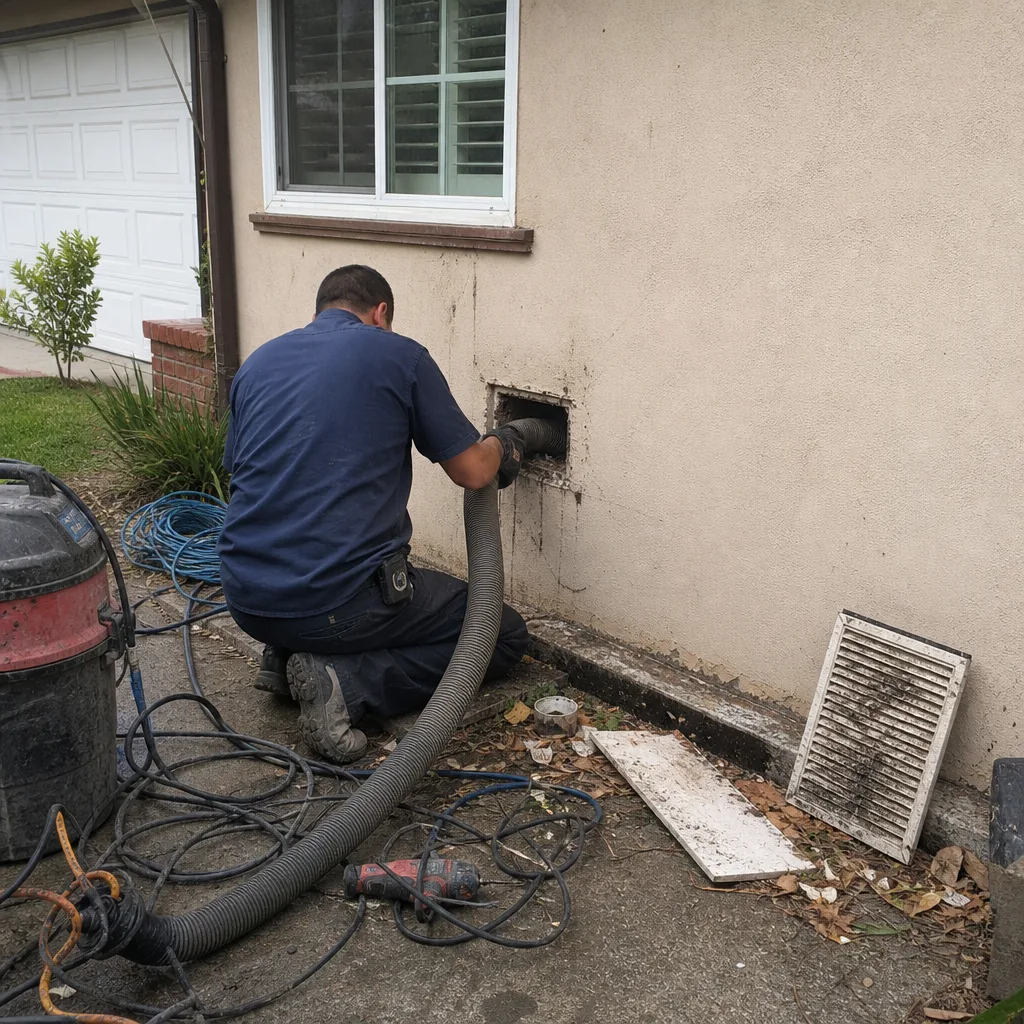 Before
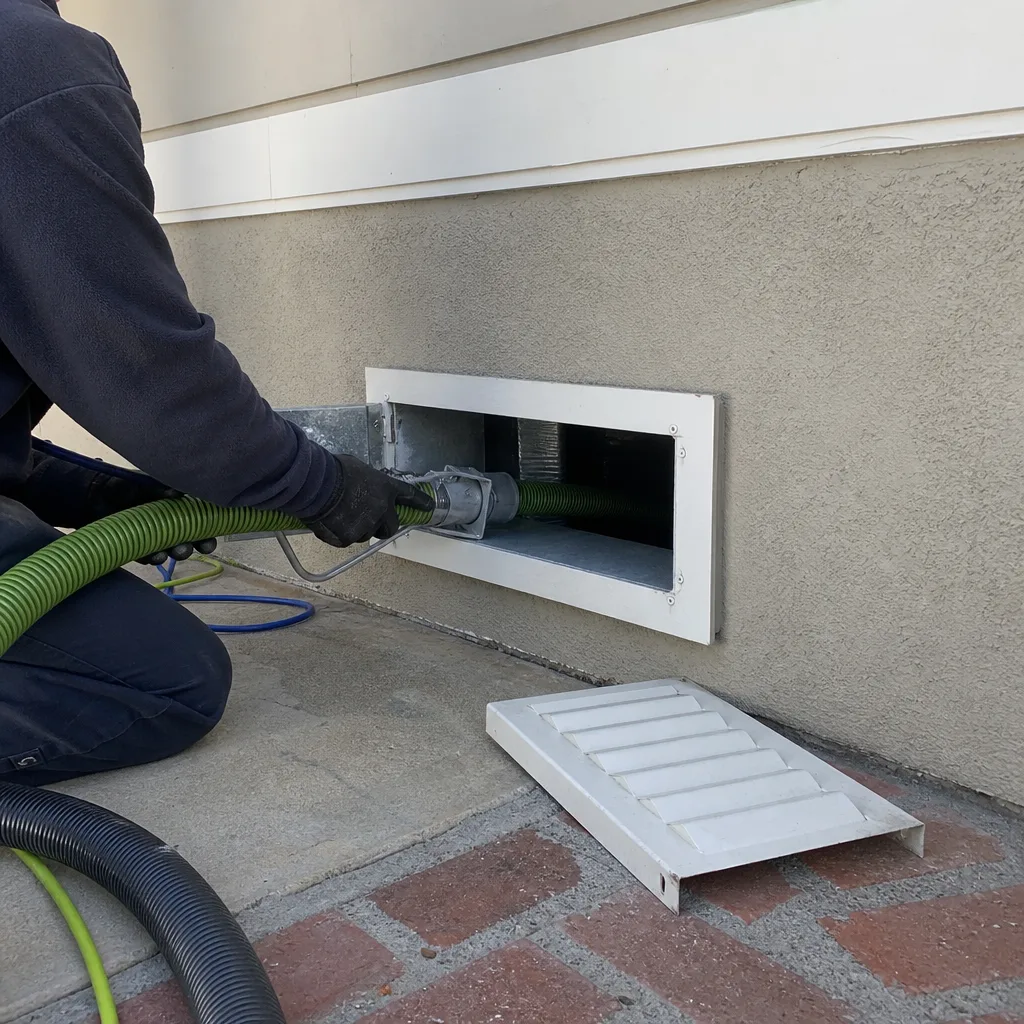 After
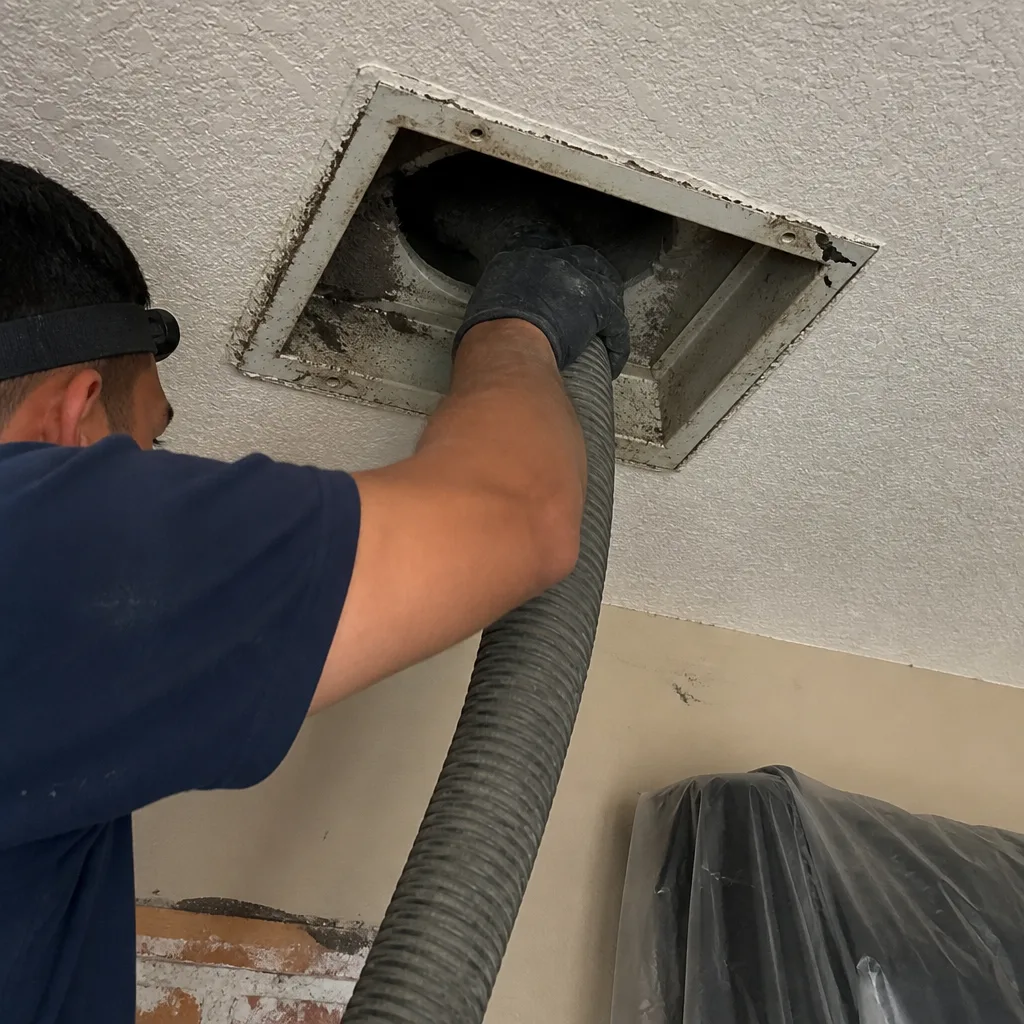 Before
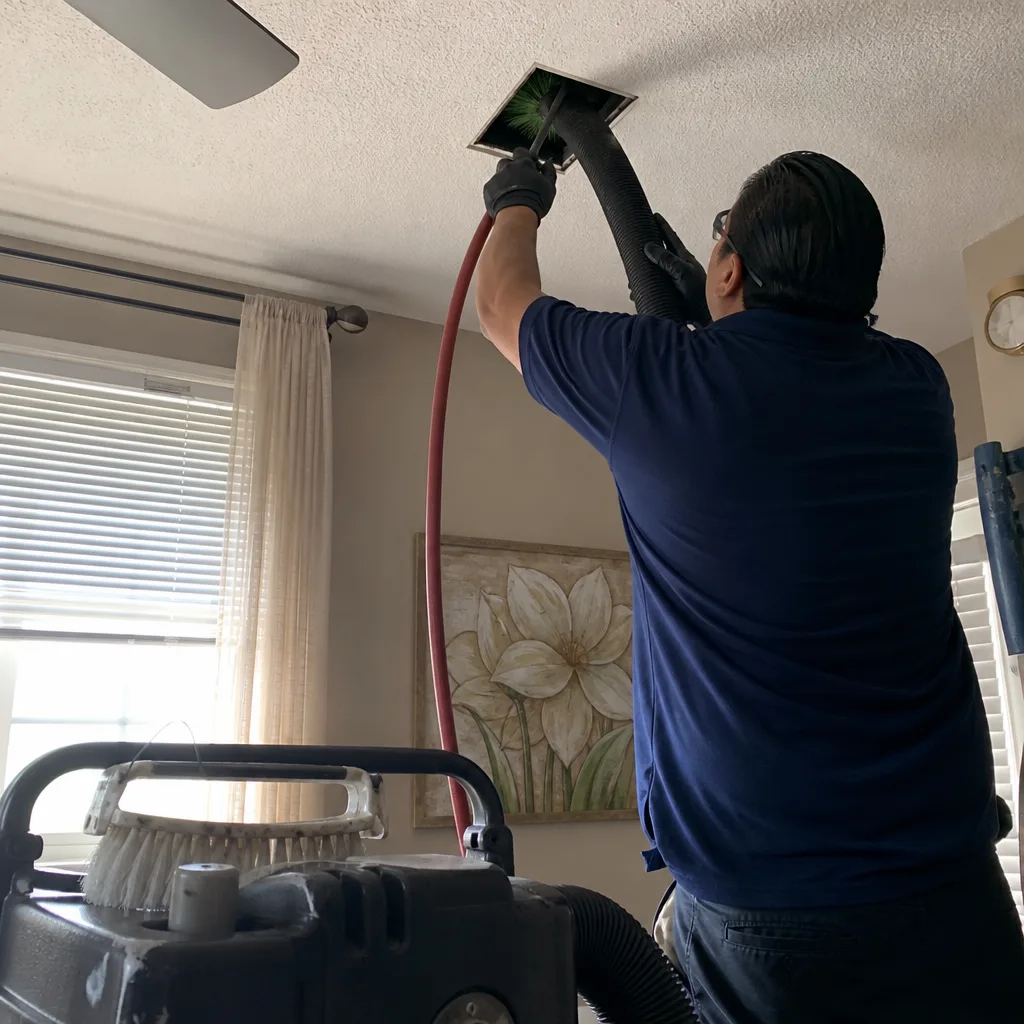 After
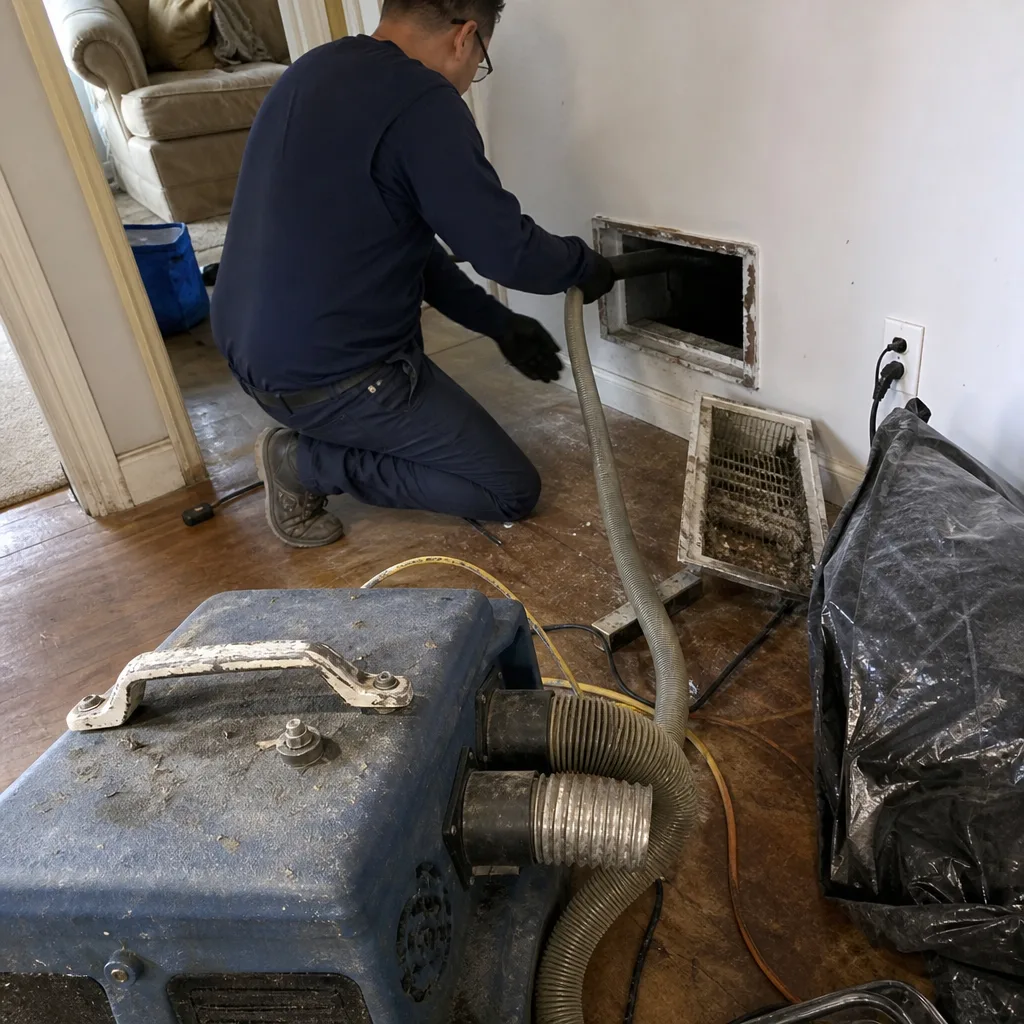 Before
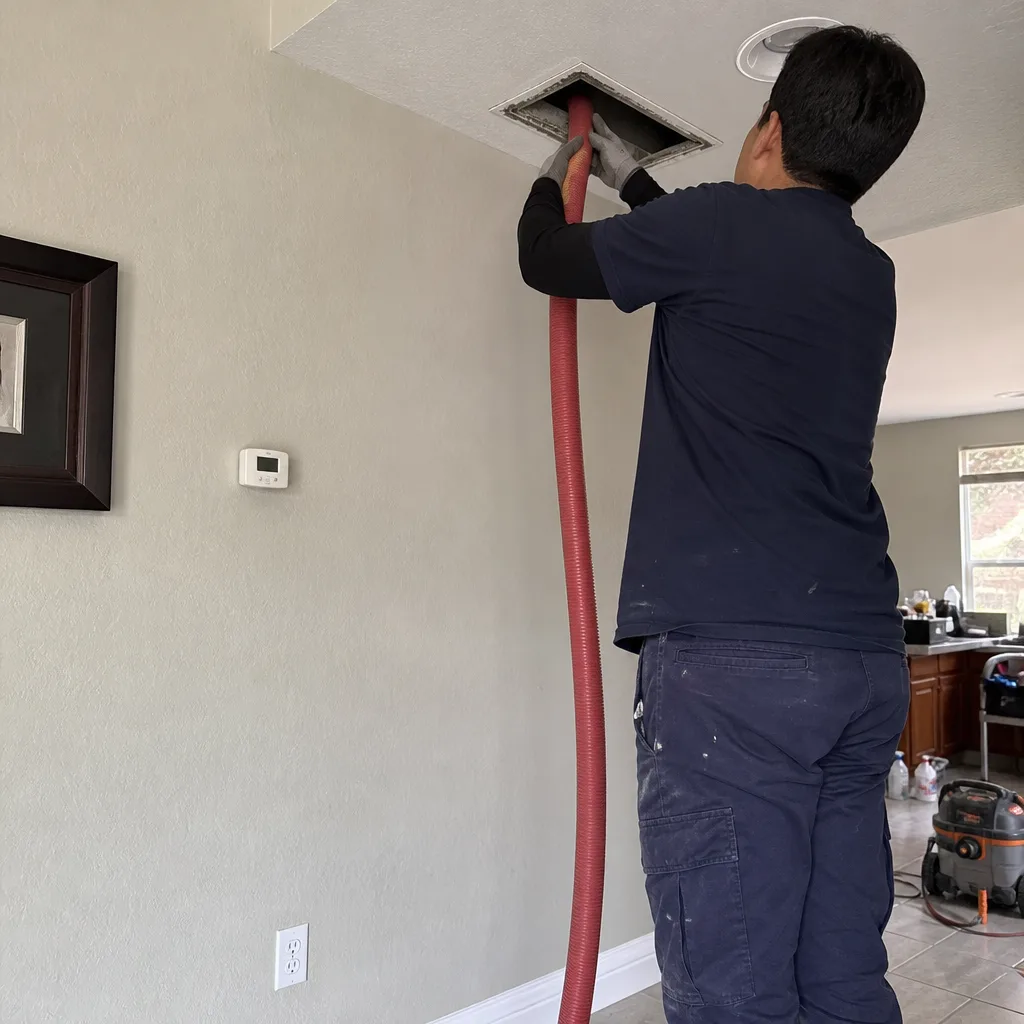 After
When to Call a Professional
Call a professional when the symptoms point to a source you can’t see or a process you can’t verify. Our Air Duct Cleaning service includes full diagnostics to locate what others miss. That means persistent odor after cleaning, dust that keeps settling past 48 hours, visible flex duct damage, or any sign that the first cleaning skipped sections of the system. It also means calling someone with the equipment to do the diagnosis correctly. A camera inspection of the duct interior, a coil and drain pan check at the air handler, a static pressure reading if airflow is suddenly worse, these are diagnostic steps, not sales tactics. In La Habra, where homes run central air for the better part of eight months a year, a duct system that isn’t functioning correctly is a year-round cost, not a seasonal annoyance. If you’re dealing with a failed cleaning or a symptom that didn’t resolve, Cobalt Air Duct Cleaning offers free estimates. Call us at (866) 596-7835 and we’ll diagnose what’s actually happening, whether or not we did the original work.
Frequently Asked Questions
Most likely, the cleaning didn’t reach the contamination source. If the source is the evaporator coil, drain pan, or air handler cabinet, cleaning the duct walls won’t stop the dust. If the cleaning used an undersized vacuum, it may have loosened debris without extracting it, which actually makes dust worse in the days after the job. The fix is a real diagnosis, not another cleaning.
A small, short-lived dust increase in the first 24 to 48 hours is normal, because the cleaning disturbs settled material and some light particles stay airborne temporarily. If dust is still settling on day four or five, or if the dust is heavier than your normal weekly load, that signals disturbed-but-not-extracted debris and should be investigated. Call (866) 596-7835 for an evaluation if the dust persists.
Persistent musty or dirty-sock odor after cleaning almost always points to the evaporator coil, drain pan, or air handler cabinet, not the ducts. In La Habra’s hot summers, condensation on the coil feeds microbial growth, and the smell gets distributed through the clean ducts. Cleaning the ducts without cleaning the coil leaves the odor source in place. A coil and drain pan treatment is the fix.
Ask for the vacuum CFM rating. A proper residential cleaning uses 2,000 CFM or higher, connected at the trunk line with registers sealed. Portable vacuums produce a fraction of that and can only clean the last few feet of each run. Companies running Rotobrush, Nikro, or similar commercial-grade systems should be able to answer this question immediately.
Yes. Aggressive brush work can tear the inner plastic liner, collapse the duct, or pull connections loose. Signs include new whistling sounds, reduced airflow to one room, or pink or yellow insulation fibers coming from a register. Flex duct repair is a specific skill, and in La Habra, where many homes run flex duct through hot attics, liner integrity is critical to both air quality and system efficiency.
Expect a proper full-system cleaning in La Habra to range from $400 to $800 for a standard single-family home, depending on system size, accessibility, and condition. Prices below $200 should raise serious questions about what equipment and process are actually being used, because the labor and tooling for a real cleaning don’t fit in that number. For an exact quote on your system, call (866) 596-7835 for a free estimate.
For most homes, every 3 to 5 years is a reasonable interval. Homes with pets, smokers, recent renovation, or residents with allergy or respiratory conditions may benefit from more frequent cleaning. If you’re being told to clean every year as a blanket recommendation, that’s a sales tactic more than a maintenance need. Have someone look at the duct interior and show you why it’s dirty before scheduling.
The Bottom Line
Air duct cleaning fails when the process skips the source, the equipment can’t keep up with the job, or the diagnosis was wrong from the start. In most cases, the fix is not another cleaning but a correct identification of what’s actually happening: a contaminated coil, a failed flex duct, an unsealed return, or a source of moisture. The companies that get this right are the ones with professional-grade equipment, whole-system knowledge, and the willingness to say “your ducts aren’t the problem.” In La Habra, that standard is what separates a specialist from a generalist. Clean air starts with a clean system, and a clean system starts with an honest diagnosis. See what’s actually inside your ducts before you pay to clean them again. Call Cobalt Air Duct Cleaning at (866) 596-7835.
Written by the team at Cobalt Air Duct Cleaning, serving La Habra since 2016. Explore more guides & resources on keeping your home’s air clean.