
Last updated November 3, 2026
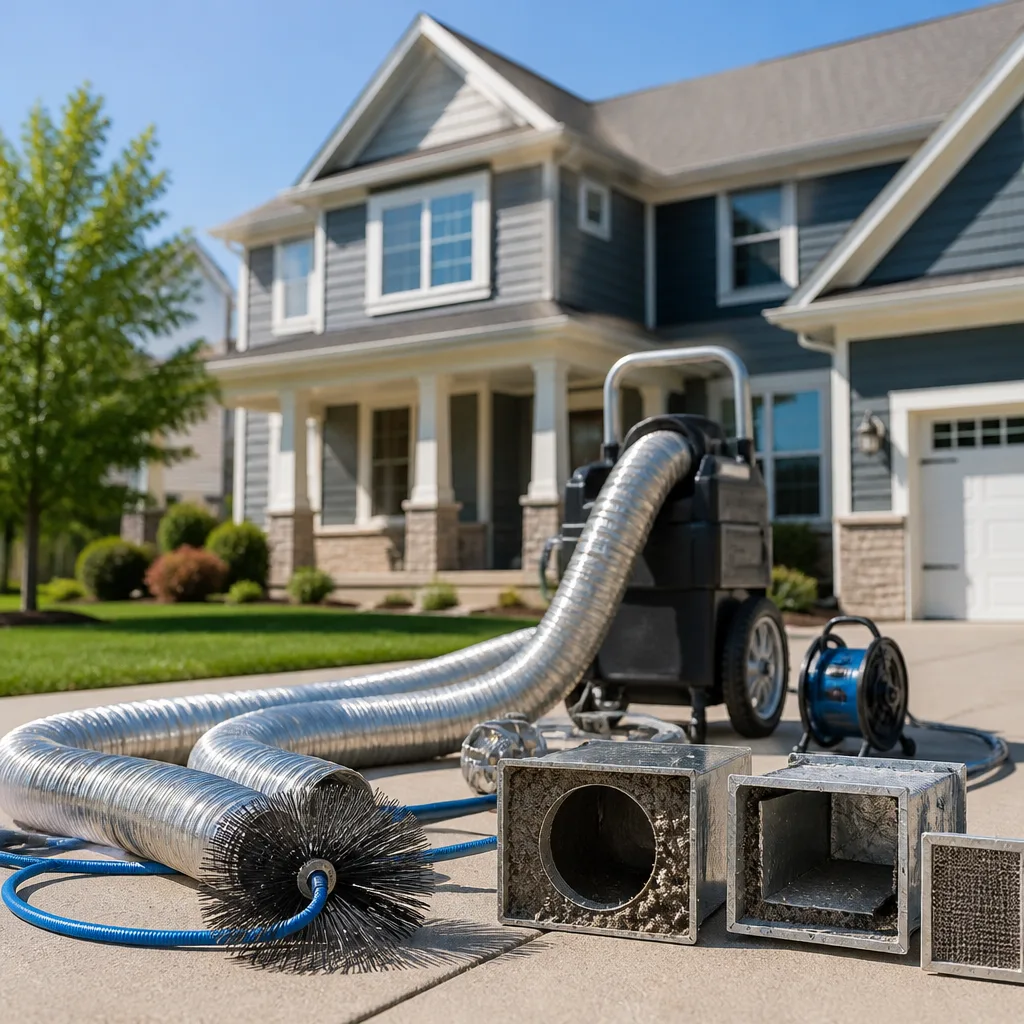 Whole-home duct cleaning
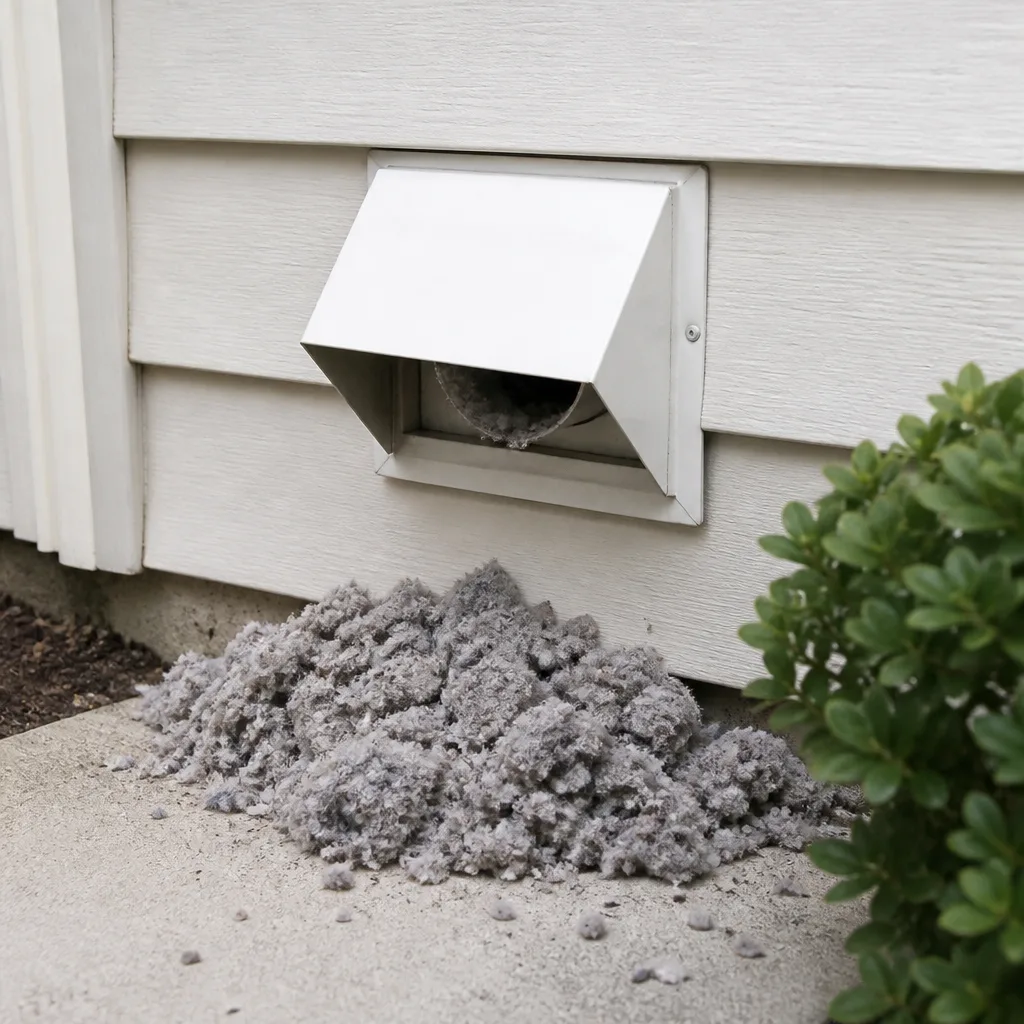 Dryer vent cleaning
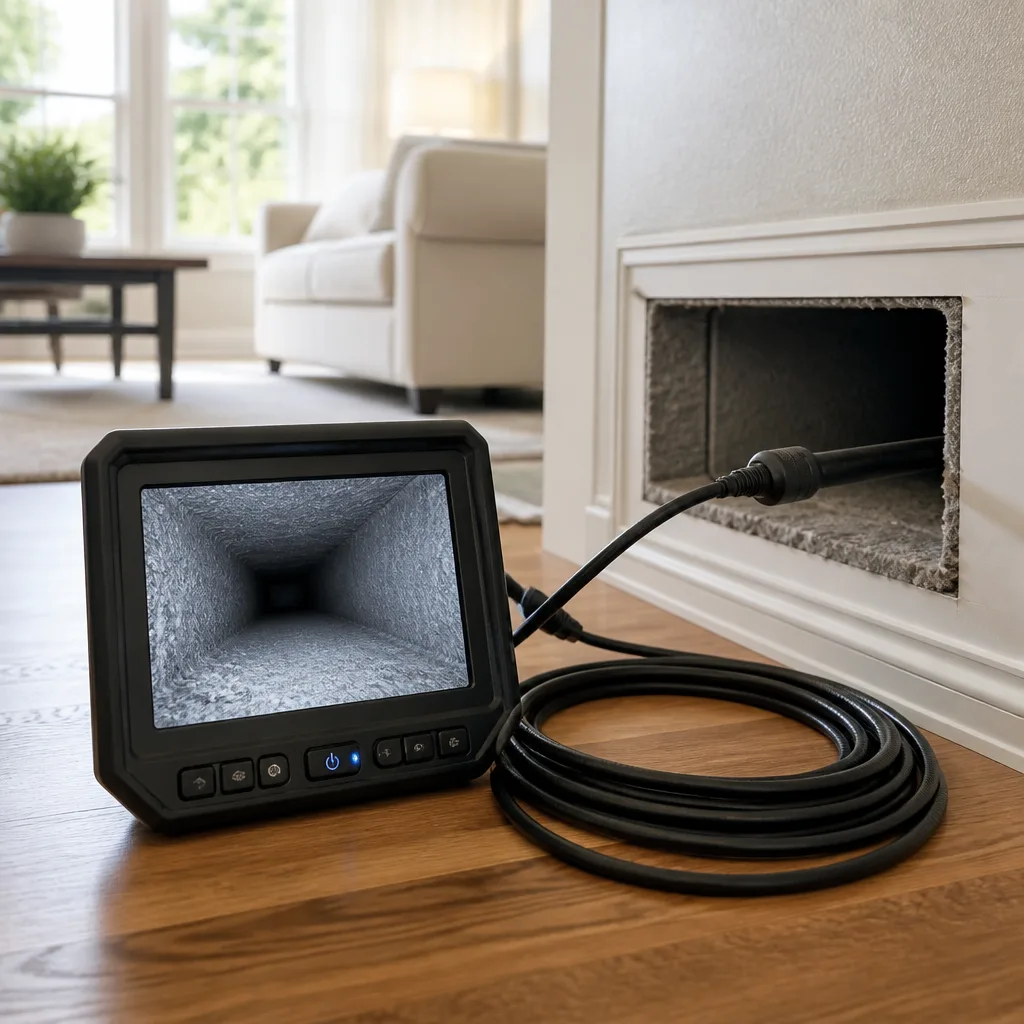 Camera inspection
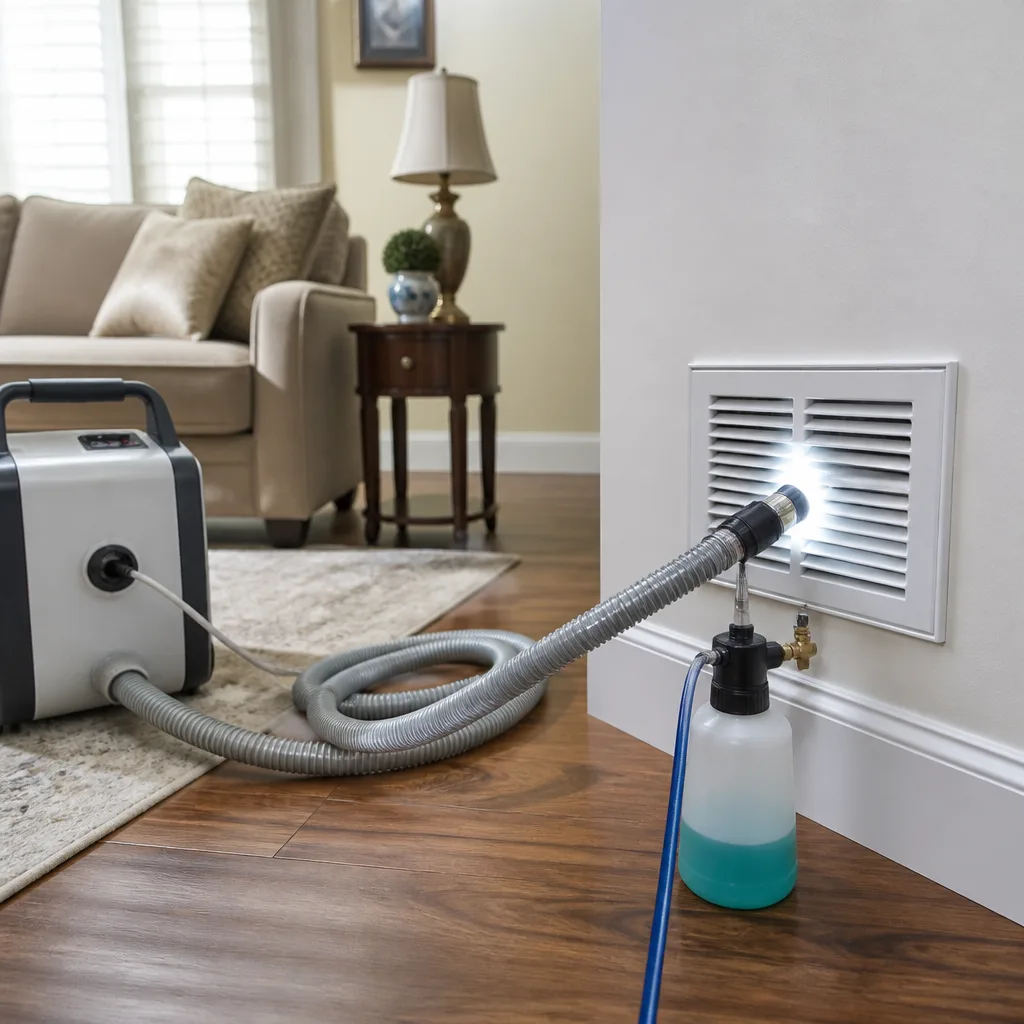 Sanitizing & deodorizing
Whole-system duct and dryer vent check with before-and-after photos - you see exactly what came out of your vents
That "$99 whole-house special" is a bait ad - the real number appears once they are in your hallway, or the "clean" is a shop-vac at the register. We photograph the inside of your ducts before and after instead.
The Complete Air Duct Cleaning Guide for La Habra Homeowners
La Habra sits in a geographic bowl where the 57 and 60 freeways wrap the city’s western edge, and when Santa Ana winds push through the canyons in October and November, they carry fine particulate matter that settles directly into home intake systems. Here’s the counterintuitive part: most La Habra duct cleaning calls we receive are triggered by symptoms that appear months after the actual contamination event. The homeowner notices a musty smell in August. They call us. The camera scope reveals particulate accumulation from a November wind event and a spring pollen surge. This guide – along with our Complete Guide to Air Duct Cleaning in La Habra – explains how to know when your ducts actually need cleaning, what a legitimate process looks like, and how to avoid paying for work that wasn’t performed. You’ll learn how La Habra’s specific geography affects your system differently than coastal cities, what equipment actually matters, and how to read documentation like a specialist.
Quick Answer
Air duct cleaning in La Habra typically costs $450 to $900 for a whole-home system, depending on square footage, number of returns, and accessibility. Most La Habra homeowners don’t need duct cleaning on a fixed schedule – they need it when specific conditions are met: visible mold at registers, rodent or insect evidence in the ductwork, post-renovation dust saturation, or a diagnosed respiratory issue tied to indoor air quality. A legitimate Air Duct Cleaning service uses mechanical agitation (rotating brushes) paired with negative-pressure vacuum collection, and should include before-and-after photo documentation.
Styles & brands we work with
- Whole-home duct cleaning
- Dryer vent cleaning
- Camera inspection
- Sanitizing & deodorizing
Table of Contents
- Why La Habra Geography Changes Duct Contamination Patterns
- Condition-Based Triggers vs. Time-Based Myths
- Why Equipment Quality Determines Cleaning Quality
- What a Legitimate Pre-Cleaning Inspection Looks Like
- The Cleaning Process, Step by Step
- How to Read a Post-Cleaning Report
- What Duct Cleaning Actually Costs in La Habra
- Common Mistakes to Avoid
Why La Habra Geography Changes Duct Contamination Patterns
La Habra’s position matters more than most residents realize. The city sits at approximately 300 feet elevation in a transitional zone between the Los Angeles basin and the Puente Hills to the north. This creates a specific set of conditions that affect what accumulates in residential ductwork.
Santa Ana wind events push fine particulate matter from the inland valleys through the Whittier Narrows and directly into La Habra’s residential zones. During these events, outdoor particle counts spike dramatically, and homes with older window seals or negative pressure issues pull that air into the return side of HVAC systems. The dust that settles in your ducts during a Santa Ana event isn’t just dirt – it’s a mixture of decomposed granite dust, vehicle brake particulates from the 57 freeway corridor, and sometimes wildfire smoke residue from Angeles National Forest fires. This particulate is finer and more abrasive than typical household dust, which means it bonds more readily to duct surfaces and requires mechanical agitation to remove.
Basin inversion layers during summer months trap pollutants at ground level. La Habra experiences more inversion-layer days than coastal cities like Seal Beach or Huntington Beach, where marine breezes flush the air column daily. When your HVAC system cycles during an inversion day, it draws in particulate that would dissipate in a coastal climate but lingers in La Habra’s air column for days at a time.
Dry-season dust loading is another local factor. La Habra receives roughly 14 inches of annual rainfall, which means the soil stays dry and friable for most of the year. Landscaping operations, construction projects, and even routine yard work generate dust that coasts four or five miles inland and settles in home intakes. Homes in the Hillsborough and Westridge neighborhoods, which sit closer to the Puente Hills open space, tend to accumulate more organic particulate from wild grasses and chaparral pollen than homes in the flatlands near Imperial Highway.
What this means practically: if you live in La Habra, your ducts are exposed to higher particulate loading than a comparable home in Torrance or Huntington Beach. That doesn’t mean you need more frequent cleaning. It means the trigger conditions appear sooner and more distinctly when contamination occurs.
Condition-Based Triggers vs. Time-Based Myths
The air duct cleaning industry – something we explore in our DIY vs Professional Air Duct Cleaning guide – has a long history of selling maintenance calendars. “Clean every three to five years” is the conventional line. We think that’s backwards. Ducts don’t accumulate contamination on a schedule – they accumulate it based on events. A home with sealed windows, a quality filtration system, and no renovation activity might go a decade without needing meaningful cleaning. A home that just survived a kitchen remodel might need it within weeks.
Here are the condition-based triggers that actually warrant duct cleaning in La Habra:
- Post-renovation dust loading: Drywall sanding, floor refinishing, and demolition generate ultra-fine dust that settles throughout the duct system. This dust is alkaline and abrasive, and it recirculates through the home every time the blower runs. If you’ve completed a remodel in the last 90 days and you’re seeing white dust on surfaces within 24 hours of cleaning them, the ducts are the reservoir.
- Visible mold at register faces: Mold doesn’t just appear at the register – if you see it there, it’s growing on interior surfaces of the ductwork. La Habra’s summer humidity spikes, particularly during monsoon flow from the Gulf of California, create condensation conditions inside uninsulated duct runs. This is a health concern and a cleaning trigger, but it’s also a repair trigger – cleaning alone won’t fix a condensation problem.
- Rodent or insect evidence: Droppings, nesting material, or dead insects in the duct system are definitive triggers. Roof rats are common in La Habra’s mature tree canopy neighborhoods, and they access ducting through roof penetrations or crawl space gaps. This requires cleaning plus physical repairs to entry points.
- HVAC replacement or major component work: When you replace a furnace or air handler, the existing ductwork is the oldest part of the system. Cleaning before connection prevents legacy contamination from entering new equipment.
- Diagnosed respiratory issues with indoor correlation: If a physician has identified an indoor air quality trigger and symptoms improve when away from home, duct contamination is a plausible contributor. Note that cleaning is one part of the response – filtration, humidity control, and source removal all matter.
What does NOT trigger cleaning: time alone. A system that has operated with quality filtration, no renovation activity, no moisture events, and no pest intrusion can remain functionally clean for many years. The calendar is not a diagnostic tool.
Why Equipment Quality Determines Cleaning Quality
Most homeowners evaluating air duct cleaning quotes focus on price and never ask about equipment. That’s a mistake. The equipment determines whether the cleaning is cosmetic or actual.
Portable vacuums versus truck-mounted negative-pressure systems: This is the single biggest variable in the industry. A portable vacuum operates at roughly 1,000 to 2,000 cubic feet per minute (CFM) of airflow. A truck-mounted system like the ones we operate pulls 8,000 to 12,000 CFM. The difference matters because negative pressure is what keeps dislodged particulate from escaping back into the home during cleaning. In a two-story La Habra tract home with longer duct runs – common in the Whittier Boulevard corridor and the western sections of the city – the vacuum needs to maintain pressure across fifty to eighty feet of ducting. Portable units lose effective suction over distance. Truck-mounted units don’t.
Mechanical agitation separates cleaning from blowing air: Compressed air alone cannot remove particulate that has bonded to duct surfaces. The bond forms through static adhesion and, in La Habra’s climate, through moisture cycling that compacts dust into a film. Rotating brush systems – we use Rotobrush and Nikro equipment – physically scour the duct walls while the negative pressure captures the dislodged material. Without agitation, you’re just moving air through a dirty pipe.
Single-story versus two-story considerations: Single-story homes in La Habra’s older neighborhoods, particularly the Ranch-style inventory south of La Habra Boulevard, often have shorter duct runs but wider trunk lines. Two-story homes in the newer subdivisions near Beach Boulevard have longer runs with more elbows and transitions. The equipment needs to handle both configurations. This is why we run professional-grade systems designed for commercial and industrial remediation – the same tooling applies cleanly to residential runs of any length.
Equipment specificity isn’t a marketing point. It’s the difference between leaving a boundary layer of filth on the duct walls and actually removing it. For an Air Duct Cleaning in La Habra job to be legitimate, the tools have to match the task.
What a Legitimate Pre-Cleaning Inspection Looks Like
Any company that quotes a price before looking at your system is guessing. A legitimate pre-cleaning inspection in La Habra takes 30 to 60 minutes and includes specific diagnostic steps. Here’s what to expect:
- Camera scope of return and supply plenums: A small, flexible camera should be inserted through the return boot and run along the main trunk line. You should be able to see the images yourself. The scope reveals dust loading, debris accumulation, moisture staining, or pest evidence that the naked eye can’t detect through a register face.
- Static pressure reading: The technician should take a static pressure measurement across the blower. High static pressure indicates airflow restriction – often from a loaded filter, closed dampers, or accumulated debris. This reading establishes a baseline and tells you whether the system has an efficiency problem beyond just cleanliness.
- Filter condition assessment: The filter tells you a lot about what’s been moving through the system. A filter that’s heavily loaded on the return side suggests the ducts upstream are also loaded. A filter that’s oddly clean after months of use suggests air is bypassing the filter entirely – a sign of poor sealing or incorrect filter sizing.
- Register and grille inspection: Every register face should be removed and inspected. The technician should look for visible mold, rust staining, dust accumulation patterns, and signs of improper sealing where the boot meets the drywall.
- Access point identification: Most La Habra homes lack dedicated duct access points. The technician should identify where access holes will be cut, how they’ll be sealed afterward, and what that sealing looks like. On a finished home, access is typically cut at the plenum and at key branch points, then capped and sealed with aluminum-faced tape or dedicated access caps.
If a company skips the camera scope or doesn’t show you the images, you’re not dealing with a process-serious operation. If they don’t take a static pressure reading, they don’t understand airflow. If they quote over the phone without seeing the system, walk away.
The Cleaning Process, Step by Step
Here’s what a legitimate whole-home duct cleaning looks like when performed properly in a La Habra residence. This is the process we follow, and it’s what you should require from any contractor:
- System shutdown and isolation: The HVAC system is powered off at the breaker. Registers in rooms not being actively worked are sealed to maintain negative pressure in the section under cleaning.
- Access hole creation: Access points are cut at the supply plenum, return plenum, and key branch locations as needed. Each hole is sized to accommodate the vacuum hose and agitation tooling.
- Negative pressure connection: The vacuum hose is connected to the main trunk line and sealed. The system is brought to full negative pressure before any agitation begins. This is critical – agitation without negative pressure just disperses dust into living spaces.
- Mechanical agitation: Rotating brush heads are run through each branch line, starting from the register end and working toward the trunk. The brushes scour the duct walls while the vacuum captures dislodged material at the source.
- Blower and coil cleaning: The furnace blower assembly, evaporator coil, and drain pan are cleaned. This is a frequently skipped step that matters – a clean duct system feeding air across a dirty coil reintroduces contamination immediately.
- Return side cleaning: The return ducts are cleaned with the same process. Return lines often carry more debris than supply lines because they’re upstream of the filter.
- Access sealing and verification: Each access point is sealed with a permanent cap or aluminum-faced tape. The technician should photograph every seal for the report.
- System reactivation and airflow check: The system is powered back on and a final static pressure reading is taken to confirm airflow improved or remained stable.
This process typically takes four to six hours for a 2,000 to 2,500 square foot La Habra home. If a company quotes you a two-hour job for that square footage, they’re either skipping steps or running underpowered equipment. Ask which one.
How to Read a Post-Cleaning Report
Documentation is where legitimate companies separate themselves. A process-serious operation should hand you a report after the job that includes:
- Before-and-after photos of the main trunk and representative branch lines: Not stock photos. Your ducts. You should be able to verify the before photos match what you saw during the pre-cleaning scope. This is the single most important verification document you’ll receive.
- Pre- and post-cleaning static pressure readings: The numbers should show improvement or stability. A decline suggests something went wrong during the job and needs follow-up.
- Access point documentation: Every cut made, every seal applied, photographed and dated. If you ever need to access the ducts again, you’ll know exactly where the ports are.
- Observations and recommendations: The technician should note any damage found during cleaning – separated joints, corrosion, moisture staining, pest entry points. These are repair items, not cleaning items, and they should be documented separately without pressure to buy additional services.
If a company hands you an invoice with no photos and no readings, you have no proof the work was performed. This industry has a documented problem with “blow-and-go” operations that never actually clean anything. Documentation is your protection. We use Guardsman-grade protection standards in our documentation process precisely because we want homeowners to see what was actually done. If a company won’t show you the inside of your own ducts before and after, that’s an answer in itself.
What Duct Cleaning Actually Costs in La Habra
Air duct cleaning in La Habra typically ranges from $450 to $900 for a whole-home system, depending on the following factors:
- Square footage and system size: A 1,200 square foot single-story home with eight registers is at the low end. A 2,800 square foot two-story with fourteen registers and two return drops is at the high end.
- Number of systems: Some larger La Habra homes have zoned systems or separate upstairs and downstairs units. Each system is priced individually.
- Accessibility: Crawl space versus attic access changes labor time. Attic runs in track homes north of La Habra Boulevard are often tighter and require more careful tooling.
- Condition severity: Post-renovation dust loading or pet hair saturation requires additional agitation passes, which adds time and cost.
- Scope additions: Dryer vent cleaning, blower assembly deep cleaning, or coil cleaning may be quoted as line items or included depending on the company’s process. We include blower and coil cleaning in every duct cleaning job because a half-cleaned system isn’t cleaned.
Be skeptical of any quote under $300 for a whole-home job in La Habra. That price point typically means a portable vacuum with minimal agitation, a single technician, and skipped steps. The work won’t hold up. Conversely, quotes above $1,200 for a standard single-system home should come with specific justification – unusually long duct runs, extreme contamination, or additional scope like duct repair. For our Cobalt Air Duct Cleaning home service area, we quote one flat price per system before work begins. No per-vent pricing. No add-ons discovered halfway through the job.
See the difference
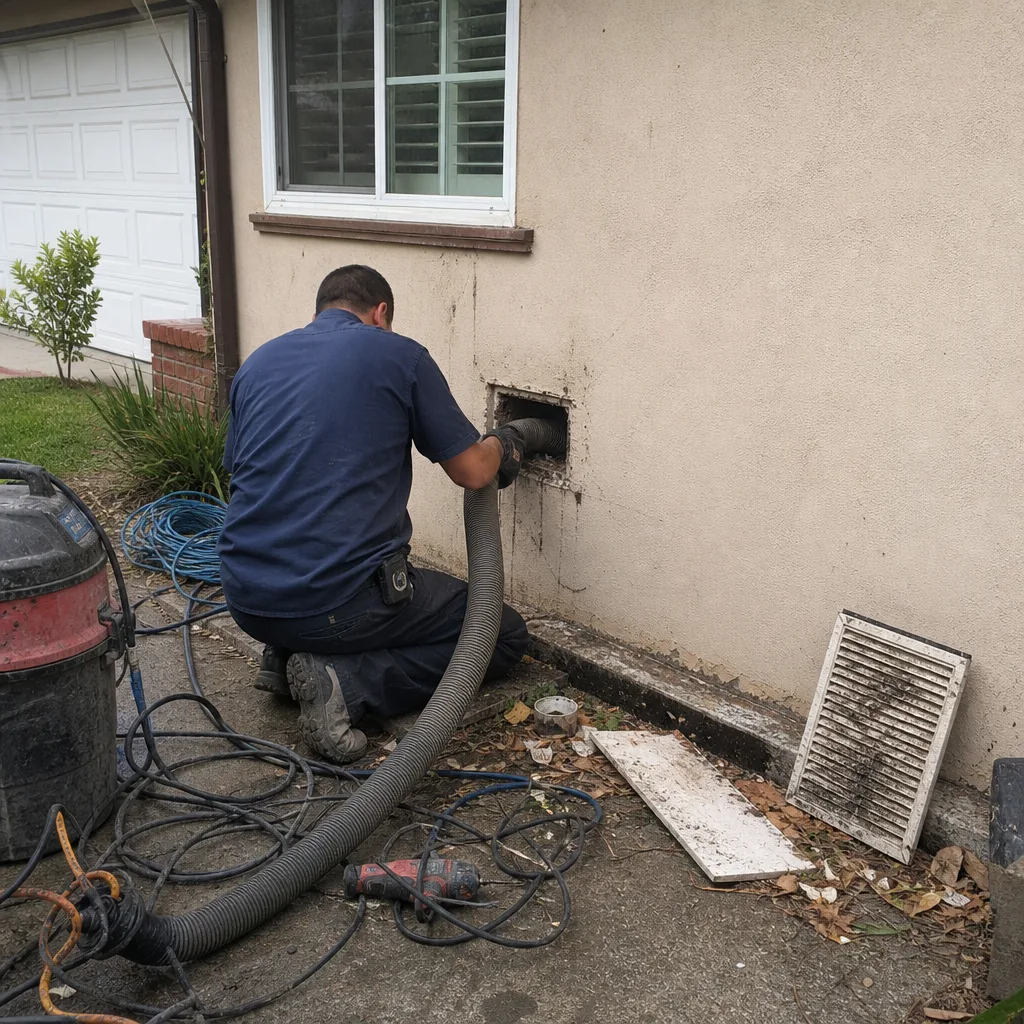 Before
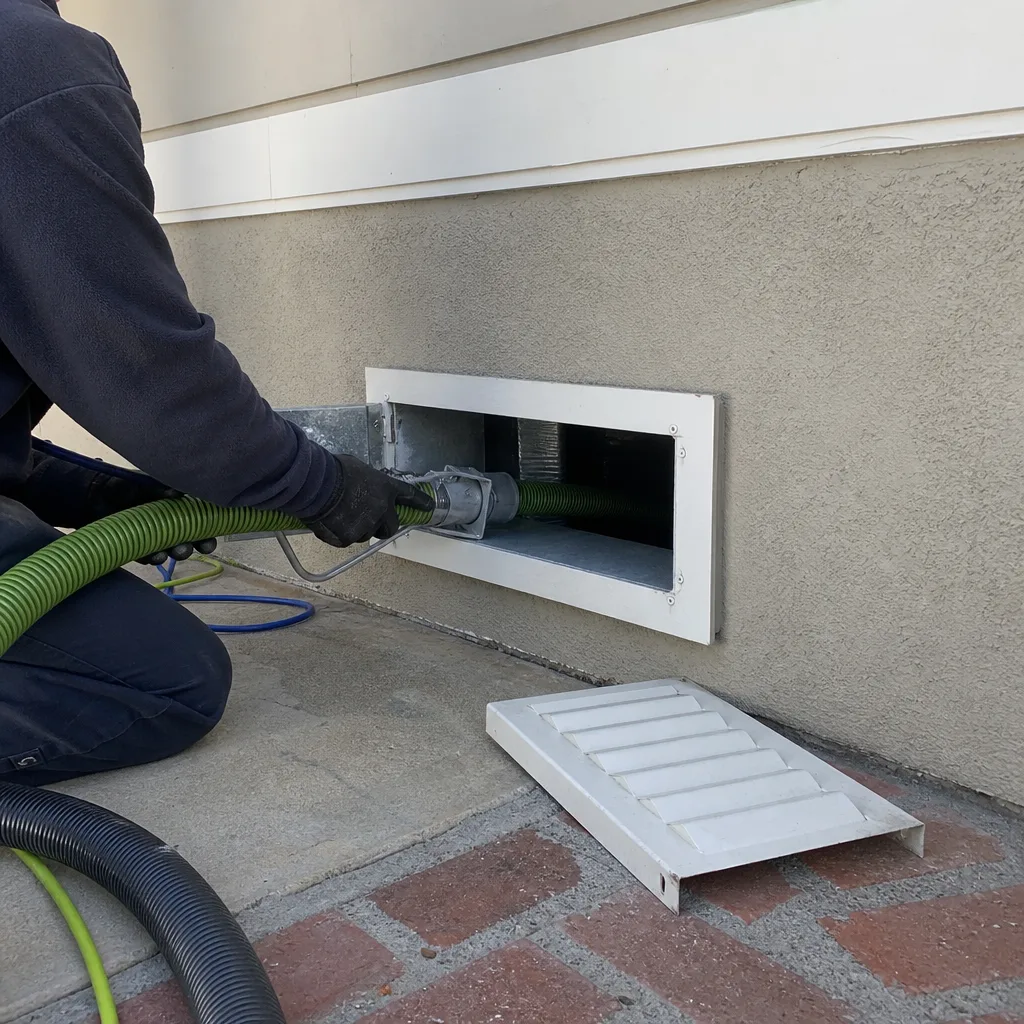 After
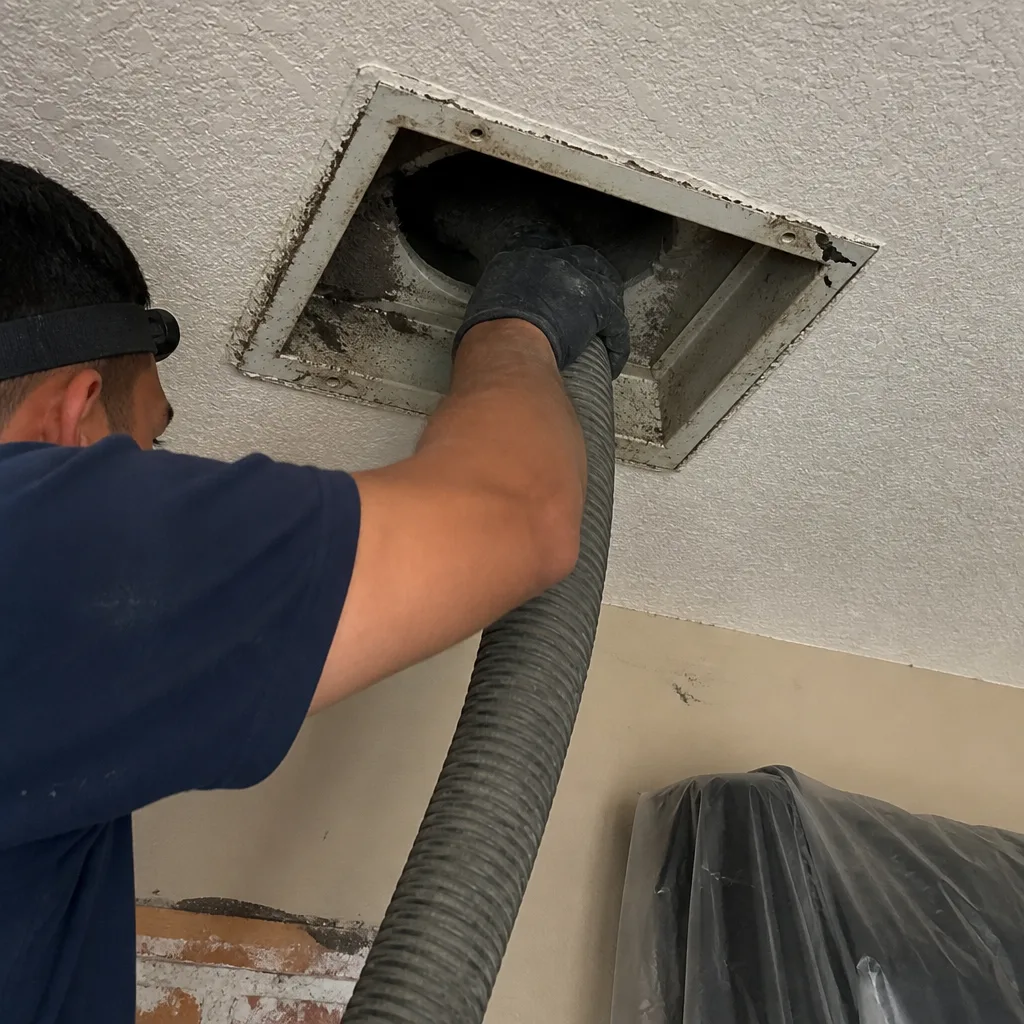 Before
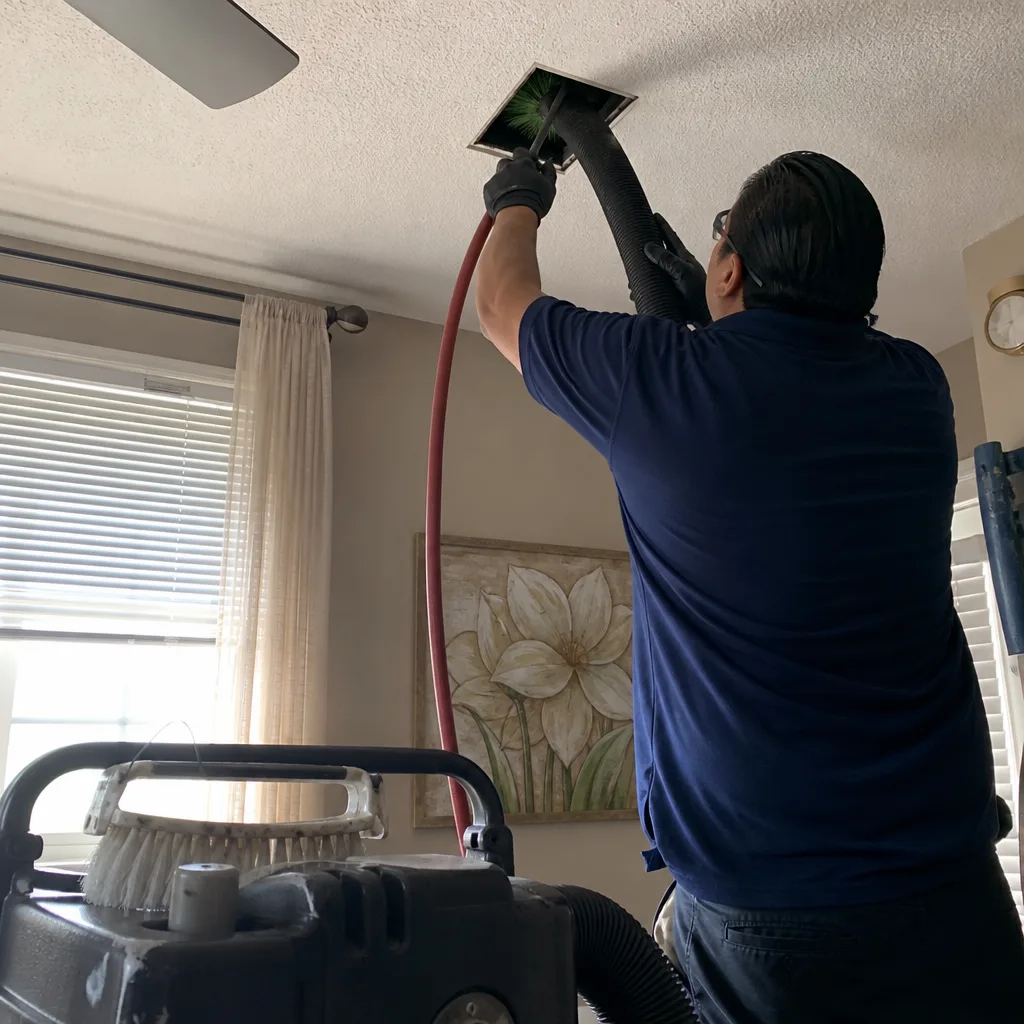 After
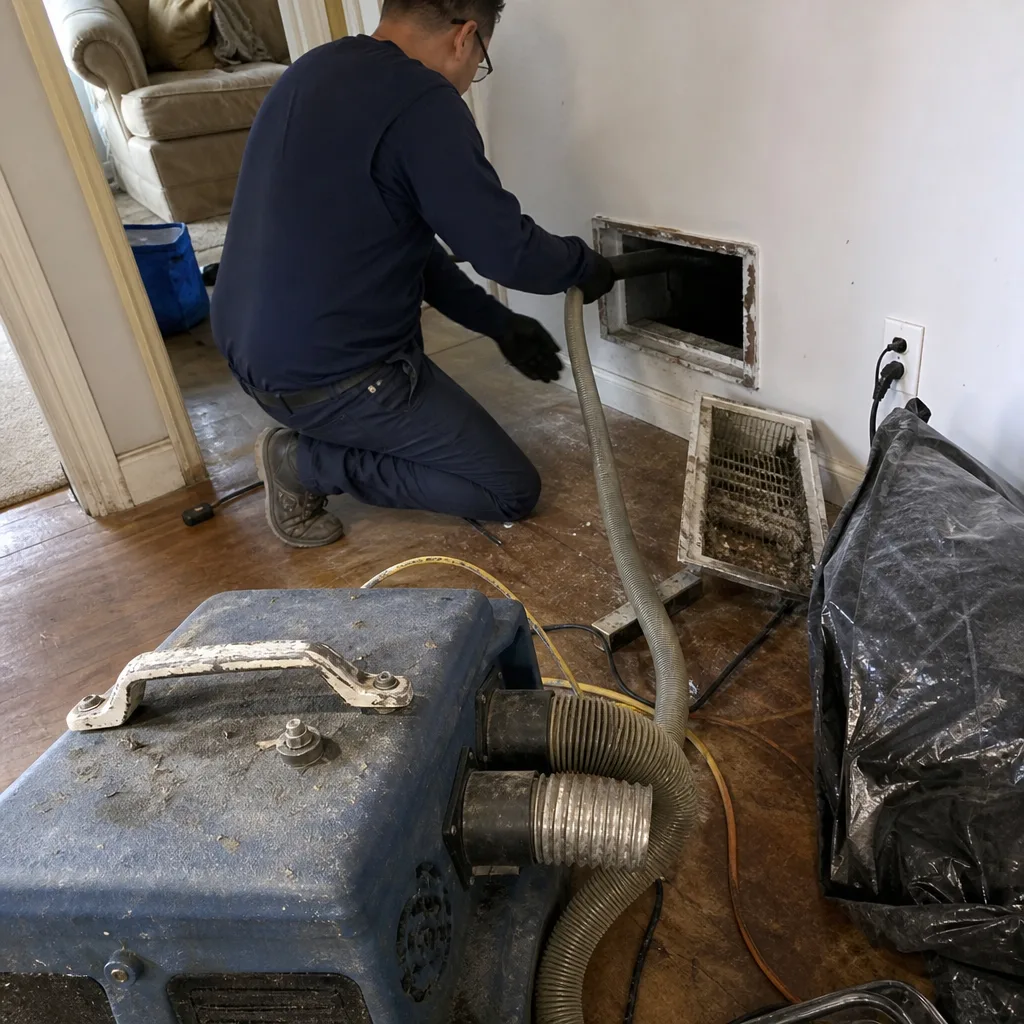 Before
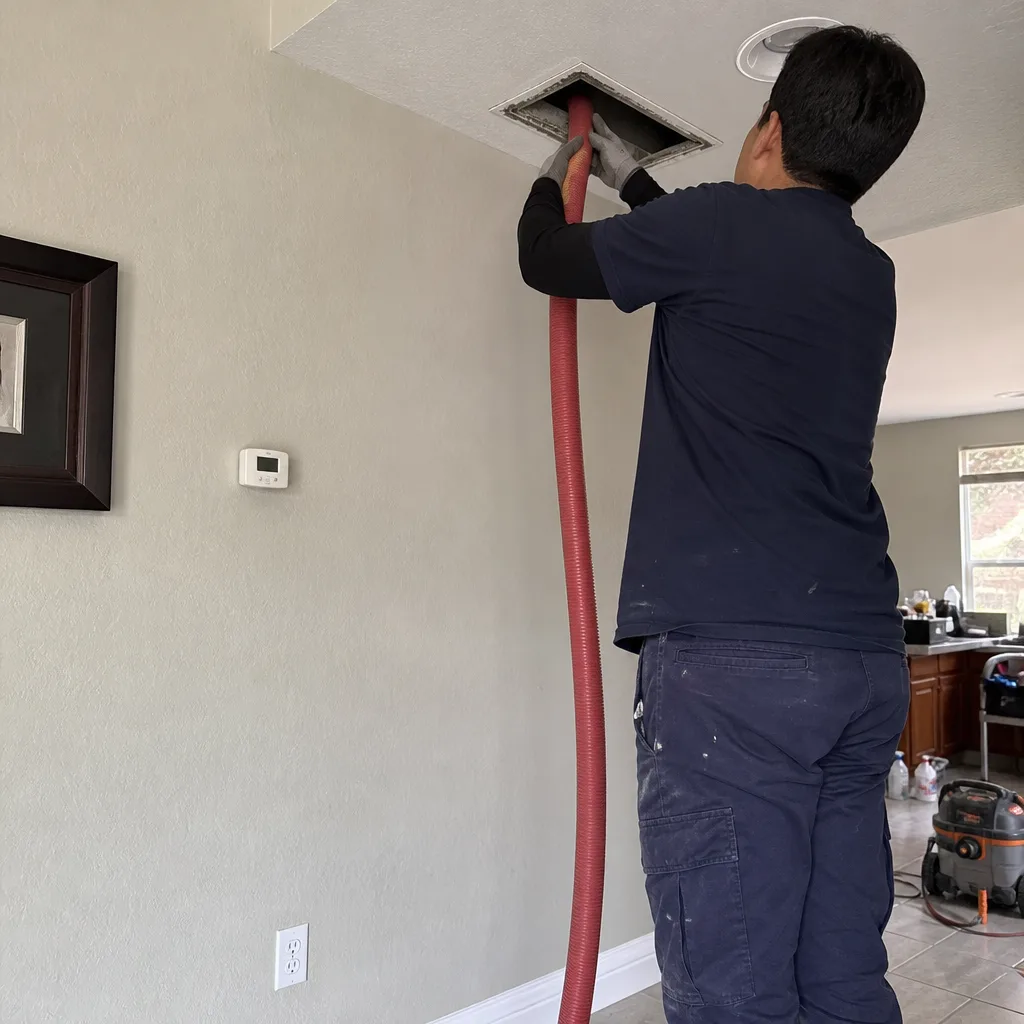 After
What About Dryer Vents and Duct Repair?
This guide focuses on air duct cleaning, but two related conditions affect many La Habra homes and are worth understanding because they frequently appear during a cleaning inspection.
Dryer vent cleaning is a separate service with different tooling and different stakes. Lint accumulation in dryer vent lines is a measurable fire risk – the U.S. Fire Administration identifies dryer vent fires as a leading cause of residential structure fires. In La Habra’s older housing stock, particularly the ranch homes built in the 1950s and 1960s, dryer vents often run long horizontal distances with multiple elbows. Every elbow is a lint trap. If your dryer takes longer than one cycle to dry a standard load, or if the exterior vent flap doesn’t open fully during operation, the line is restricted. Dryer Vent Cleaning in La Habra should be treated as a safety service, not a convenience. We run dedicated dryer vent tooling – rotary brushes and high-CFM vacuums sized for four-inch lines – and we document the before and after with photos just like a duct job.
Air duct repair addresses the structural failures that cause contamination in the first place. A separated return duct in a crawl space pulls unconditioned air, fiberglass insulation particles, and rodent debris directly into the system. A crushed supply branch reduces airflow to one room and creates pressure imbalances throughout the home. Cleaning can’t fix these conditions – the contamination will return within months. During a cleaning inspection, we specifically look for separated joints, crushed sections, unsealed boots, and condensation damage. When we find them, we document them and recommend Air Duct Repair in La Habra as a targeted fix, not a bundled upsell. The three services – cleaning, vent cleaning, and repair – are related but distinct, and treating them that way serves the homeowner better than pretending one truck can do everything.
Common Mistakes to Avoid
- Hiring on price alone: The $199 whole-home special is the most common entry point for disappointed homeowners in La Habra. The economics don’t work – proper equipment, two technicians, and four to six hours of labor cannot happen at that price. What happens instead is a portable vacuum, a skipped coil cleaning, and a homeowner who pays twice.
- Skipping the camera scope: If you don’t see the inside of your ducts before cleaning, you have no baseline to judge the after photos against. Demand to see the live scope feed.
- Accepting compressed air as a cleaning method: Blowing high-pressure air through ducts without mechanical agitation and proper negative pressure disperses dust into your home and doesn’t remove bonded particulate. This is a cosmetic procedure sold as cleaning.
- Ignoring the coil and blower: Cleaning ducts while leaving a dirty evaporator coil means the system re-contaminates within weeks. Any legitimate quote includes blower and coil cleaning or clearly explains why it’s not needed.
- Treating dryer vent cleaning as a free add-on: If a company offers “free dryer vent cleaning with any duct cleaning,” that vent work is likely a five-minute visual inspection, not a proper rotary brush cleaning with photo documentation. A genuinely cleaned dryer vent takes 45 to 90 minutes.
- Not asking about access point sealing: Every access hole cut into your ductwork needs to be permanently sealed. Ask how it will be sealed, what materials will be used, and whether it will be photographed. Loose caps leak conditioned air into attics and crawl spaces.
- Assuming a clean duct system fixes all air quality issues: Duct cleaning addresses one component. Filtration, humidity control, source removal, and ventilation all matter. A company that promises duct cleaning will “solve your allergies” is overselling.
When to Call a Professional
Call an air duct specialist when you can point to a specific condition: visible mold at a register, rodent evidence in the system, a recent renovation that saturated the ducts with dust, or a physician-diagnosed indoor air quality issue. Call when the pre-inspection reveals static pressure problems or airflow imbalances that suggest restriction. Don’t call because a calendar says it’s time. Don’t call because a coupon arrived in the mail. Don’t call because a telemarketer told you your ducts are dirty – they haven’t seen them. Cobalt Air Duct Cleaning offers free estimates in La Habra. Call (866) 596-7835 if you want a camera scope and a static pressure reading before anyone touches a tool. If the scope shows clean ducts, we’ll tell you that and leave without quoting a job.
Frequently Asked Questions
Expect to pay between $450 and $900 for a whole-home system in La Habra, depending on square footage, number of systems, accessibility, and contamination severity. Single-story homes under 1,500 square feet are typically at the low end; two-story homes over 2,500 square feet are typically at the high end. Avoid any quote under $300 and ask for specific justification on any quote over $1,200. Call (866) 596-7835 for an exact quote after a visual inspection – estimates are free.
There is no fixed interval that applies to La Habra homes. The need for cleaning is condition-based, not time-based. A home with clean filters, sealed windows, no renovation activity, and no moisture or pest issues can go many years without meaningful duct contamination. A home that underwent a major remodel or experienced a rodent intrusion may need cleaning within weeks of the event. The right approach is to inspect when conditions change, not to clean when the calendar says so.
Price differences typically reflect equipment quality, process depth, and what’s included. A low quote usually means a portable vacuum instead of a truck-mounted negative-pressure system, compressed air instead of mechanical agitation, one technician instead of two, and a skipped blower or coil cleaning. The labor and equipment costs for a legitimate whole-home cleaning in La Habra cannot be delivered at the $199 to $299 price point. Ask what equipment is used, how many technicians will be on site, and whether blower and coil cleaning are included.
Demand before-and-after photos of your specific duct system, including the main trunk line and representative branch lines. The before photos should match what you saw during the pre-cleaning camera scope. You should also receive pre- and post-cleaning static pressure readings and documentation of every access point cut and sealed. If a company cannot produce this documentation, you have no evidence the work was performed. This is not a negotiable detail – it’s the difference between a cleaning and an invoice.
Duct cleaning can reduce the volume of particulate matter circulating through your home if the ducts are genuinely contaminated, but it is not a standalone allergy treatment. Allergens enter the home through windows, doors, pets, clothing, and the air exchange that occurs whenever exterior doors open. A clean duct system removes one reservoir, but filtration quality, humidity control, and source reduction all contribute to symptom improvement. If your ducts are clean and your symptoms persist, the issue is elsewhere in the system or the home envelope.
They are entirely separate services with different tooling, different purposes, and different risks. Air duct cleaning addresses the HVAC distribution system – the trunk lines, branch lines, plenums, coil, and blower. Dryer vent cleaning addresses the exhaust line from your clothes dryer to the exterior of the home. Dryer vent blockages are a fire risk and require rotary brushes sized for four-inch lines. Many companies bundle these services at a discount; a legitimate dryer vent cleaning takes 45 to 90 minutes as a dedicated job. Dryer Vent Cleaning in La Habra should be treated as a safety service, not a freebie.
The Bottom Line
La Habra’s geography – the basin position, the Santa Ana wind corridor, the inversion-layer days – means residential duct systems here accumulate particulate differently than coastal homes. But geography doesn’t dictate a cleaning schedule. Conditions do. A legitimate duct cleaning starts with a camera scope and a static pressure reading, uses mechanical agitation paired with serious negative pressure, includes the blower and coil, and ends with photo documentation of everything that was done. If a company skips any of those steps, you’re paying for theater. Clean air starts with a clean system, but a clean system starts with an honest diagnosis. Call (866) 596-7835 for a free estimate in La Habra – we’ll show you what’s actually inside your ducts before we quote a dollar.
Written by the team at Cobalt Air Duct Cleaning, serving La Habra since 2016. Explore more guides & resources on our blog.