
Last updated November 2, 2026
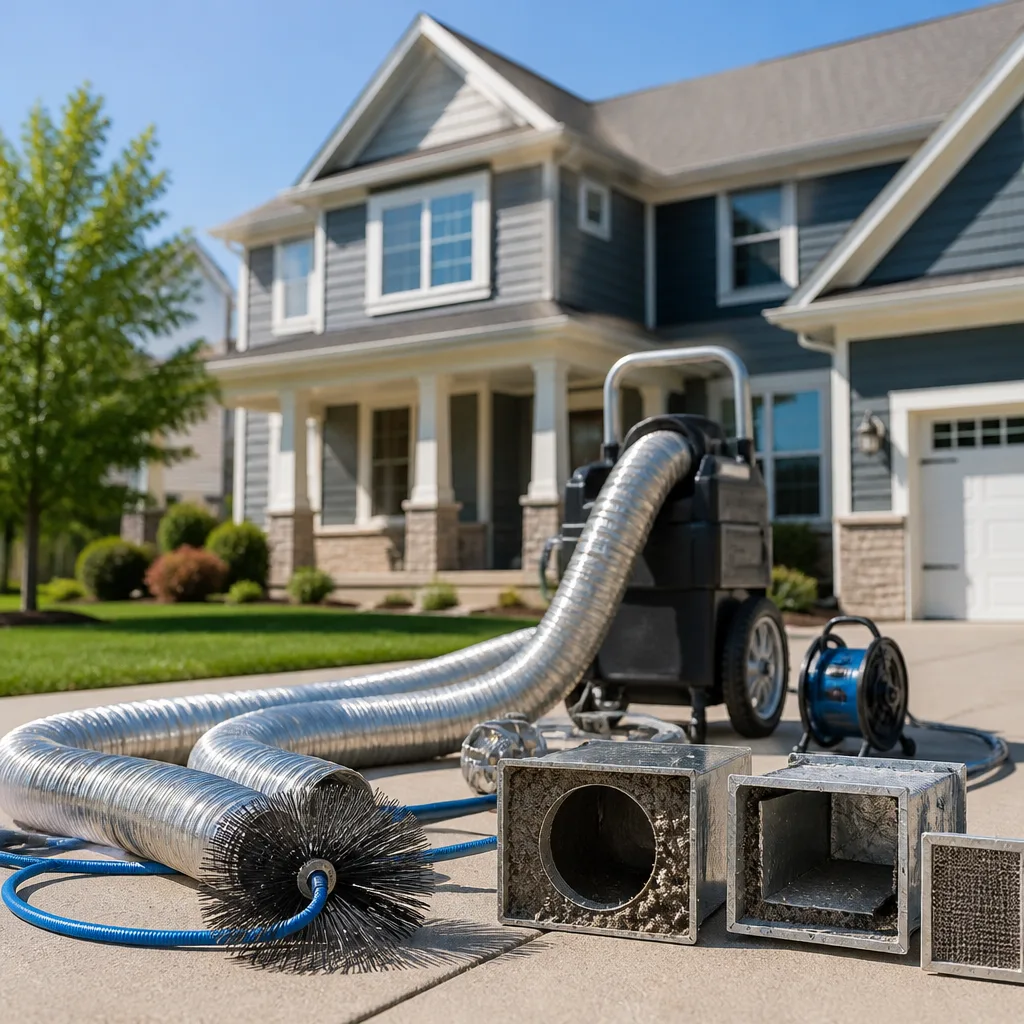 Whole-home duct cleaning
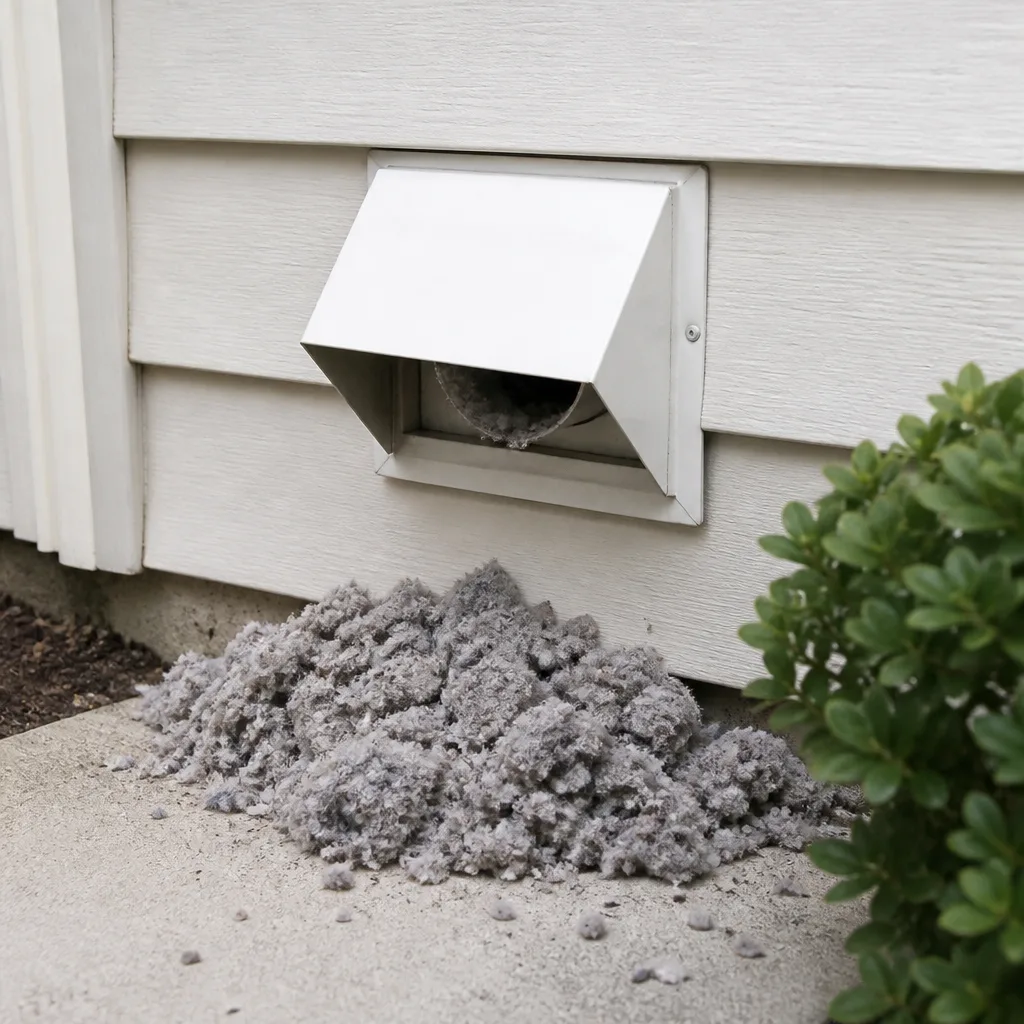 Dryer vent cleaning
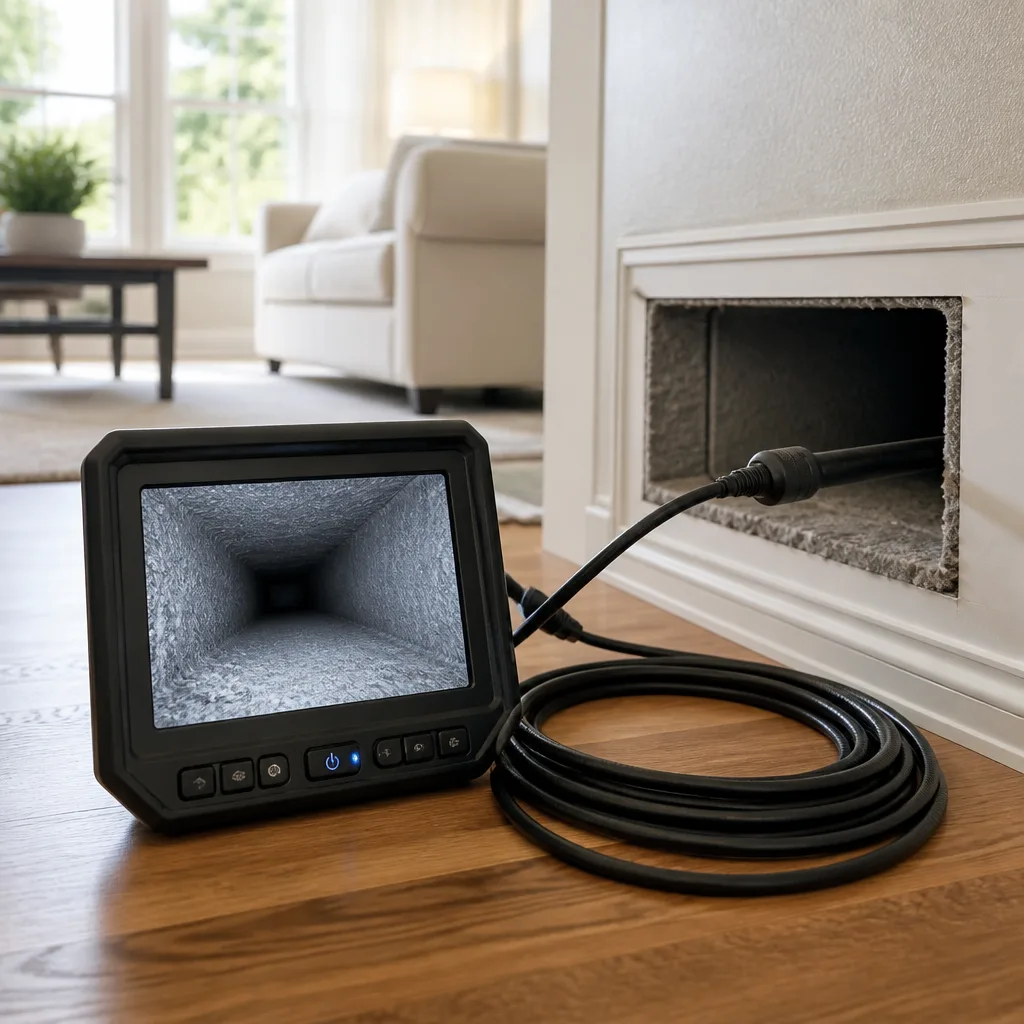 Camera inspection
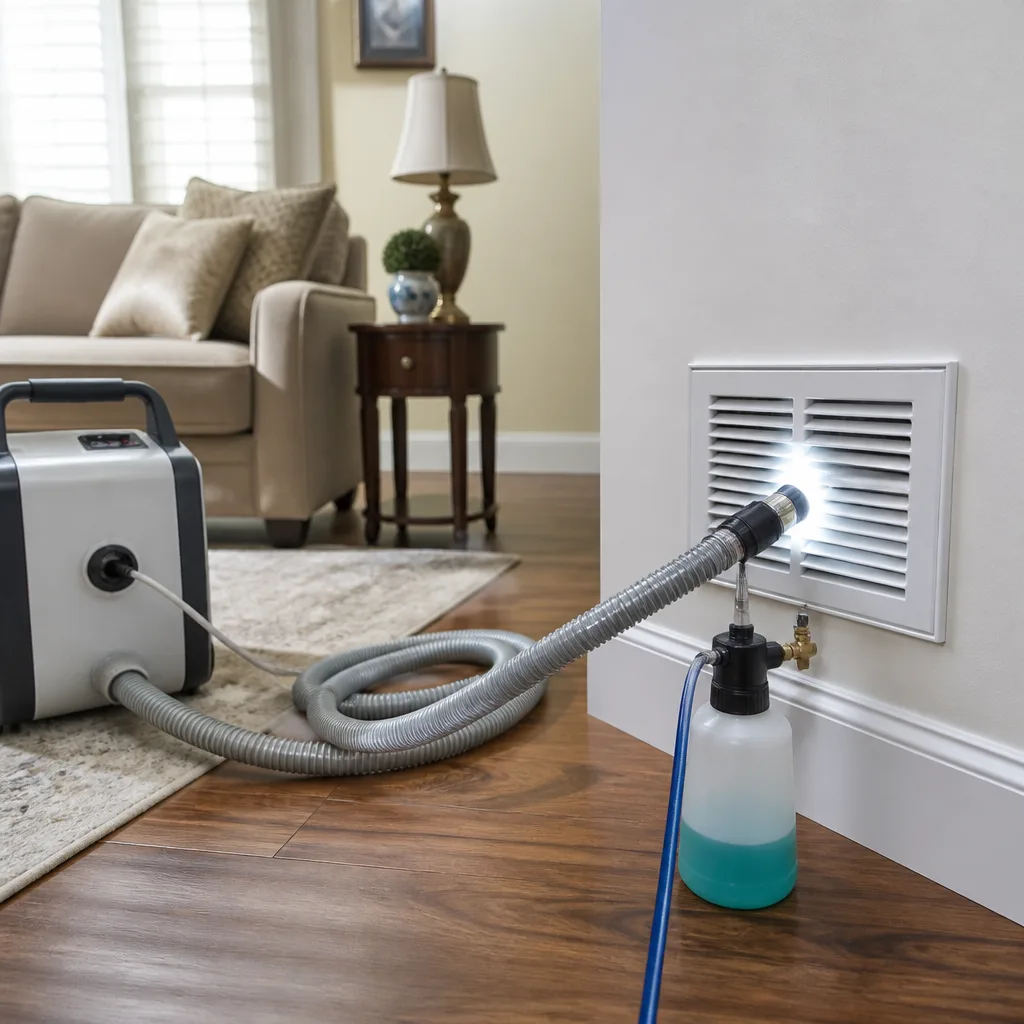 Sanitizing & deodorizing
Whole-system duct and dryer vent check with before-and-after photos - you see exactly what came out of your vents
That "$99 whole-house special" is a bait ad - the real number appears once they are in your hallway, or the "clean" is a shop-vac at the register. We photograph the inside of your ducts before and after instead.
DIY vs Professional Air Duct Cleaning: The La Habra Homeowner’s Decision Guide
A shop vac generates roughly 1 to 2 inches of water column in static pressure. A truck-mounted or professional-grade portable duct cleaning system generates 8 to 12 inches. That gap isn’t a marketing statistic. It’s the physical difference between disturbing debris and removing it from your La Habra home’s air system. This guide explains why the DIY versus professional question comes down to equipment physics, not effort, and what a homeowner can realistically accomplish on their own.
Styles & brands we work with
- Whole-home duct cleaning
- Dryer vent cleaning
- Camera inspection
- Sanitizing & deodorizing
Quick Answer
Professional air duct cleaning in La Habra is the only method that achieves true source removal, because consumer vacuums cannot generate the negative pressure required to extract debris from duct walls. DIY efforts typically redistribute particulate rather than remove it. A homeowner’s realistic role is filter maintenance, register cleaning, and visual inspection between professional cleanings, not the cleaning itself.
Table of Contents
- The Physics of Source Removal: Why Negative Pressure Decides Everything
- What Homeowners Can Legitimately Do Themselves
- When DIY Attempts Make Conditions Worse
- The Equipment Gap: What Professional Tools Actually Do
- An Honest Cost Comparison for La Habra Homeowners
- The Partial DIY Bridge: What Makes Sense Between Cleanings
- What You Should Never DIY: Mold, Asbestos, and Damaged Ducts
- Common Mistakes to Avoid
- When to Call a Professional
- Frequently Asked Questions
- The Bottom Line
The Physics of Source Removal: Why Negative Pressure Decides Everything
Duct cleaning is not a wiping process. It’s an extraction process. The goal is source removal: pulling particulate off the interior surfaces of your ductwork and out of the system entirely. This requires a specific physical condition that consumer equipment cannot create.
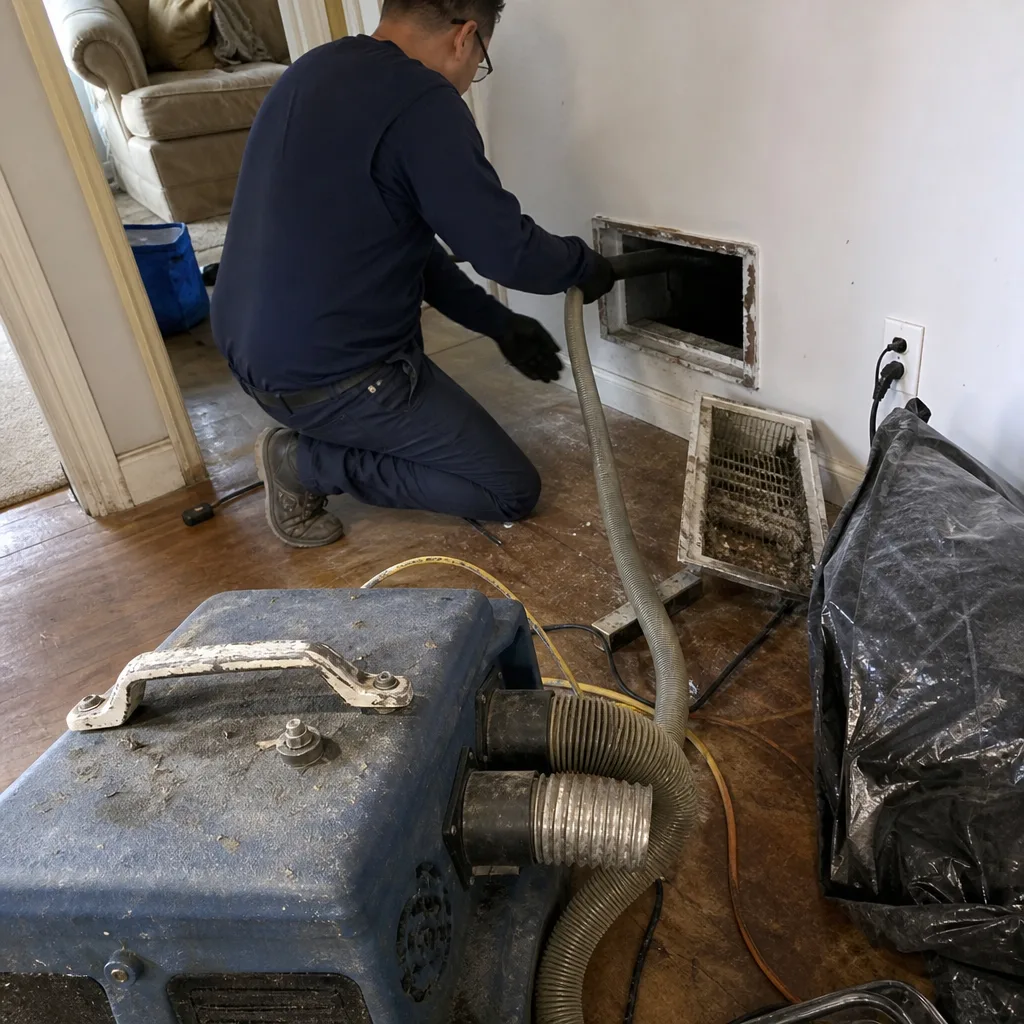
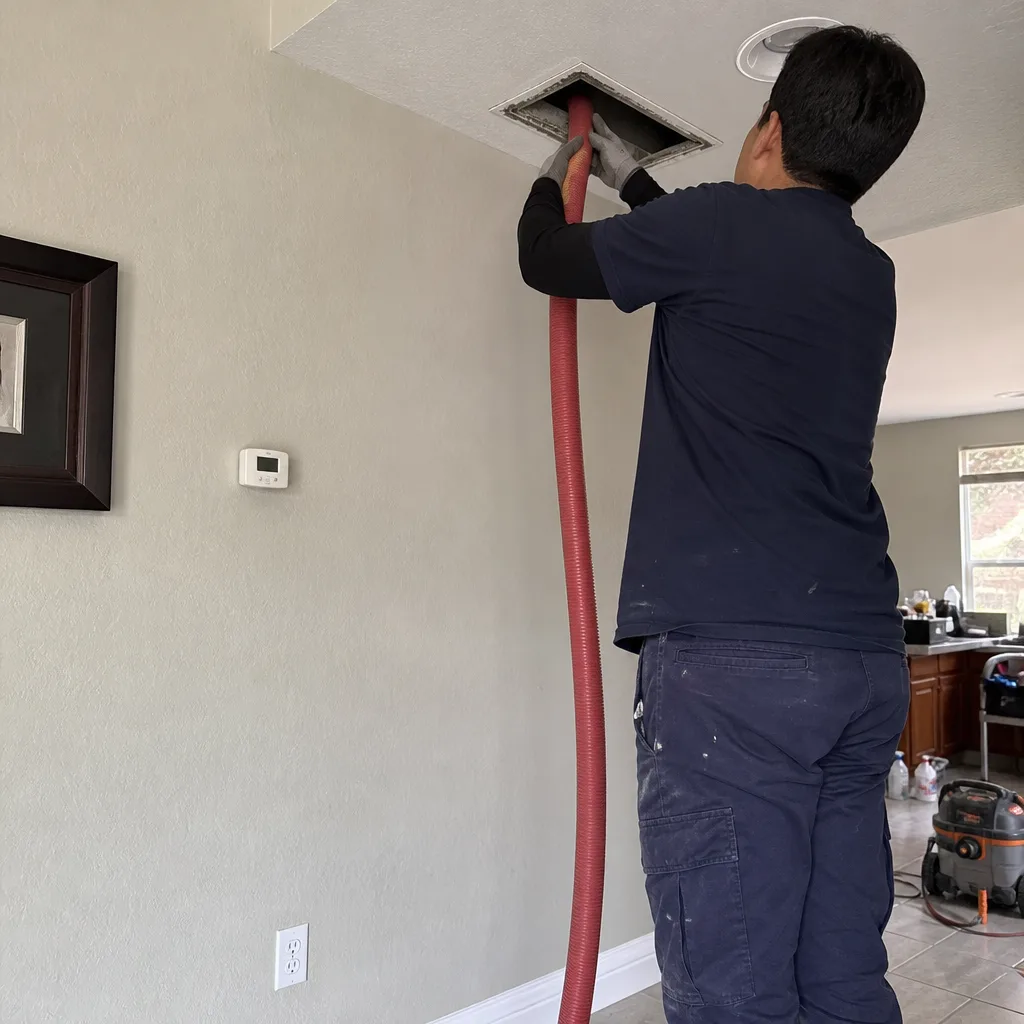
Here’s the mechanism. A professional duct cleaning system connects a high-powered vacuum to the duct system, creating sustained negative pressure throughout the entire network. At 8 to 12 inches of water column, that vacuum is strong enough to overcome the static charge and adhesive forces that hold dust, pollen, and debris to duct walls. Simultaneously, mechanical agitation tools, like the rotating brushes on a Rotobrush system or the pneumatic whips on Nikro equipment, dislodge material while the airstream carries it out.
A shop vac running at 1 to 2 inches of water column cannot do this. It can pull loose debris from the first few feet of duct accessible from a register opening. It cannot create system-wide negative pressure. It cannot overcome the static cling of dust on duct walls. And it cannot capture what it disturbs.
Think of it this way. If you sweep a dirty floor without a dustpan, you’ve moved dirt around, not removed it. That’s what a DIY duct cleaning does inside your air system. The dust you fail to extract becomes airborne the next time your system cycles. In a La Habra home where HVAC systems run heavily through summer months, that means the particulate redistributes into living spaces within hours. For year-round maintenance tips, see our guide on Seasonal Air Duct Cleaning Care for La Habra: Year-Round Homeowner’s Guide.
We’ve measured the difference in post-cleaning particulate counts between professional extraction and consumer attempts. The professional method reduces measurable dust in the airstream. The DIY method often increases it temporarily, because material dislodged from duct walls has nowhere to go except through the registers and into rooms.
What Homeowners Can Legitimately Do Themselves
A realistic DIY program supports professional cleanings rather than replaces them. Here’s what a La Habra homeowner can do with basic tools and reasonable time, organized by frequency.
- Monthly filter inspection and replacement. Check your filter every 30 days during peak cooling season in La Habra. A clogged filter forces your blower to work harder, pulls more particulate into the system, and shortens the interval between professional cleanings. Use a MERV 8 to MERV 11 filter unless your system manufacturer specifies otherwise.
- Register and grille cleaning. Remove supply registers and return grilles, wash them with warm soapy water, and dry them thoroughly. Vacuum the visible interior of the register boot with a shop vac while the cover is off. This removes surface dust at the point of entry but does not clean the duct run itself.
- Visual inspection of accessible duct sections. Every six months, remove a few registers and look inside with a flashlight. If you see fiberglass liner that appears frayed, dark staining that could indicate moisture, or debris accumulation beyond a light dust film, document it and call a specialist. You’re looking for conditions, not cleaning them.
- Return air vent vacuuming. The return side pulls air into the system and accumulates dust faster than supply registers. Vacuum the return grille and the visible return plenum monthly during high-use months.
- Moisture check around registers. Condensation on registers or walls near duct runs signals airflow or insulation problems. In La Habra’s dry climate, visible moisture around ductwork is almost always a mechanical issue, not humidity. Note it and have it assessed.
These tasks are maintenance, not cleaning. They slow contaminant buildup and help you identify problems early. They do not remove the dust, dander, and debris that accumulates along the entire length of your duct runs.
When DIY Attempts Make Conditions Worse
There are specific scenarios where a DIY duct cleaning attempt actively degrades your indoor air quality. La Habra homes built before the mid-1980s commonly have duct systems with fibrous insulation liner on the interior of sheet metal duct. This liner was standard practice for thermal and acoustic control. It also deteriorates with age.
Here’s what happens. A homeowner inserts a shop vac hose or a drill-mounted brush into a duct with aging fiberglass liner. The agitation tears the liner’s surface. Fibers release into the airstream. The shop vac lacks the sustained pressure to capture them. The next system cycle blows those fibers, along with the dust you stirred up, into every room of the house.
The same failure occurs with vermiculite insulation in older La Habra homes’ plenums. Agitating material without full extraction capability redistributes it. You haven’t cleaned anything. You’ve aerosolized the problem.
Another scenario we’ve seen repeatedly: a homeowner opens a flexible duct connection to inspect it, fails to reseal it properly, and creates an air leak. That leak pulls unconditioned attic air into the system. In La Habra’s summer heat, that means your AC now pulls 120-degree attic air into the supply stream, driving up cooling costs and pulling attic dust and insulation particles into the ducts. The attempted fix created a new contamination source.
The honest assessment is this: if your ductwork has visible dust accumulation, signs of moisture, or deteriorating liner, a DIY attempt is more likely to worsen conditions than improve them. The tooling that can safely address those conditions is not sold at Home Depot.
The Equipment Gap: What Professional Tools Actually Do
The equipment used by Cobalt Air Duct Cleaning for Air Duct Cleaning in La Habra falls into two categories: mechanical agitation tools and negative pressure extraction systems. Both are necessary. Neither is available at a consumer price point.
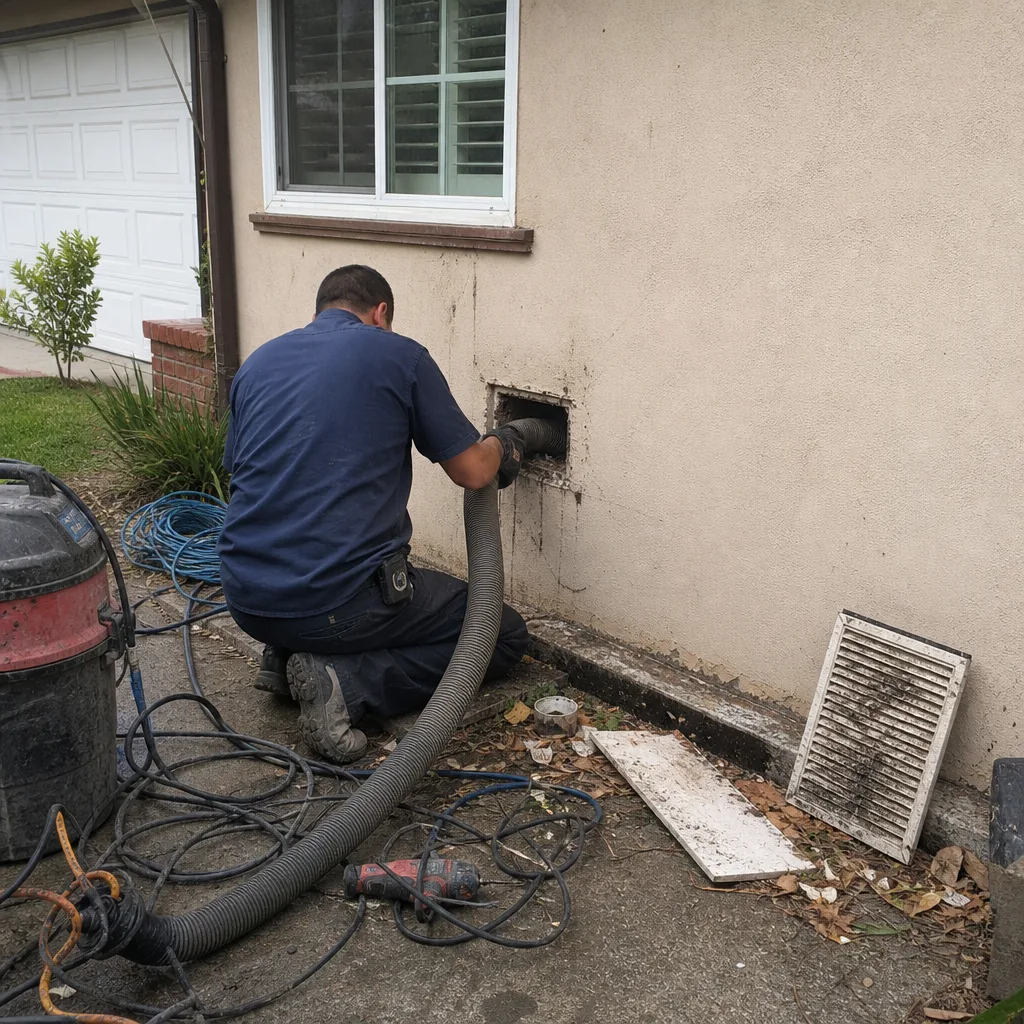
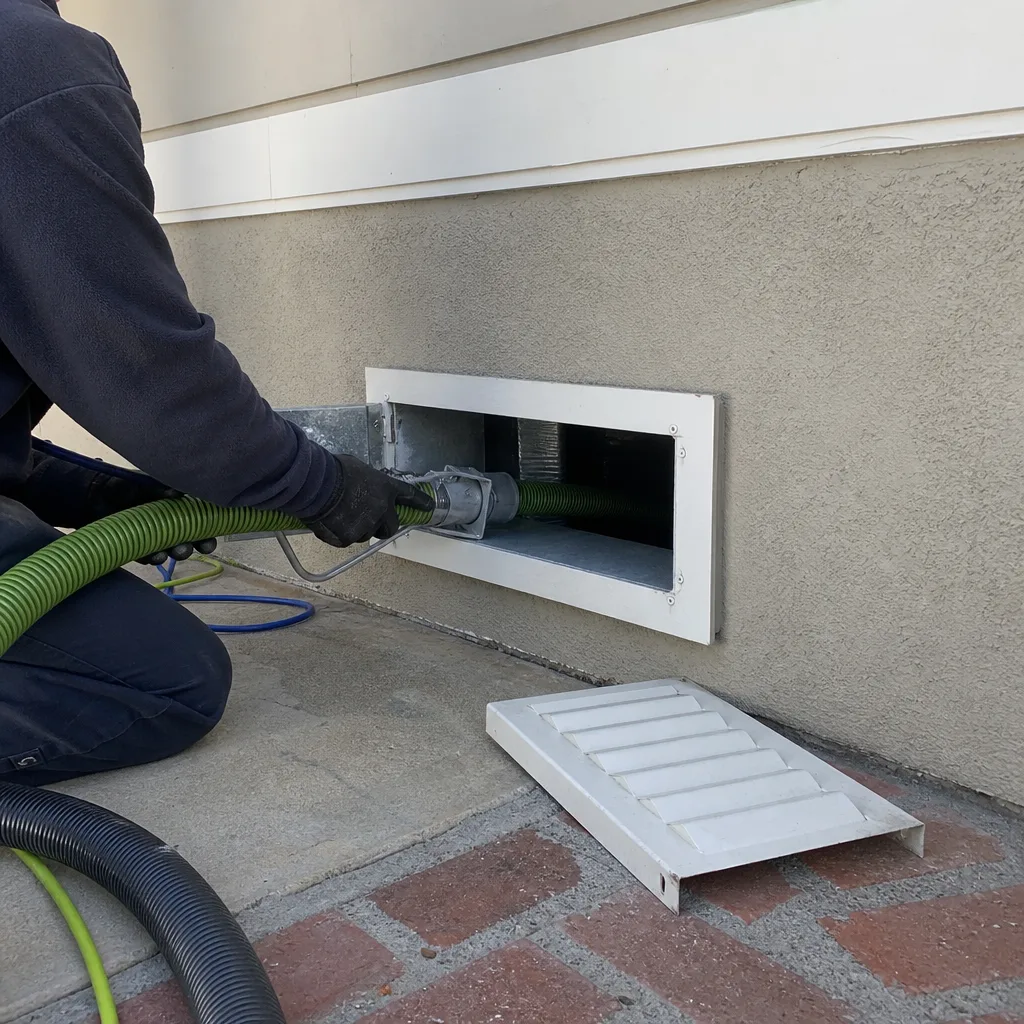
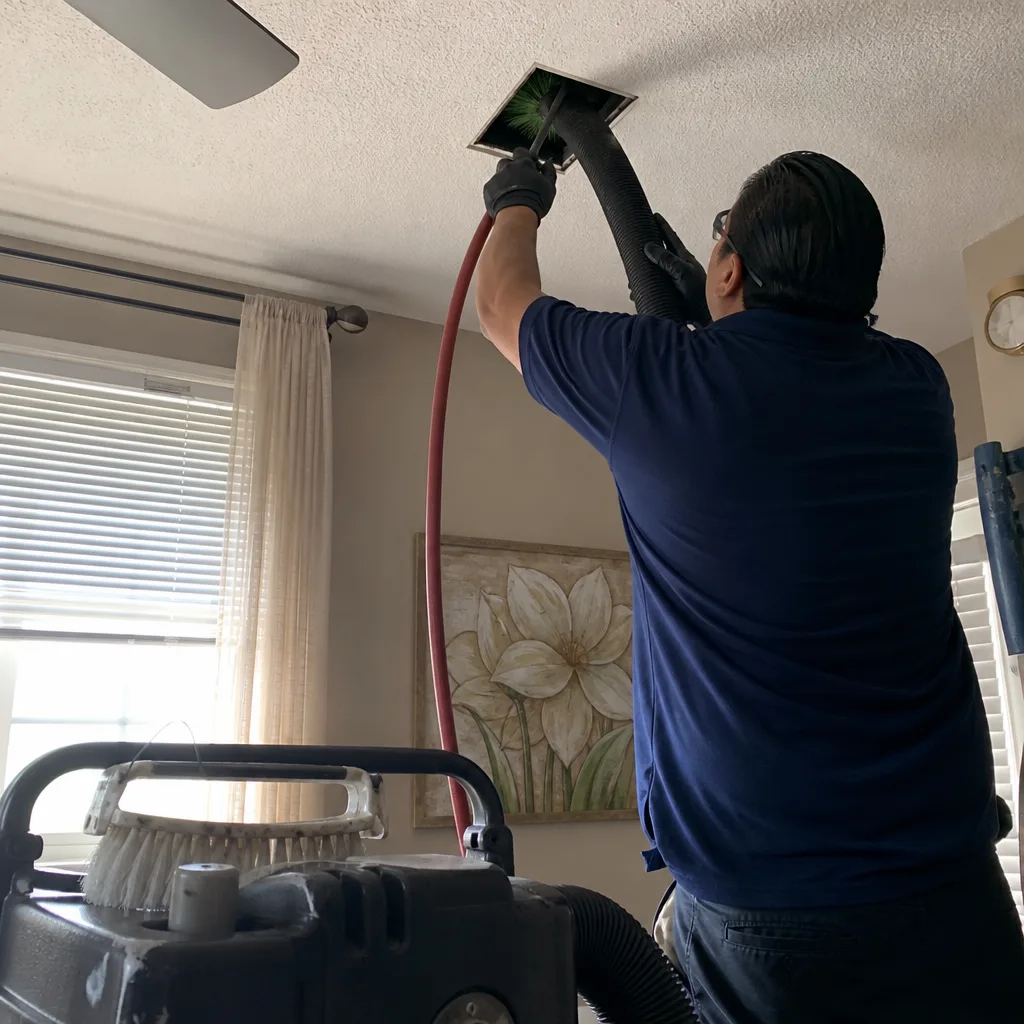
On the agitation side, we run Rotobrush and Nikro systems. A Rotobrush system uses a motorized rotating brush head at the end of a flexible shaft that runs through the duct, scrubbing the interior walls while a vacuum simultaneously extracts dislodged material. Nikro equipment uses air-powered agitation tools, including skipper balls and forward and reverse air sweeps, that work in duct systems where a brush head won’t navigate tight turns.
On the extraction side, professional systems generate the sustained negative pressure described earlier. A professional-grade portable vacuum used for residential duct cleaning typically produces 4,000 to 6,000 CFM of airflow. A shop vac produces 100 to 200 CFM. That’s not a comparison. It’s a category difference.
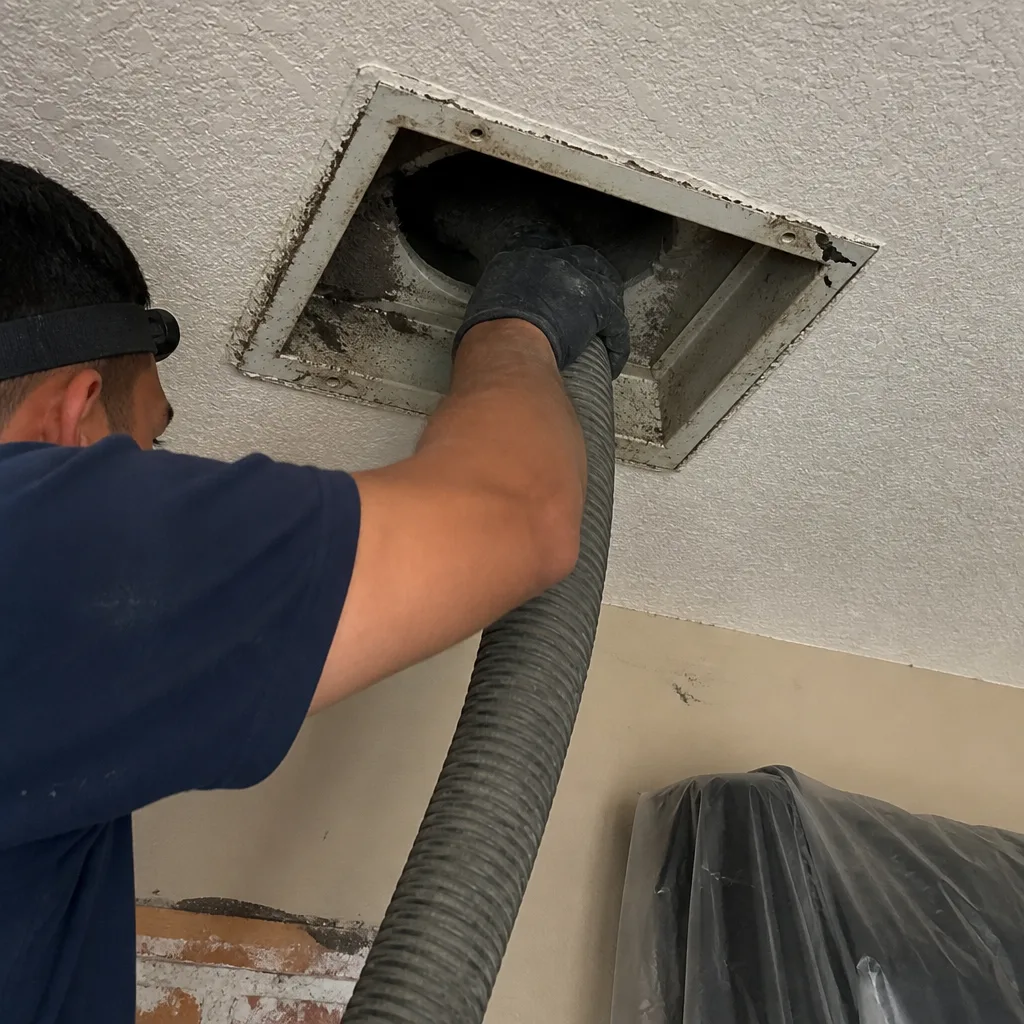
The other equipment gap is diagnostic. Professional duct cleaning includes inspection before and after the work. We look at the full duct run with cameras and document what’s there, and we document what’s left after extraction. That’s the difference between a process you can verify and one you’re asked to take on faith.
The equipment specificity matters because it determines outcomes. A Nikro system is designed for commercial-grade duct remediation, applied here to residential systems in La Habra. A Rotobrush is the standard for brush-based source removal in residential ductwork. These aren’t interchangeable names in a brochure. They’re distinct tools for distinct system architectures, and the person running them needs to know which applies to your house.
An Honest Cost Comparison for La Habra Homeowners
The DIY versus professional cost question has a hidden variable: the tools capable of approaching professional results are not available to rent in any meaningful way.
Here’s a realistic breakdown for a La Habra homeowner attempting a legitimate DIY duct cleaning on a typical 2,000-square-foot house with 12 to 15 duct runs.
- Shop vac with HEPA filter upgrade: $150 to $300. Generates 1 to 2 inches of water column. Cannot achieve source removal. Effectively useless for duct interior cleaning beyond the first two feet of a register boot.
- Drill-mounted duct brush kit from an online retailer: $80 to $150. Agitates duct walls without extraction capability. Risks liner damage in older systems. Creates airborne particulate without capturing it.
- Consumer air compressor and blow gun: $100 to $250 if not already owned. Blowing compressed air into ducts without extraction redistributes dust at high velocity. This is the worst possible DIY method.
- Professional equipment rental: Not typically available. The portable units used by professional duct cleaners cost $4,000 to $12,000 and require training to operate without damaging ductwork. Rental yards do not stock them because the liability and learning curve make consumer rental unworkable.
Professional whole-system duct cleaning for a La Habra home of that size typically runs $400 to $800 depending on system configuration, access difficulty, and contamination level. The DIY approach costs $150 to $300 and produces no measurable cleanliness improvement, or worse, creates a temporary indoor air quality problem.
Put another way: the DIY path spends half the money for zero or negative result. The equipment that would make DIY viable doesn’t exist at the consumer level because the market for it doesn’t justify the tooling investment. That’s not a sales pitch. It’s a market reality.
The Partial DIY Bridge: What Makes Sense Between Cleanings
A partial DIY approach is not only reasonable but recommended. It extends the interval between professional cleanings and helps you monitor system condition. Here’s what that looks like in practice for a La Habra homeowner.
- Maintain a filter schedule. Set a calendar reminder for every 30 days during May through October. In a home with pets or household members with allergies, check every two weeks. This is the single highest-impact DIY action for system longevity and air quality.
- Vacuum return grilles and registers weekly. Use the brush attachment on a standard household vacuum. This removes surface dust at the point of entry and reduces the load on your filter.
- Document conditions with photos. When you remove a register for cleaning, take a photo looking into the boot. Over time, you’ll build a visual record of dust accumulation, moisture staining, or liner condition. This documentation helps a professional assess your system and helps you make an informed decision about when cleaning is actually needed.
- Manage source dust in the home. Vacuum carpets and rugs with a HEPA-filtered vacuum. Dust hard surfaces with a damp cloth rather than a dry duster. The less particulate in your living spaces, the less that enters the return air stream and ends up in your ducts.
- Change HVAC filters after any major home project. Drywall work, flooring replacement, or attic insulation upgrades generate fine particulate that overwhelms a standard filter. If you’ve had work done, replace your filter immediately after and consider a professional cleaning once the project dust has settled.
These steps are not duct cleaning. They’re duct maintenance. The distinction matters because homeowners who believe they’re cleaning their ducts with a shop vac are making a decision based on a misunderstanding of the physics involved.
What You Should Never DIY: Mold, Asbestos, and Damaged Ducts
Three conditions demand professional intervention and should never be approached with consumer equipment, both because of health risk and because DIY attempts worsen the underlying problem.
Mold or microbial growth in ductwork. If you see dark staining on duct surfaces or register boots, or smell a persistent musty odor when the system runs, do not attempt to clean it yourself. Agitating mold without proper containment spreads spores through the entire living space. A professional assessment identifies the moisture source causing the growth, because cleaning mold without fixing the moisture source guarantees recurrence. Cobalt works with Abatement Technologies products for containment and air scrubbing in situations where microbial contamination is present.
Asbestos-containing duct insulation. La Habra homes built before 1980 may have asbestos-containing tape or insulation wrap on duct seams and plenums. Disturbing this material without proper abatement protocol is illegal and dangerous. If your ductwork is original to a pre-1980 home, have it assessed before any cleaning work. Professional duct cleaners in California are trained to identify suspect materials and will not proceed if asbestos is present without proper remediation.
Structurally damaged ducts. Disconnected runs, crushed flex duct, separated seams, and leaking plenums are repair issues. They are not cleaning issues. If your system has visible damage, Air Duct Repair in La Habra should precede any cleaning work. Cleaning a system with structural failures pulls unconditioned air, attic dust, and insulation into the ductwork during the process. Cobalt offers air duct repair as a standalone service for exactly this reason: the structural fix must come first.
For related systems, Dryer Vent Cleaning in La Habra addresses the exhaust side of your home’s air movement, and the same principle applies: consumer brushes and drill attachments do not traverse the full vent run or remove compacted lint. If the vent run is more than a few feet, hire the work out.
Common Mistakes to Avoid
- Using a leaf blower to “blow out” ducts. This forces dust and debris into the plenum, where it accumulates or redistributes into the home. There is no extraction component. The air gets worse, not better.
- Believing a filter change is a duct cleaning. The filter protects the equipment, not the ductwork. Duct interiors accumulate particulate regardless of filter condition. A fresh filter doesn’t address what’s already on the duct walls.
- Ignoring the return side. Homeowners focus on supply registers and overlook the returns. The return side pulls the dirtiest air in the house into the system. If you’re cleaning anything, start with returns, but understand that partial cleaning is maintenance, not source removal.
- Attempting DIY cleaning in a home with respiratory illness. If a household member has asthma, COPD, or an autoimmune condition, do not experiment with duct disturbance. The temporary spike in airborne particulate from a failed DIY attempt can trigger serious health events. Professional cleaning with proper extraction and air scrubbing is the only appropriate approach.
- Trusting the cheapest quote without asking about equipment. Some companies in the La Habra market advertise low prices and send a technician with a shop vac and a brush. That’s not duct cleaning. Ask what equipment they run. If they can’t name the system, they’re selling a DIY result at a professional price.
- Skipping inspection before cleaning. A visual inspection with camera documentation tells you what’s actually in your ducts and whether cleaning will address it. Paying for cleaning without inspection is paying for a process you can’t verify.
- Cleaning ducts without addressing the moisture source. If your ducts are damp or show staining, the problem is water entry or condensation, not just dirt. Cleaning without fixing the source means the contamination returns within months.
When to Call a Professional
Call a professional when you see visible dust accumulation beyond a light film inside your ducts, when you smell musty or stale air when the system runs, when household allergy symptoms worsen during HVAC operation, when your registers show dark staining, or when your home has had recent construction or water damage. Each of these signals indicates conditions that consumer tools cannot address. For help choosing a qualified provider, read How to Hire an Air Duct Cleaning Contractor in La Habra: A Step-by-Step Guide. Cobalt Air Duct Cleaning offers free estimates in La Habra. Call (866) 596-7835 and we’ll assess what’s actually in your system before recommending any work.
Frequently Asked Questions
Professional whole-system duct cleaning in La Habra typically costs $400 to $800 for a 2,000-square-foot home, depending on system configuration, contamination level, and access difficulty. The price reflects the equipment required to achieve actual source removal, not just a technician’s time. Call (866) 596-7835 for an exact quote based on your system, estimates are free.
Some companies in the La Habra market quote $99 or $150 for duct cleaning and send a technician with a shop vac and a brush. That equipment cannot generate the negative pressure required for source removal, so the work produces no measurable cleanliness improvement, or redistributes dust into your living spaces. Ask any company what specific equipment they run before you book. If they can’t name the system, they’re not doing professional duct cleaning.
A professional duct cleaning includes before-and-after documentation. At Cobalt, we photograph or video the duct interior before work begins and after extraction is complete, and we provide this documentation to you. If a company cannot show you what your ducts looked like before and after, you have no verification that anything happened.
For most La Habra homes, professional duct cleaning every 3 to 5 years is appropriate, with the interval shortening if you have pets, household members with allergies, recent renovation work, or a landscaped property that tracks a lot of outdoor dust inside. The filter maintenance and register cleaning described in this guide happen far more frequently and extend the time between professional cleanings.
No. The equipment required to achieve source removal, sustained negative pressure of 8 to 12 inches of water column with simultaneous mechanical agitation, does not exist at the consumer price point. A shop vac running at 1 to 2 inches of water column cannot perform the task. Homeowner DIY should focus on filter maintenance, register cleaning, and visual inspection, not duct interior cleaning.
Yes. Our technicians are trained on Honeywell and Aprilaire filtration and air quality products, which means we understand how your duct system interacts with the broader air handling and filtration components in your home. The ductwork is one element of a complete system, and we assess it in that context.
The Bottom Line
The DIY versus professional duct cleaning question resolves to equipment physics. Consumer vacuums cannot generate the negative pressure required for source removal. They disturb what they cannot extract. The legitimate DIY role in La Habra is filter maintenance, register cleaning, and visual inspection between professional cleanings. When ducts show visible contamination, when occupants have respiratory concerns, or when the system has moisture or structural issues, professional equipment is the only option that produces a verifiable result. The cost difference is smaller than it appears once you account for what the DIY path actually accomplishes: nothing measurable, and sometimes a temporary worsening of your indoor air.
For a professional assessment of your system in La Habra, call Cobalt Air Duct Cleaning at (866) 596-7835. We’ll show you what’s actually inside your ducts before recommending any work. Visit the Cobalt Air Duct Cleaning home page to learn more about our process and service area.
Written by the team at Cobalt Air Duct Cleaning, serving La Habra since 2016.
See the difference
 Before
 After
 Before
 After
 Before
 After