
Last updated November 2, 2026
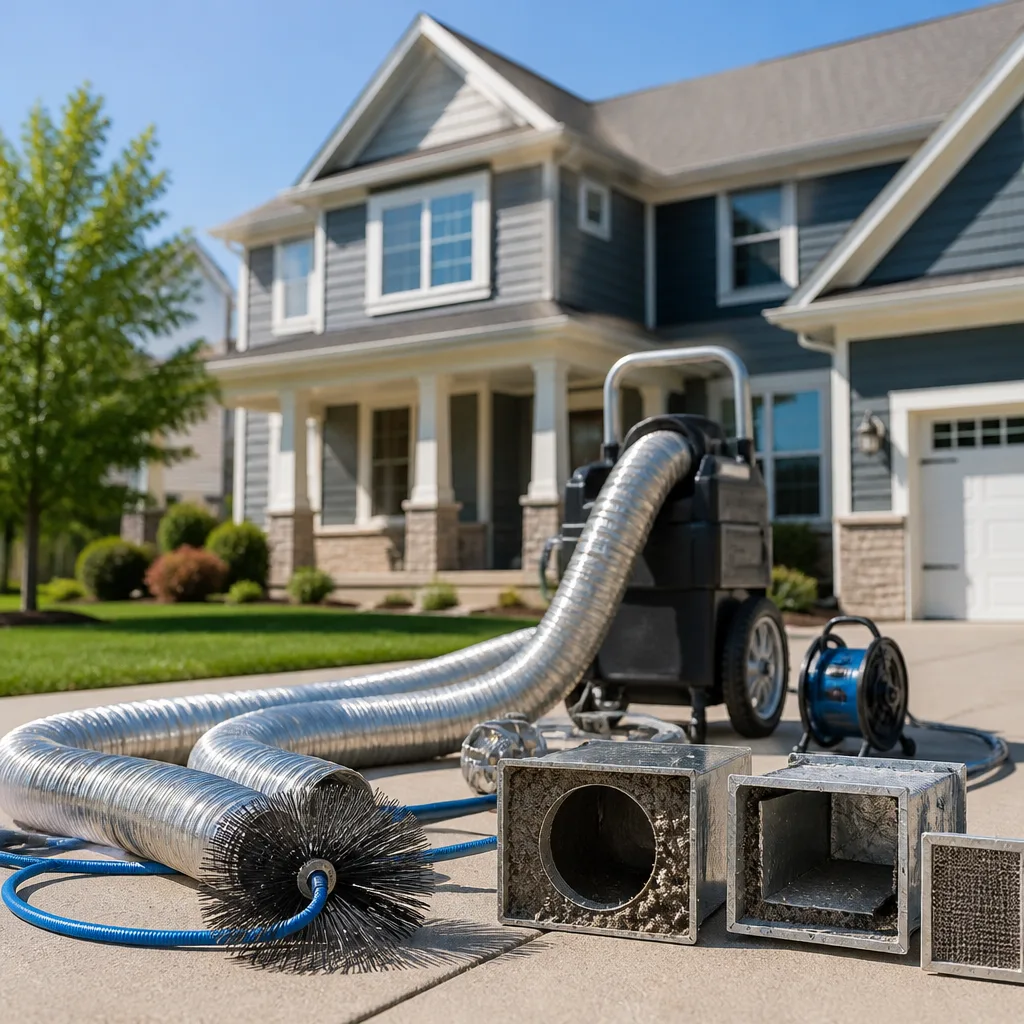 Whole-home duct cleaning
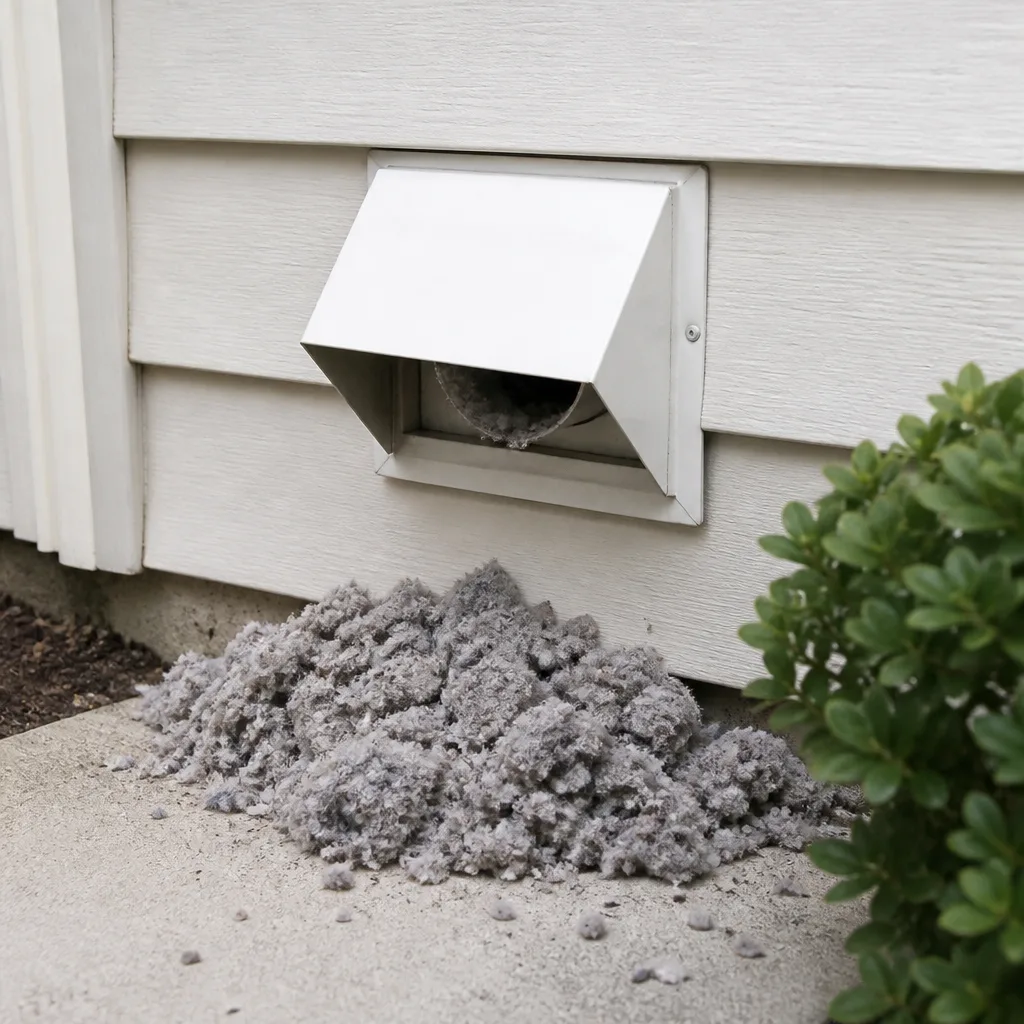 Dryer vent cleaning
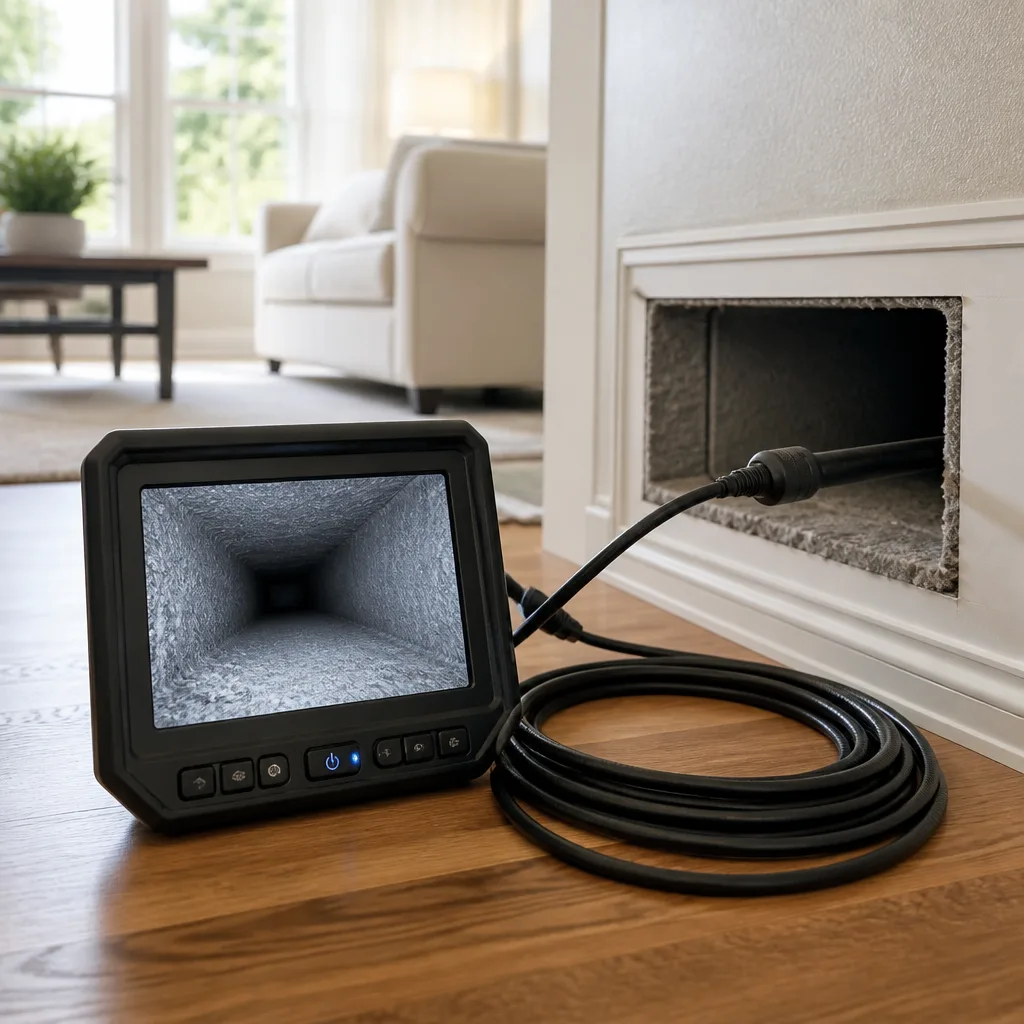 Camera inspection
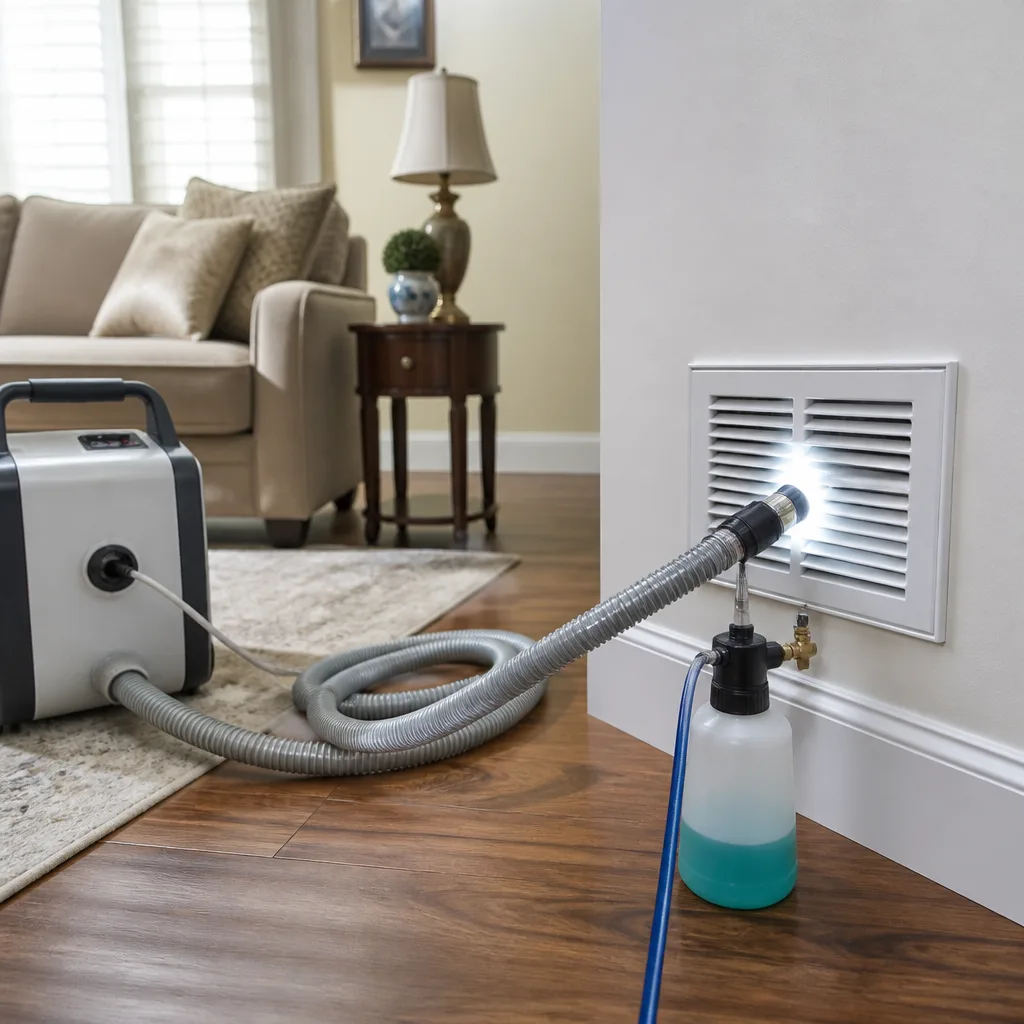 Sanitizing & deodorizing
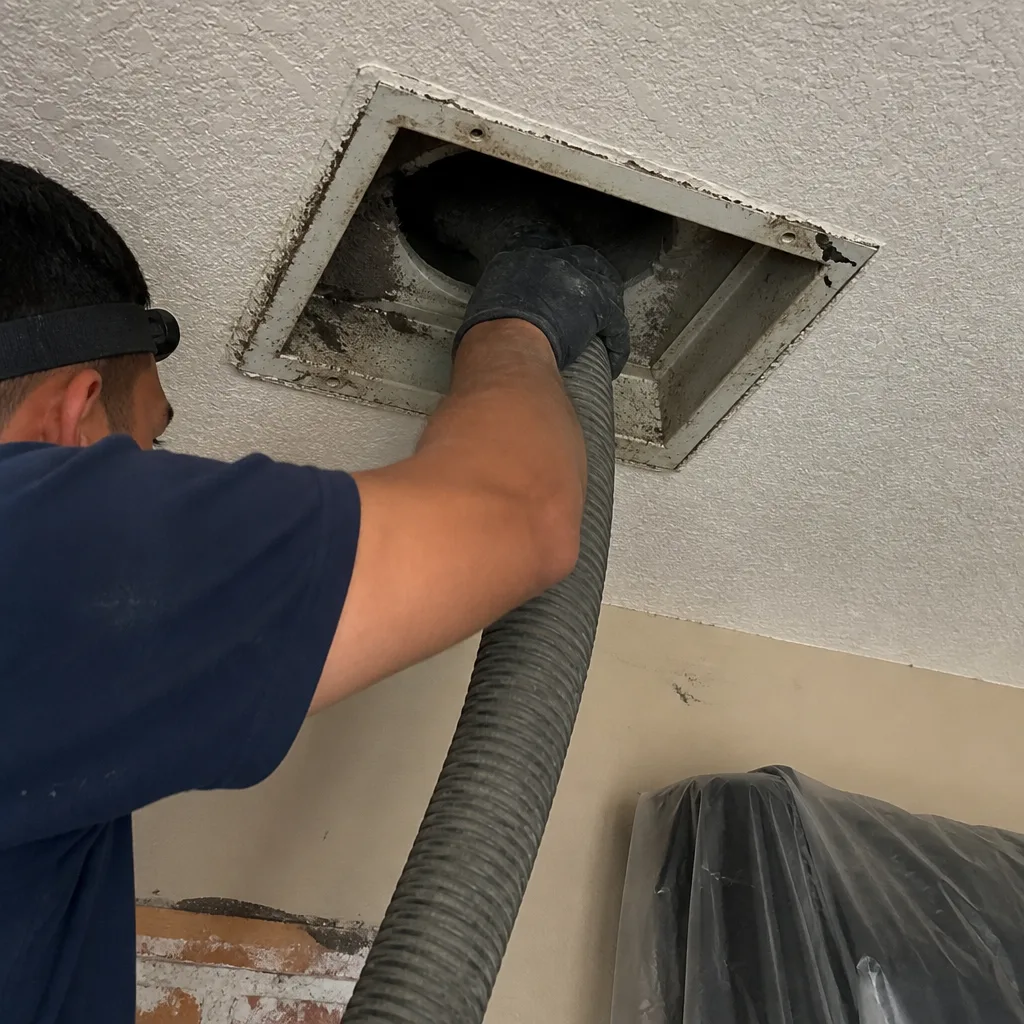
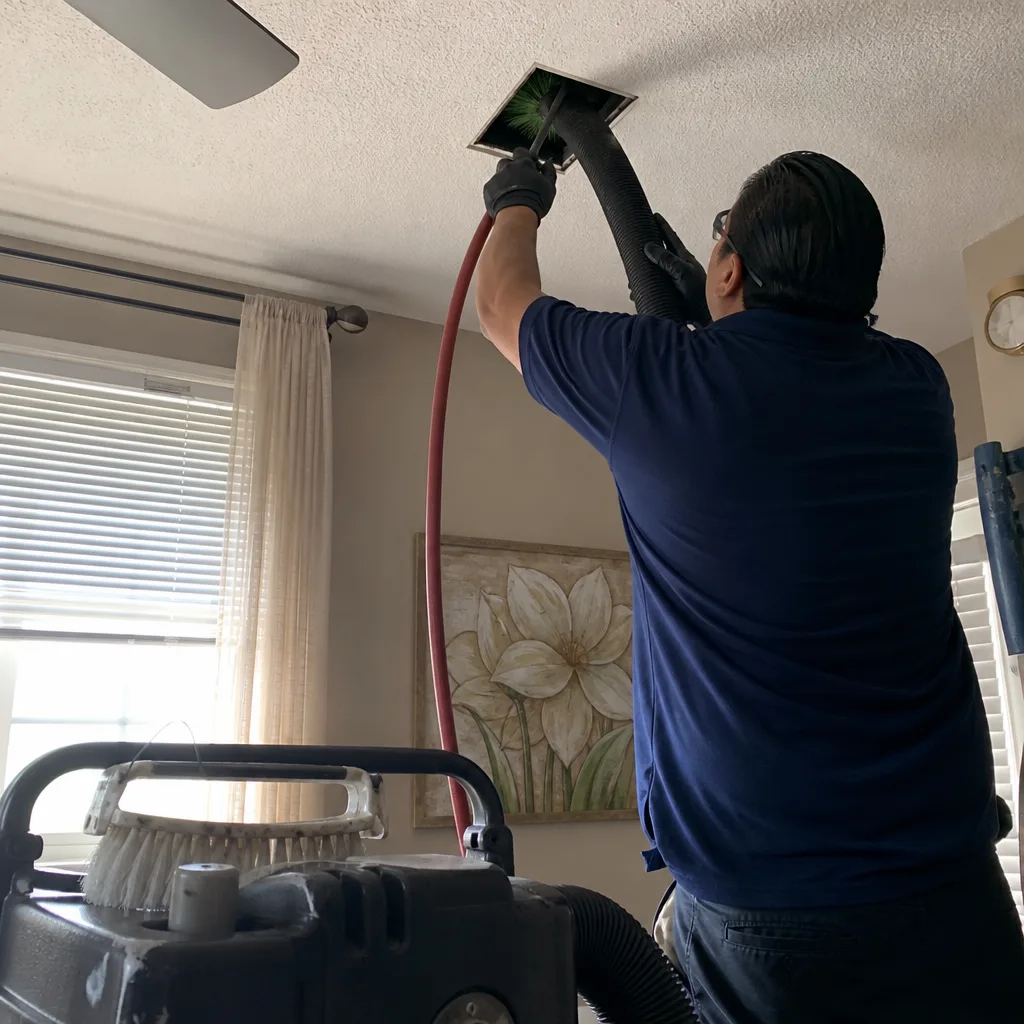
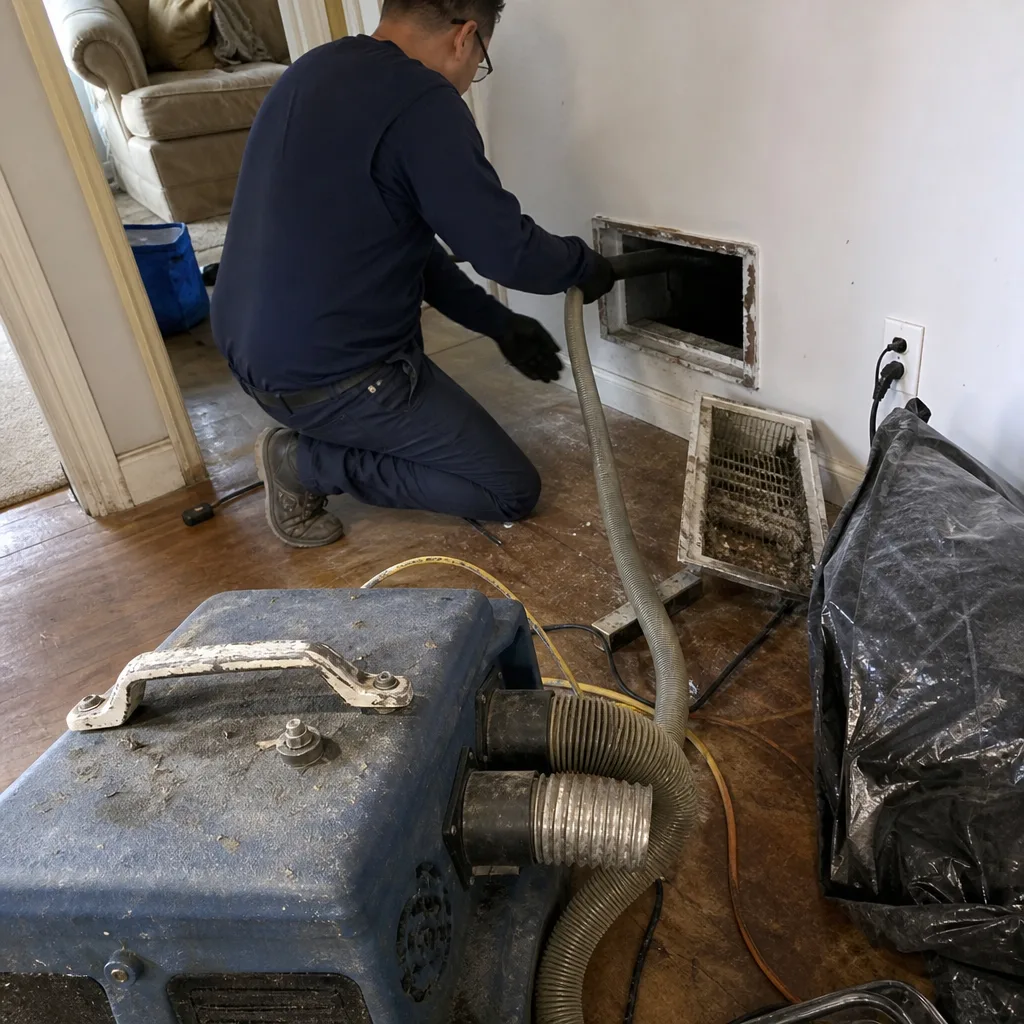
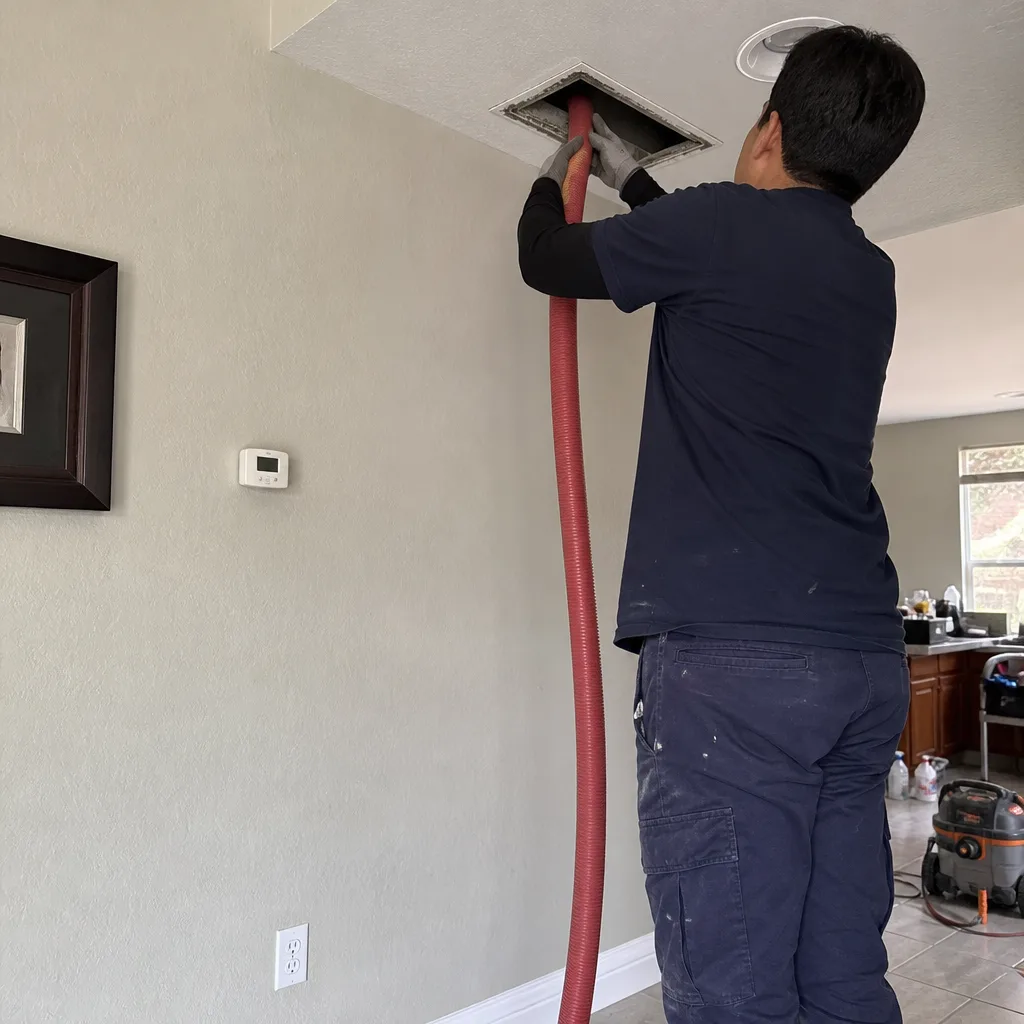
Whole-system duct and dryer vent check with before-and-after photos - you see exactly what came out of your vents
That "$99 whole-house special" is a bait ad - the real number appears once they are in your hallway, or the "clean" is a shop-vac at the register. We photograph the inside of your ducts before and after instead.
Seasonal Air Duct Cleaning Care for La Habra: Year-Round Homeowner’s Guide
Between October and December, La Habra homeowners face back-to-back threats: offshore winds that push combustion particulate from inland fires directly into HVAC returns, followed by the drop in humidity that cracks duct seals and opens pathways for attic infiltration. Most seasonal maintenance guides treat this as “fall.” It isn’t. What actually shapes the air moving through your home is a sequence of three recurring stress events particular to Southern California’s inland edge: wildfire smoke, Santa Ana wind cycles, and the late-spring marine layer. This guide explains what each of those events does to a duct system, when to act, and what maintenance actually makes a difference in a La Habra home.
Quick Answer
Air Duct Cleaning in La Habra should be scheduled around three events, not four calendar seasons: after wildfire smoke season (October-December), before peak summer AC runtime (April-May), and any time a Santa Ana wind event exposes visible dust discharge at registers. Homes within two miles of the 57 Freeway or in neighborhoods with mature eucalyptus and pepper trees typically need attention every two to three years, while homes with pets or recent renovation may warrant annual service. The single most important seasonal habit is inspecting return grilles and supply registers after the first significant Santa Ana event of autumn – that inspection tells you whether your duct seals held through the wind cycle.
Styles & brands we work with
- Whole-home duct cleaning
- Dryer vent cleaning
- Camera inspection
- Sanitizing & deodorizing
Table of Contents
- La Habra’s Actual Air Quality Cycle: Three Events, Not Four Seasons
- Santa Ana Wind Events and Duct Seal Integrity
- Wildfire Smoke Protocol: The 48-Hour Decision Window
- The Marine Layer Cycle: Humidity and Fibrous Duct Liner
- Pre-Summer Cleaning: Timing Before Peak AC Runtime
- Using La Habra AQI Data for Evidence-Based HVAC Decisions
- Year-Round Inspection Routine: What to Check Monthly
- Common Mistakes to Avoid
- When to Call a Professional
- Frequently Asked Questions
La Habra’s Actual Air Quality Cycle: Three Events, Not Four Seasons
If you’ve ever followed a generic seasonal maintenance calendar – the kind written for Chicago or Minneapolis – you’ve already noticed it doesn’t map to what happens here. La Habra sits at the eastern edge of the Los Angeles basin, close enough to the coast to catch marine layer influence but far enough inland that offshore wind events hit with full force. What that means for your duct system is a cycle defined by three distinct stressors:
- Wildfire smoke season (typically October through December): Offshore wind patterns push fine particulate matter from inland and foothill fires across the basin. This isn’t just an outdoor problem. When your HVAC system draws return air, it pulls whatever is in the ambient air into your ducts. Combustion particulate – which includes carbon, ash, and partially burned organic compounds – is fine enough to penetrate standard filters and tends to bond electrostatically to duct surfaces. Once bonded, it resists normal airflow and requires mechanical agitation to remove.
- Santa Ana wind events (typically September through February, with peaks in October and November): Sustained winds of 20 to 40 mph with gusts higher create negative pressure zones around homes. Air gets pulled through attic spaces, wall cavities, and crawl spaces. Any gap in a duct seal – even a hairline separation at a register boot or a return plenum joint – becomes an active infiltration path. What comes through is typically attic insulation fibers, cellulose dust, and rodent debris pulled from spaces you never want connected to your breathing air.
- Marine layer humidity cycling (typically May through early July): Late-night and early-morning fog pushes inland far enough to influence La Habra, especially in the western and southern parts of the city. Homes with fibrous duct liner – a common internal insulation material in older systems – absorb moisture during high-humidity periods, then dry out when temperatures climb later in the day. Repeated cycling creates conditions favorable to microbial growth and accelerates liner deterioration, which then sheds fibers into the airstream.
This three-event model is what we use when we evaluate a home’s duct health in La Habra. It replaces the Midwest calendar because it describes what’s actually happening in the air system, not what a publishing template assumes should be happening. A homeowner who understands these three events can make sound maintenance decisions without guessing. And that matters, because duct cleaning is not a cosmetic service. It’s a response to measurable contamination loading, and that loading tracks these three events with surprising consistency.
The city’s geography amplifies all of this. La Habra sits in a slight topographic bowl relative to its surroundings, oriented northeast-southwest along the line of prevailing wind patterns in both onshore and offshore flow. That orientation means the city catches more particulate than nearby locations at higher elevation or closer to the coast. In practice, homeowners here tend to see dust accumulation on return grilles faster than friends in Fullerton or Brea. If you’ve noticed that your return grilles look dirty even a few weeks after cleaning them, you’re observing this geography effect in real time. It’s also a good indicator that your duct system is capturing material that will eventually need professional removal.
For a deeper look at what a full-system cleaning involves in this area, see our detailed guide to Air Duct Cleaning in La Habra.
Santa Ana Wind Events and Duct Seal Integrity
Santa Ana winds are the most mechanically destructive force your duct system faces in La Habra. Not because they blow ductwork around – the ducts are inside your walls, attic, and crawl spaces – but because sustained pressure differentials across your home’s envelope find every weakness in the air distribution system. Here’s the sequence we’ve observed across hundreds of homes in North Orange County:
- Pressure gradient forms: Wind hits the home on one side, creating positive pressure. The leeward side goes negative. The entire structure becomes a passive air pump.
- Attic and wall air gets drawn in: Negative pressure inside living spaces pulls air from unconditioned spaces through any available path. In many homes, that path is the return air chase, duct boots, and plenum connections.
- Duct seals fail progressively: In a well-maintained system, mastic seals and foil tape hold against normal gradients. But if seals are already brittle – common in systems older than 10 years in this climate – the repeated stress of multiple Santa Ana events over a season will widen microscopic gaps into visible openings.
- Particulate loads accumulate: Once air bypasses the filter and enters post-filter ductwork, everything in it – insulation fibers, dust, pest contamination – deposits directly inside the supply side of the system. This is contamination you’ll breathe, and it compounds with every event.
The practical takeaway: a pre-Santa Ana inspection of visible duct seals at registers and return grilles is one of the highest-value maintenance actions a La Habra homeowner can take. It takes ten minutes. You’re looking for:
- Gaps between the register flange and the wall or ceiling opening
- Visible dust streaking around the register perimeter, which indicates air movement
- Streaks or staining on the wall near return grilles, especially in hallways
- Attic dust visible on the back of supply diffusers when you remove the register cover
- Increased dust settling on horizontal surfaces within 24 hours of a Santa Ana event
If you see any of these, you have bypass infiltration. That’s not a cleaning problem initially – that’s a repair problem. Duct leaks need to be sealed before cleaning makes sense, otherwise the system will re-contaminate immediately after service. This is why Air Duct Repair in La Habra is offered as a standalone scope of work, not an add-on to cleaning. In our experience, roughly one-third of homes we inspect in La Habra have at least one significant seal failure in the return air path, and most homeowners are unaware of it. The symptom they notice is dust, but the cause is structural.
Wildfire Smoke Protocol: The 48-Hour Decision Window
When smoke from a foothill or inland fire reaches La Habra, the condition usually lasts between 24 and 72 hours, with AQI readings fluctuating as wind patterns shift. What you do with your HVAC system during this window determines how much contamination gets pulled into your ducts. This is the protocol we recommend based on how systems respond to combustion particulate:
During the smoke event:
- Run the system on recirculate with the highest MERV filter your blower will tolerate: The instinct to shut everything off is understandable, but a sealed system with a good filter actually reduces indoor particulate. The filter captures smoke particles before they settle into the living space. The trade-off: you’re loading the filter and the pre-filter side of the duct system with smoke particulate. That’s acceptable – filters are replaceable, and pre-filter duct deposition can be cleaned.
- Do not run the system with windows open or with a standard fiberglass filter: This is the worst-case scenario. Open windows mean continuous smoke entry. Low-efficiency filters mean nearly all of that smoke passes through the fan and deposits on duct surfaces. Fiberglass filters capture only the largest particles – effectively none of the smoke that matters.
- Close fresh air intakes if your system has one: Economizer dampers and dedicated outdoor air systems should be closed during active smoke events. If you have a whole-house fan, do not run it. It will pull smoky air into the attic and, by extension, into any duct leak paths.
In the 48 hours after the smoke clears:
This is where most homeowners miss an important step. The filter, if you did things right, is now heavily loaded. That’s intended. But the return side of your duct system – from the return grilles back to the filter cabinet – has also been exposed to unfiltered smoky air every time the system cycled. Smoke particulate that deposits in this section does not get removed by changing the filter. It stays until it’s mechanically cleaned. If you don’t clean it, you’ll be recirculating remnants of that particulate for months, and it will gradually migrate through the fan and into the supply side.
The practical protocol: after the AQI drops below 100 for 24 consecutive hours, replace the filter. Then schedule an inspection, and if smoke exposure was prolonged – multiple days above 150 AQI – schedule a duct cleaning. Cobalt Air Duct Cleaning home offers free estimates in La Habra, and we can tell you whether the contamination load justifies full service or whether a filter change and basic inspection are sufficient. We have no interest in cleaning ducts that don’t need it. The inspection tells you what the system actually holds.
The Marine Layer Cycle: Humidity and Fibrous Duct Liner
From roughly late May through early July, La Habra’s western neighborhoods often wake to fog that burns off by mid-morning. The city sits close enough to the coast that this marine influence is a real factor, particularly in homes west of Beach Boulevard. What this does to a duct system depends heavily on what the ducts are made of.
Metal ducts with external insulation handle humidity cycling well. The metal conducts temperature changes efficiently, and any condensation that forms on the exterior tends to dry quickly once daytime temperatures climb. The problem case is fibrous duct liner – the fiberglass material applied to the interior walls of ducts, typically in systems installed before the late 1990s or in larger custom homes. Liner is porous, and it holds moisture. When it absorbs humidity during extended marine layer periods and then warms, it creates a microenvironment where mold and bacteria can establish a foothold. You won’t necessarily smell it at first. What you may notice instead:
- Increased mustiness in the first few minutes of system operation, especially in the morning
- Visible gray-black discoloration at supply registers
- A slight increase in allergy symptoms when the AC runs, even though you haven’t changed anything in the home
- Dampness or condensation spotting on return grilles during morning hours
These are all signs of moisture cycling that has progressed far enough to affect the liner or to indicate condensation forming in unintended areas. The response is not simply to clean. Cleaning a liner that has reached this state may remove surface growth, but if the liner is degenerating, it will continue to shed and regrow. In those cases, repair – including partial liner removal or section replacement – is the correct remediation. We’ve seen homes in La Habra where the supply plenum liner had reached the point of delamination, meaning fiberglass fragments were actively entering the living space every time the fan ran. That’s beyond cleaning; that’s a structural failure requiring air duct repair.
The seasonal action item for marine layer season: if you have an older system with internal liner, do a visual check of accessible duct sections and register interiors in early June. If you see any moist staining or fibrous debris, schedule an inspection before July heat arrives and the system runs continuously, which would pull any released material into the entire home.
Pre-Summer Cleaning: Timing Before Peak AC Runtime
There’s a logical error embedded in the advice to clean ducts in fall. That advice originated in climates where furnaces run all winter and ducts sit idle all summer. La Habra is the inverse: your system’s peak workload is the three to four months of summer when AC runs daily, often continuously. If you clean before that peak, the system is at its cleanest during the period when the most air moves through it. If you clean after summer, you’re removing what accumulated during peak operation, but you spent an entire season circulating that material through the living space before addressing it.
The right approach here is a pre-summer clean, timed for late April or May. The logic:
- Winter has deposited its load: Fireplace use, closed-window stagnation, and winter dryness all contribute to the material that’s accumulated in ducts since the previous clean.
- Spring pollen is past its peak: La Habra’s tree pollen season typically runs February through April. By May, a significant portion of that seasonal pollen has already entered the HVAC system through open windows and infiltration paths.
- The system is about to work at maximum throughput: Summer AC operation means the fan moves more air, more continuously, than any other time of year. Every contaminant in the ducts gets distributed more efficiently. Cleaning before this period means the cleanest possible air during the months you’re sealed indoors against heat.
- Filter loading begins from a baseline of zero: A clean system lets you evaluate filter performance accurately through the summer. If your filter loads unusually fast in June, you have a different problem – possibly a duct leak on the return side or a missing seal at the filter cabinet – and you’ll catch it earlier.
This pre-summer timing is not about marketing a season. It’s about aligning service with the physics of how systems actually operate in La Habra. If you’ve never had the ducts cleaned in a home you’ve lived in for more than three years, and you’re seeing dust return to horizontal surfaces within days of cleaning, the pre-summer window is the right time to correct that baseline.
Using La Habra AQI Data for Evidence-Based HVAC Decisions
La Habra doesn’t have its own dedicated Air Quality Monitoring District station, so residents typically rely on data from the nearest South Coast AQMD monitors in nearby communities, depending on wind direction. What’s useful is not the raw AQI number in isolation, but the trend over hours and the particulate-specific breakdown. Here’s how to use that data to make decisions about your HVAC system and duct maintenance:
Decision thresholds that matter:
- AQI below 50 (Good): No special action. Normal operation. This is the right weather for a duct cleaning appointment if one is scheduled, because the ambient air outside is clean and won’t reintroduce contaminants during the service window.
- AQI 51-100 (Moderate): Normal operation with standard filter. If you have a high-efficiency filter, this is a good time to verify it’s well-seated. The fan will be pulling moderate particulate that the filter should handle.
- AQI 101-150 (Unhealthy for Sensitive Groups): Switch to recirculate if you have that option, and consider upgrading to a higher-MERV filter if your system can handle it. Do not run window fans or whole-house fans. This is a signal that smoke or dust is entering the region.
- AQI above 150 (Unhealthy): Run the system on recirculate with the best filter available, or turn the system off if you don’t have a good filter. Avoid creating any negative pressure in the home. After the event passes, replace the filter and assess whether a duct inspection is warranted.
The key insight here is that AQI tells you when your system is being exposed. It doesn’t tell you what’s now in your ducts. After a sustained event above 150, assume the return side of your duct system has been exposed to significant particulate. The decision about whether to clean is a visual inspection decision, not a formula. In our experience, homes that underwent a major smoke event with the HVAC running on a standard fiberglass filter typically show visible deposits in the return trunk and plenum that justify professional cleaning; for a deeper look at what this involves, see our Air Duct Cleaning Cost Breakdown: The La Habra Homeowner’s Reference for 2026. Homes that ran with MERV 11 or better often show much lighter loading, and an inspection can confirm whether cleaning is actually warranted.
Year-Round Inspection Routine: What to Check Monthly
The most reliable defense against duct system problems in La Habra is a simple monthly visual inspection that takes less than ten minutes. Consistency matters more than thoroughness. Here’s the routine we recommend to every homeowner we serve:
- Check return grilles for visible dust accumulation: Dust on the grille face means air is flowing, which is normal. Dust streaks radiating outward from the grille perimeter mean air is bypassing the filter path, which is a seal problem. Both are worth noting, but the second needs action.
- Look at the filter every month, not every three months: In La Habra’s particulate environment, filters load faster than manufacturer guidance suggests, especially during Santa Ana season and fire season. If the filter looks loaded before the expected change interval, change it. A loaded filter doesn’t just reduce airflow; it increases the pressure differential across the filter, which can pull air through gaps you didn’t know existed.
- Inspect visible supply registers for streaking or discoloration: Supply register streaking – especially dark streaks radiating from the register – is an indication of air leakage around the boot or contamination inside the supply duct. It’s visible evidence of what’s normally hidden.
- Note any new musty smell during the first five minutes of system operation: This odor window is when stagnant air from inside the ducts gets pushed into the room. A persistent mustiness that only appears during early operation is often a sign of liner moisture or contamination somewhere in the system.
- After any Santa Ana event, check visible areas where ducts run through the attic or crawl space: If you can access any section of ductwork, look for disconnected joints, sagging sections, or visible dust accumulation around joints. The vibration and pressure cycling from wind events can work loose connections that were previously holding.
These monthly checks are preventive. They catch problems when they’re small. The homeowner who notices duct seal failure in October and addresses it then avoids spending a full Santa Ana season pulling attic insulation into their living space. The homeowner who notices register streaking in February and schedules an inspection can correct a supply-side leak before the AC season distributes whatever is being pulled in. This is the difference between maintenance and remediation, and the cost difference between them is substantial.
Common Mistakes to Avoid
- Waiting until fall to clean because a national blog said so: La Habra’s system is not fall-centric. The correct timing is before summer AC season, after major smoke events, or when inspection shows visible loading. Cleaning in November because the calendar says “fall furnace maintenance” means you spent the highest-airflow season circulating whatever was in there.
- Running the HVAC during a smoke event with a standard fiberglass filter: This does more harm than good. The fiberglass filter captures almost nothing of the fine smoke particulate, and the fan deposits it throughout the supply duct system. If you don’t have a better filter, turning the system off during heavy smoke is actually the cleaner choice.
- Ignoring return-side air leaks while focusing only on supply-side cleaning: Most contamination enters the system on the return side, where negative pressure pulls attic and wall air into the ducts. Clean supply ducts connected to leaky returns will re-contaminate within weeks. This is why inspection before cleaning matters. We see this pattern frequently in homes throughout La Habra, particularly older construction where return chases were never sealed properly.
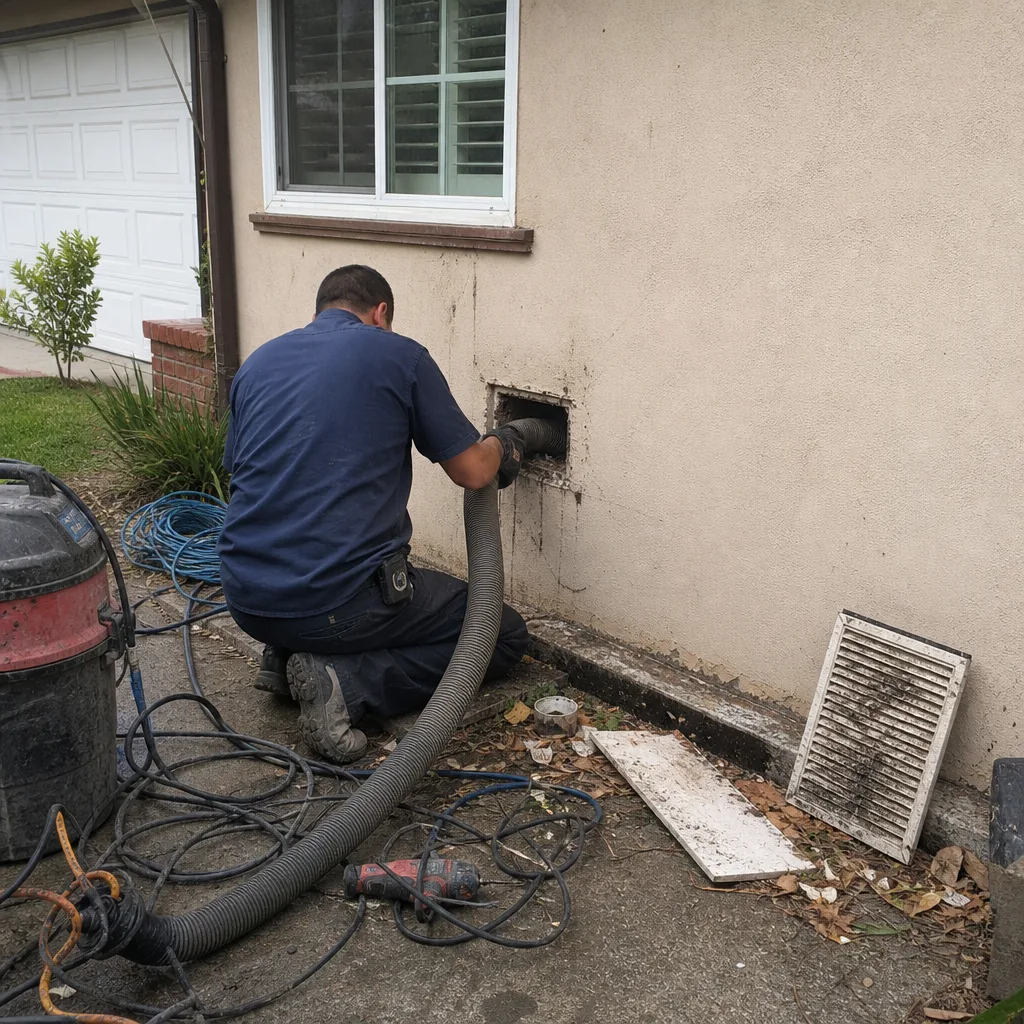
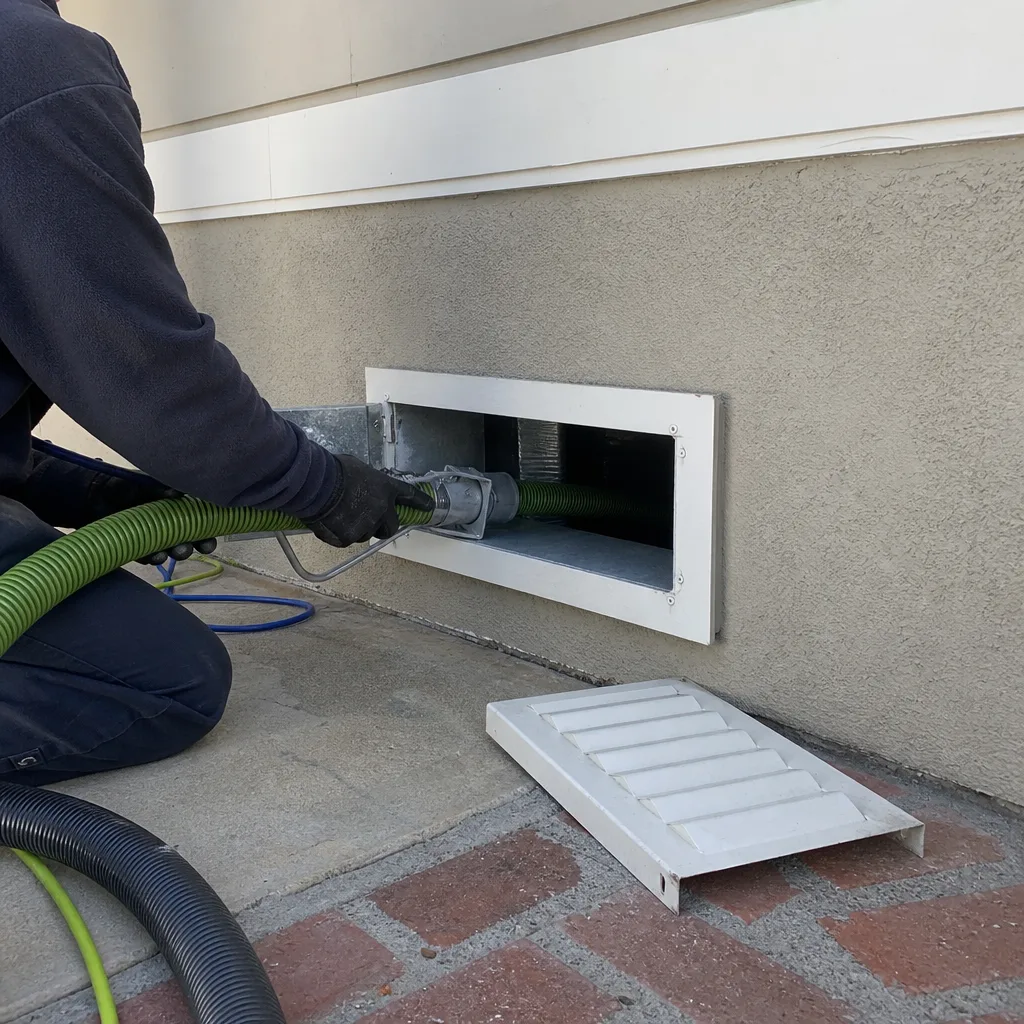
- Treating a dryer vent as a minor accessory issue: The dryer vent is not part of the HVAC system, but it’s usually ignored for years in the average home. Lint accumulation is the leading cause of dryer-related fires, and it’s a service that deserves deliberate, scheduled attention. Dryer Vent Cleaning in La Habra addresses this as a dedicated service, which is how it should be treated.
- Assuming a clean filter means clean ducts: The filter captures what enters through the return grille, but only if the return path is sealed. Air that bypasses the filter through leaks goes unfiltered into the supply side. And the filter does nothing about contamination that has already deposited inside the duct system. Filter changes and duct cleaning are complementary, not substitutions.
- Using retail “duct cleaning” coupons from mailers without verifying what the service actually includes: Low-price duct cleaning offers frequently cover only accessible registers and a short reach into the trunk, leaving the majority of the system untouched. They may not remove vent covers properly, may not access the plenum, and may leave more debris than they remove. Ask specifically what’s included and what’s excluded before agreeing to anything. The honest answer will be detailed and will not be a single line item.
- Delaying inspection because you don’t see visible dust in the living space: Duct contamination is often invisible in the room. What’s visible is just the fraction that makes it through the register and into the air. The rest sits in the duct, accumulating. By the time you notice it in the living space, the system has been distributing it for months. La Habra’s particulate environment makes this particularly common.
When to Call a Professional
There are clear triggers that warrant professional inspection and potentially cleaning or repair. If you’ve lived in your La Habra home for more than four years without a duct inspection, that alone is a trigger, regardless of symptoms. If you’ve experienced any of the following, schedule an assessment:
- A wildfire smoke event that kept AQI above 150 for more than 24 hours, especially if your system ran during it with a standard filter
- Visible dust streaking around return grilles or supply registers
- Persistent musty odor during the first minutes of system operation
- Unexplained increase in dust accumulation on horizontal surfaces within days of cleaning
- Any renovation that involved drywall, flooring, or attic work without sealed-off supply and return registers
- Discovery of rodent activity in the attic or crawl space, regardless of whether you’ve seen evidence inside the ducts
Cobalt Air Duct Cleaning offers free estimates in La Habra. Call (866) 596-7835 and we’ll inspect the system, show you what we find, and give you an honest assessment of whether service is warranted. If it isn’t, we’ll tell you that too.
Frequently Asked Questions
Whole-home air duct cleaning in La Habra typically ranges from $400 to $1,000 for a single-family residence, depending on the number of systems, the length of ductwork, the accessibility of furnaces and plenums, and the level of contamination present. Homes with multiple HVAC zones, long duct runs, or heavy soiling at the upper end. The price should be quoted as one flat fee per system after inspection, not as a per-vent price that can expand unpredictably. Call (866) 596-7835 for an exact quote in La Habra – estimates are free and inspection is part of the estimate.
Cheaper quotes typically reflect a smaller scope of work: fewer access points opened, shorter reach into the trunk, limited or no plenum access, and sometimes no return-side cleaning at all. The lowest-priced services often cover only visible register openings and a short section of duct at each, leaving most of the system untouched. A legitimate full-system clean requires access at the plenum, the return drop, and the trunk line, and it takes time. That can’t be done for a $99 special. The difference in quality is not marginal; it’s the difference between cleaning and pretending to clean.
Ask for before-and-after photos of the inside of your ducts. A professional cleaning should include visual documentation from a camera inserted into the system, showing contamination before and the clean surfaces after. If a company cannot or will not show you this, you have no way to verify their work. We provide photo documentation on every job because it’s the only way for a homeowner to confirm the result. The camera doesn’t lie, and neither should anyone touching your air system.
Every two to three years for most La Habra homes is a reasonable baseline, with adjustments based on specific conditions. Homes with shedding pets, regular fireplace use, or proximity to major roadways like the 57 corridor may need annual service. Homes with no pets, high-quality filtration, and sealed ductwork may go five years between cleanings. The honest answer comes from inspection: if the system shows minimal loading, we’ll tell you to wait. If it shows accumulation, the visual evidence answers the timing question better than any fixed schedule.
Duct cleaning removes particulate that has accumulated inside the system and would otherwise be circulated during operation. That includes pollen fragments, dust mite debris, pet dander, and other common allergens. For allergy sufferers in La Habra, where spring pollen load is significant and closed-window summer operation recirculates indoor air continuously, a clean system can make a meaningful difference. That said, duct cleaning is one component of indoor air quality. It works alongside filtration, source control, and regular filter maintenance, not in place of them.
Yes, when done with appropriate equipment and technique. Older systems in La Habra commonly have fibrous liner, thinner-gauge metal, or less robust connections, and they require a gentler touch than modern systems. Professional-grade mechanical agitation systems from Rotobrush and Nikro are designed to clean without damaging duct surfaces, including liner. The more important consideration for older homes is the condition of seals and connections; cleaning should be preceded by an inspection that identifies any structural issues before they’re disturbed. If we find damage during a cleaning, we don’t push through it. We stop, show you what we found, and discuss repair options. That’s the standard for any older system.
The Bottom Line
La Habra’s duct systems live with a weather pattern that most of the country never sees. Wildfire smoke, Santa Ana wind pressurization, and marine layer humidity each leave a specific signature inside ductwork, and the right response to each is different. The homeowners who understand this cycle and take action at the right moments – pre-summer cleaning, post-smoke inspection, Santa Ana seal checks – get cleaner air and a longer-lived system; for help preparing for unexpected events, see our Air Duct Cleaning Emergency Preparedness Guide for La Habra Homes. The homeowners who follow a generic calendar get whatever comes. Your ducts are either managed or neglected, and the difference shows up in the air you breathe every day. If you’re in La Habra and want to know what your system actually holds, call us. The inspection is free, the answer is honest, and the decision is yours.
Written by the team at Cobalt Air Duct Cleaning, serving La Habra since 2016. Explore more guides & resources.
See the difference
 Before
 After
 Before
 After
 Before
 After