
Guardsman Air Duct Cleaning in La Habra: A Homeowner’s Guide
If you’re in La Habra and a home warranty plan or referral network has pointed you toward Guardsman for air duct cleaning, here’s what you actually need to know: the Guardsman name tells you who’s sending the work order, not which technician shows up, what equipment they bring, or how thorough the job will be. Home warranty duct cleaning is typically scoped to the minimum coverage requirement, which means the technician’s incentive is completion, not depth, and your recourse for mediocre results runs through a claims department rather than a service guarantee. Before you schedule, understand what the name does and doesn’t deliver.
Key Takeaways:
- Guardsman’s air duct cleaning is often dispatched through home warranty or referral networks, which changes how the job is scoped and paid.
- Warranty-covered duct cleaning usually excludes sanitizing, dryer vents, air handler cleaning, and full-system access.
- Equipment questions matter: CFM rating, brush type for your duct material, and whether the tech scopes before cleaning.
- Documenting before and after gives you standing to dispute incomplete work with a claims department.
- Hiring a dedicated duct cleaning specialist independently often produces a more accountable outcome than a warranty-referred process.
What “Guardsman Air Duct Cleaning” Actually Refers To
Guardsman is a consumer protection and home service coordination name that many La Habra homeowners encounter through moving-company add-ons, home warranty plans, or real-estate referral programs. The company doesn’t maintain its own fleet of duct cleaning trucks in most markets. Instead, it contracts locally, dispatching whatever service provider is in rotation for your ZIP code. In practical terms, two neighbors on the same La Habra block could receive wildly different equipment standards, technician experience, and thoroughness while both thinking they got “Guardsman-grade” service.
This matters because duct cleaning quality is determined by the equipment and process on the truck that actually parks in your driveway, not the brand name on the work order. A referral network’s value is coordination only. The actual cleaning standard comes down to whether the tech is running a commercial-grade vacuum with serious CFM, whether they’re using the right brush for your duct material, and whether they bother to scope the system before and after. We get calls from La Habra homeowners who had a referral-network clean done a year prior and are still seeing dust accumulate on registers within days. That’s not a cleaning that failed to last; it’s a cleaning that never reached the full system in the first place.
If you want a good outcome from any referred contractor, you need to interview them like you’d interview an independent hire. The dispatch platform won’t do it for you.
What Home Warranty Duct Cleaning Usually Covers (And What It Doesn’t)
Most home warranty plans that include duct cleaning cover the baseline: a single pass through accessible supply and return ducts with mechanical agitation and vacuum collection. That’s the scope. Anything beyond it is either billed separately or quietly skipped, depending on the contractor’s economics. Here’s what typically falls outside a standard claim in La Habra homes:
- Sanitizing or antimicrobial treatment: Most plans exclude it. If you want it, expect a separate line item or pushback.
- Dryer vent cleaning: Almost never included. It’s a separate safety service, and a warranty-referred tech has no incentive to flag it if the plan only covers HVAC ducts.
- Air handler, evaporator coil, and blower motor access: This is where the real contamination often lives, but it requires more labor and care. Many warranty jobs skip it because the claim doesn’t specify it.
- Duct repair or sealing: If the tech finds a disconnected branch or a crushed flex duct, that’s outside the cleaning scope. Some will flag it; others won’t, because fixing it isn’t their job under the claim.
We’ve inspected La Habra systems in older homes near Euclid and Imperial where the previous “cleaning” never touched the return plenum, leaving a half-inch of fine sediment sitting right above the filter slot. The homeowner assumed the system was clean because the registers looked clear. That’s the gap between a warranty-minimum pass and a full-system clean, and it’s invisible unless someone opens panels and actually documents what’s inside.
How to Evaluate Any Duct Cleaning Contractor Referred to You
Whether the referral comes from Guardsman, another network, or a neighbor’s recommendation, three questions separate the technicians who can actually clean a system from those who are just moving air. Ask before you schedule:
- What vacuum CFM are you running? A truck-mounted or high-output portable unit in the 4,000+ CFM range creates the negative pressure needed to pull debris from branch runs. A portable unit rated for a residential carpet job won’t move enough air to clean a 20-foot La Habra duct run properly.
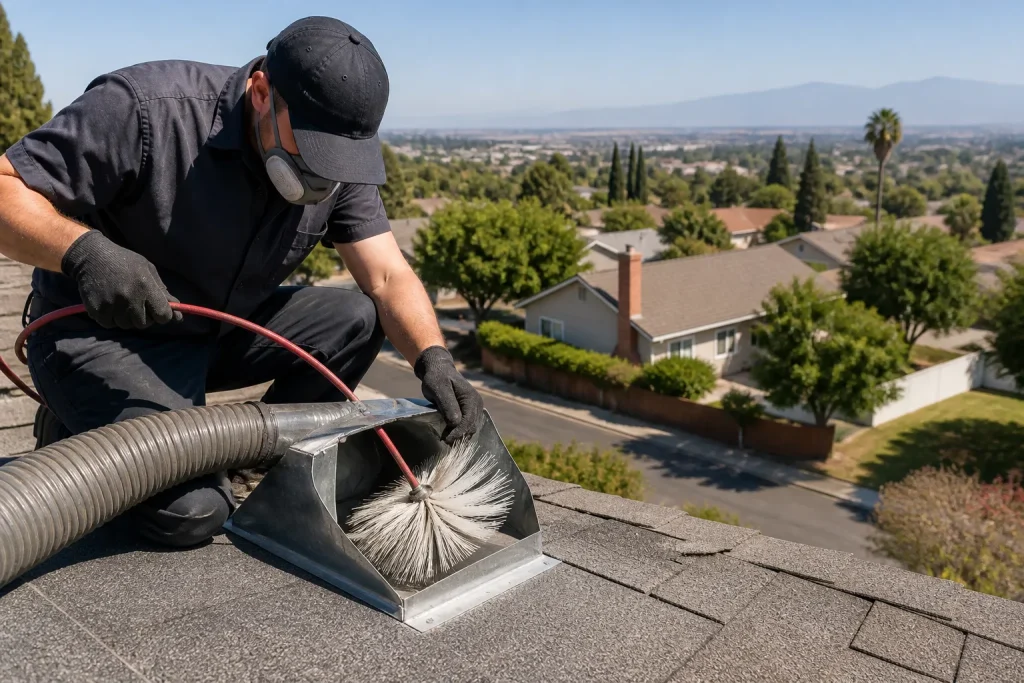
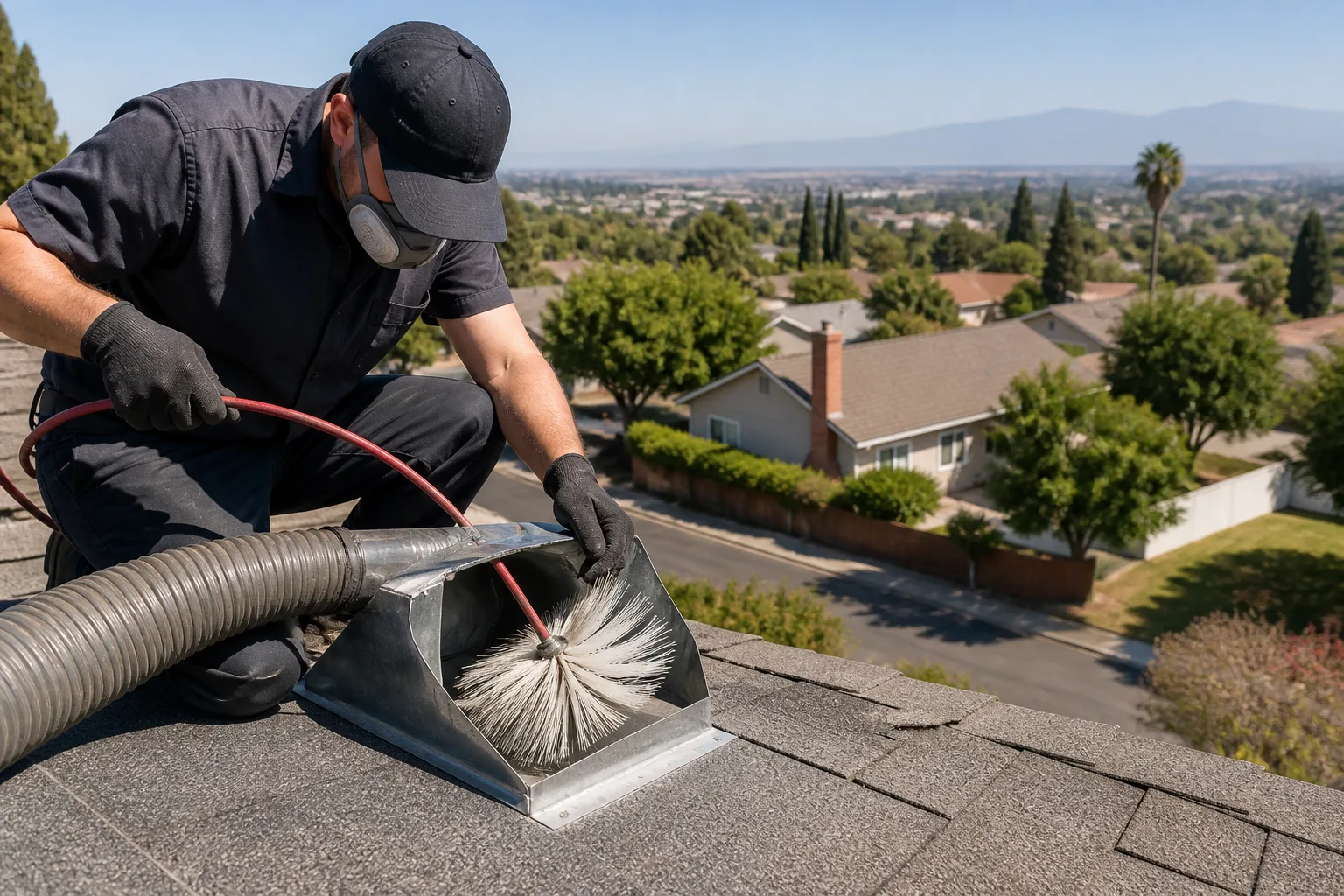
- What brush type do you use for my duct material? Sheet metal, flex duct, and fiberboard each need different agitation. A rotating nylon brush that’s perfect for metal can tear or separate flex duct if the tech isn’t careful. We run Rotobrush and Nikro systems specifically because they offer matched agitation for different duct material, which matters in La Habra homes built across different decades.
- Do you scope before and after? If the answer is anything less than “yes, with video or photos,” walk away. A technician who doesn’t document the interior before starting has no baseline, and one who doesn’t document after completion has nothing to prove except a line item. We show customers what’s actually inside their ducts, before and after, because a cleaning you can’t see is just an invoice.
One more signal: ask how long the job takes. A full-system clean on a typical single-family La Habra home runs two to four hours with proper setup, room-by-room agitation, main trunk access, and post-scope. If a tech is in and out in 45 minutes, you got a vent vacuuming, not a duct cleaning.
Warranty-Minimum Clean vs. Full-System Clean: What You Can Actually Verify
The difference isn’t philosophical. It’s measurable, and you can check it yourself. A warranty-minimum clean targets accessible supply registers and returns with a single pass, avoiding panel removal, coil access, and any location that requires more than routine labor. A full-system clean opens the main trunk line, accesses the return and supply plenums, addresses the air handler if accessible, and mechanically agitates every branch run before vacuuming.
Here’s what you can verify while the work is happening or immediately after:
- Registers removed and brushed: Did the tech pull each individual register, or did they run a whip through the vent covers in place?
- Main trunk access: Was a main trunk line panel removed and resealed? If not, debris in the core of the system wasn’t reached.
- Filter housing and return plenum: Is there visible sediment left right after the filter slot? That’s the first place to check with a flashlight.
- Post-job airflow: Stronger airflow at registers after cleaning is a decent proxy for removed restriction, though it’s not proof by itself.
We’ve pulled dryer lint, rodent nesting material, and once a child’s foam toy out of La Habra ducts that had been “cleaned” by a referral contractor months earlier. The homeowner had paid for the service through their policy and had no direct leverage. When you hire a dedicated duct cleaning specialist, the accountability chain is one call, not a claims queue.
What to Document Before and After Any Warranty-Covered Cleaning
If you’re going through a warranty or referral network and have limited choice in contractor, documentation is your only real power. Start before the tech arrives:
- Photograph the visible ductwork. Open a few registers, shine a light in, and take photos. Capture the return plenum if you can. These baseline images are proof of what the tech saw before they started.
- Photograph areas around registers. Dust accumulation patterns around vent covers are evidence of active circulation. Compare them two weeks after the cleaning.
- Ask for a signed scope of work before they start. What exactly is included? Which parts of the system will they access? If they won’t define it, document that refusal.
- Ask for before-and-after photos from the tech. If they don’t have a camera or scope, that tells you something about their process.
- Check visible areas immediately after completion. Open a few returns and supplies within the hour. Sediment left directly behind the filter or around the return boot is a red flag.
Two weeks later, check register dust accumulation and take comparison photos. If dust returns quickly in isolated rooms, that’s usually a branch run that wasn’t reached or a leak that wasn’t flagged. With documentation, you can reopen the claim with specific evidence. Without it, you’re having a phone argument with a department that processes hundreds of cases a week.
Why an Independent Duct Cleaning Specialist Often Delivers More Accountability
Here’s the structural problem with warranty-referred duct cleaning: the technician’s customer isn’t you. Their customer is the network that dispatched them, and that network pays a set rate per job. The incentive runs toward speed and low overhead, not thoroughness. If results are poor, your recourse is a claims dispute with a third party, which is designed to be friction-filled enough that most homeowners give up.
The independent specialist model works differently. When you hire a dedicated duct cleaning company in La Habra directly, the accountability chain runs from the tech to the company to you, without a claims department in between. The technician’s incentive is to do the job well enough that you’d rebook and refer them, because that’s how the company survives. That structural difference produces a different job, even when the equipment and the technician’s base skill level are comparable.
There’s also a technical edge. A company whose whole focus is indoor air quality, rather than a generalist HVAC crew adding duct cleaning to a service call, tends to run equipment built for the task. We use Rotobrush and Nikro systems, the same commercial-grade agitation and vacuum platforms used on industrial remediation jobs, applied to residential and light-commercial La Habra properties. That’s not a brand flex. It’s the difference between a system that reaches the full duct run and one that gets what’s easy to reach.
When to call a pro: if you can see visible mold growth inside a duct, if you’re finding pest nesting material, if there’s a musty odor that returns within days of the last cleaning, or if specific rooms stay dusty while others stay clean, that’s beyond a routine cleaning question. Air Duct Repair in La Habra matters here because cleaning around a disconnected branch or a crushed flex run doesn’t solve the air leak causing the dust. We’ve opened La Habra systems where the duct cleaning was fine but a branch had separated in the attic crawl space, pulling insulation and dust into the system continuously. No amount of cleaning fixes that. The repair comes first.
Related services in La Habra: if you’re looking beyond the warranty-referred route, see our full Air Duct Cleaning in La Habra process, or read about Dryer Vent Cleaning in La Habra as a dedicated fire-safety service rather than an add-on.
The Bottom Line
Guardsman air duct cleaning in La Habra is a referral mechanism, not a quality standard. The name gets a technician to your door, but the outcome depends entirely on that tech’s equipment, process, and incentives. Warranty-covered cleaning is typically scoped to the minimum, excludes sanitizing and dryer vents, and gives you a claims department rather than a direct guarantee if you’re unhappy. Document everything, ask hard questions before scheduling, and understand what a full-system clean actually requires. If you’re in La Habra and want a direct, equipment-serious answer to what’s in your ducts, Cobalt Air Duct Cleaning home offers free estimates. Call (866) 596-7835 and we’ll scope before we clean, document the whole thing, and tell you honestly what needs work and what doesn’t.
Frequently Asked Questions
No, Guardsman is a service coordination and consumer protection name that typically contracts local duct cleaning providers through referral networks or warranty programs. The technician dispatched under a Guardsman work order in La Habra is a local contractor, not a Guardsman employee, so equipment and process quality vary.
Usually not. Most warranty duct cleaning claims cover a baseline pass through accessible supply and return ducts only. Sanitizing, air handler access, dryer vent cleaning, and duct repair are typically excluded or billed separately. Confirm in writing before the tech arrives. Call (866) 596-7835 for an honest scope review if you’re unsure what’s actually included.
Check the main trunk line access, the return plenum behind the filter, and a few supply registers immediately after the job. If sediment is still visible in those areas, the full system wasn’t reached. Ask for before-and-after video or photos, and compare register dust accumulation two weeks later. A proper full-system clean runs two to four hours on a typical La Habra home.
Independent hiring gives you direct accountability, because the company you hired answers to you, not to a third-party claims department. The independent specialist’s incentive is a job good enough that you’d rebook and refer. If you do go through a warranty referral, document everything in writing and photograph before and after. For La Habra homeowners who want to skip the claims-queue runaround, we offer free estimates at (866) 596-7835.
Written by the team at Cobalt Air Duct Cleaning, serving La Habra since 2016.
Need Air Duct Cleaning Help?
Call Cobalt Air Duct Cleaning - licensed & insured, here with fast help in La Habra.
(866) 596-7835